
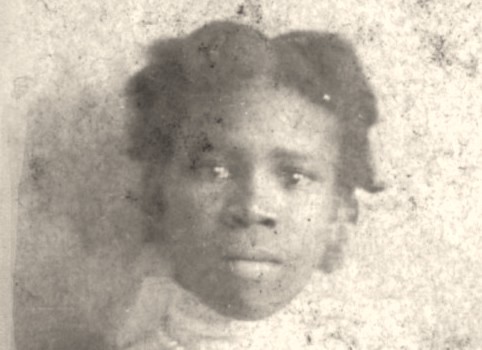
Before Jack the Ripper terrorized London, an unidentified killer known as the Servant Girl Annihilator stalked Austin, Texas. The brutal Servant Girl Murders of 1884–1885 left eight people dead, terrified the Texas capital and became one of America’s earliest unsolved serial killer mysteries. More than 140 years later, the identity of Austin’s so-called Midnight Assassin remains unknown.
Three years before London feared the name “Jack the Ripper,” Austin spent a year listening for lurking shadows or quiet footsteps on its streets. From Dec. 30, 1884, through Christmas Eve 1885, a series of nighttime attacks killed eight people—seven women and one man—and left several others wounded. The majority of the early victims were Black women and girls living in servants’ quarters behind the homes where they worked. The murders were never solved.
The crimes are now known as the Servant Girl Murders, though the name did not accurately describe all the victims, who were actually fairly diverse. One was an 11-year-old child. Another was a man killed beside the woman with whom he lived. The final two victims were white married women. The Travis County Archives identifies the eight dead as Mollie Smith, Eliza Shelley, Irene Cross, Mary Ramey, Orange Washington, Gracie Vance, Susan Hancock and Eula Phillips.
Their deaths are commonly presented as the work of a single serial killer, sometimes called the “Servant Girl Annihilator” or the “Midnight Assassin.” The similar modus operandi, or “MO,” among the attacks make that conclusion feasible. The surviving records, however, leave room for debate. Austin authorities arrested hundreds of people, prosecuted two husbands and entertained theories about whether one killer, several killers or a loose group of violent men had been stalking the city.

Since the killer(s) were never apprehended, we don’t know the answer. What we do know is that someone repeatedly entered Austin homes after midnight, brutally attacked people as they slept and disappeared through yards and alleys before help arrived. By the end of 1885, the capital of Texas was living under curfew, armed citizens were patrolling the streets and frightened families were anticipating another murder.

Photo: December 1885 newspaper Fort Worth Gazette headline relating to The Servant Girl Annihilator, via Wikimedia Commons
A Pattern in the Servants’ Quarters
In the 1880s, Austin was still a small city. The Handbook of Texas records 11,013 residents in 1880 and 14,575 in 1890, placing the population during the murder year somewhere between those census counts. Roughly one-third of Austin’s residents were Black in 1880.
The city was expanding quickly. Its railroad had arrived in 1871, followed by gas street lamps in 1874, followed by Austin’s first streetcar line. The University of Texas began holding classes in 1883, and work was underway on the enormous granite Capitol that would be dedicated in 1888.
A few blocks away from the construction, rail traffic and government offices, much of Austin was poorly lit at night and only partly developed. Homes had been erected beside creeks, stables, sheds or open plots of land. Domestic workers frequently lived in small rooms or detached buildings behind their employer’s houses. All it would take was a predator familiar with the area to stealthily move through shadows across several blocks to arrive unseen outside your bedroom window.
Mollie Smith had been working as a cook in the home of Walter K. Hall on West Pecan Street, now West Sixth Street, for a little more than a month. She was about 25 and had moved to Austin from Waco in search of work. Later research found that she had a 10-year-old son named George, a fact the newspapers omitted from their accounts of her death.
On the night of Dec. 30, 1884, someone attacked Smith and Walter Spencer, a man visiting her, while they slept. Spencer survived with serious injuries. Smith was carried into the yard, sexually assaulted and killed. The assailant left without waking the main household.
These peculiar circumstances became an alarming pattern. On several nights over the course of nearly a year, an intruder entered sleeping quarters, used a weapon found nearby or carried for the purpose, disabled anyone who might interfere and removed the intended victim from the room to the yard, likely because it offered darkness and a route of escape through a gate, fence or alley.
During the following months, domestic workers reported break-ins, threats and objects thrown through windows. The record of disturbances and attempted assaults suggests that Austin faced a broader campaign of nighttime violence alongside the murders. By May, attacks around servants’ rooms had become frequent enough for residents to suspect an organized gang.
On May 7, Eliza Shelley was found dead in a one-room cabin behind the home of Dr. Lucien B. Johnson on East Cypress Street, now Third Street. Shelley was about 30 and had three young children. She had worked as a cook for the Johnson family, who described her as a trusted employee and devoted mother.
Sixteen days later, Irene Cross was attacked with a knife in the room where she lived near Scholz Garden. Cross was a widow, about 33, who shared the quarters with her adult son and young nephew. Her nephew, Douglas Brown, saw a man leaving and described him as large and stocky, with rolled trousers and bare feet.
The description drew attention to an important detail that appeared elsewhere in the investigation: footprints. Police found tracks in yards, alleys and damp soil. They brought bloodhounds to crime scenes and attempted to follow the trails, sometimes as far as nearby stables or creeks. At several locations, the assailant seemed to have traveled barefoot.
Modern accounts can make 19th-century investigators sound helpless, but Austin police used the tools available to them at the time. They interviewed witnesses, conducted inquiries, measured tracks, preserved pieces of flooring and hired private detectives. However, critically, they lacked reliable methods for connecting physical evidence to a particular person. Even London’s Metropolitan Police would not establish its Fingerprint Bureau until 1901, 16 years after the Austin murders.
William Sydney Porter, a young Austin resident who later became famous under the name O. Henry, mentioned the attacks in a May 10, 1885, letter. He joked about the “frequent raids of the Servant Girl Annihilators” during the night. The original letter used the term in the plural, reflecting the then-popular belief that several people might be responsible.
The next death left little room for humor. Before dawn on Aug. 30, an intruder entered the quarters where Rebecca Ramey slept beside her 11-year-old daughter, Mary. Rebecca was struck unconscious. Mary was taken into a washhouse behind the residence, sexually assaulted and killed.
Mary had been born in Austin in 1875, after the death of her father. Her family was part of Austin’s established Black community. Her uncle, Edward Carrington, operated one of the city’s early Black-owned grocery businesses and later became a respected community leader. Mary’s identity is among the details recovered through research into the victims’ families, whose lives were recorded far less thoroughly than those of wealthy white men.
The circumstances surrounding Mary’s death were different from the previous murders because of recent rain that had left the ground soft enough to hold footprints. Bloodhounds followed the clearer trail out of the yard, but unfortunately, the predator’s pathing was again lost near a stable. Rebecca survived the attack, though an 1888 newspaper reported that she never recovered from the injuries or from the loss of her daughter.
The killer returned on Sept. 28 in a cabin near the newly opened University of Texas. Gracie Vance, 20, lived there with Orange Washington, 25, who worked for an Austin builder. Lucinda Boddy and 17-year-old Patsy Gibson were spending the night.
The attacker entered while all four were sleeping. Washington was struck in the head with an ax and died several hours later, making him the only male murder victim in the series. Vance was also struck, dragged through a window and over a fence, sexually assaulted and beaten to death with a rock.
According to a contemporary account of the attack, Boddy and Gibson were hit with a sandbag and knocked unconscious. Boddy regained consciousness and struggled with the assailant near the property’s gate. The commotion awakened Vance’s employer, William Dunham, who came outside carrying a gun. Boddy grabbed him in her panic, unintentionally preventing him from firing before the man escaped. Other neighbors fired several shots at the fleeing assailant, but he disappeared into the darkness.
The attack occurred near a principal street and within sight of the university grounds. The assailant had entered a room occupied by four adults, attacked all of them and still slipped into darkness beyond the property before anyone could stop him.
Austin hired Pinkerton detectives, expanded patrols and offered rewards. Police questioned suspects with little evidence beyond their presence in the wrong neighborhood. A later Texas State University analysis of the case notes contemporary reports that about 400 people—mainly Black men—were arrested or examined during 1885. The number reveals the size of the police dragnet, but it produced neither a confession nor a case that could be proved.
The city replaced Marshal H. Grooms Lee with former Texas Ranger James E. Lucy in December. Officials increased the police force and tried to bring the streets under control. Then, on the night families gathered for Christmas, the violence crossed a line that transformed public fear into near panic.
Christmas Eve 1885
Susan Hancock was 41 and lived with her husband, Moses, near the Colorado River on East Water Street. Their daughters, Lena and Ida, had gone to a Christmas party on Dec. 24. Susan went to sleep in Lena’s bed while Moses slept in another room.
Shortly before midnight, Moses heard a disturbance. According to his testimony, he found a figure outside near his injured wife and threw a brick at the man. The intruder jumped a fence and disappeared into the alley.
Susan remained alive for three days. Dr. W.J. Burt examined her after her death on Dec. 28, and his surviving autopsy report in the Travis County Archives documented wounds consistent with an ax or similar heavy instrument.
Perhaps disgruntled by the interrupted attempt, the killer struck again. About an hour after the Hancock attack, another household awoke to violence. Eula Phillips was 17, the mother of a young son and the wife of carpenter James Phillips Jr. The family lived in several connected structures on West Hickory Street, now West Eighth Street.
James was found unconscious and bleeding heavily in the couple’s bed. According to medical testimony preserved from his 1886 trial, he had received at least two blows to the left side of his head, leaving deep wounds in front of and behind his ear. The deepest wound reached the bone and may have fractured his skull. He remained ill and intermittently unconscious after the attack and required medical care for about two months. The couple’s young son, who had been sleeping between his parents, was crying but unharmed.
Eula was gone from the bed. A trail of blood led from the room, across the connected galleries and through the backyards to where her partially unclothed body was found near the alley. A powerful blow consistent with an ax had fractured the front of her skull and killed her almost immediately. She also had a smaller injury near one ear and abrasions indicating that she had been dragged. Her condition and the position in which she was found led physicians to suspect that she had been sexually assaulted, possibly after death, although the medical evidence could not establish that with certainty.
Austin had already buried six Black victims. The deaths of two white women on the same night brought a harsher response from the city’s white press and political establishment. One newspaper headline announced that “the demons have transferred their thirst for blood to white people”. The wording exposed the racial boundary the murders had crossed in the public mind.
Men armed themselves and organized neighborhood patrols. City officials imposed a midnight curfew, restricted late-night liquor sales and ordered people labeled as vagrants out of town. A mob threatened to take control of the investigation, and civic leaders warned that innocent people would be killed if the city abandoned the courts.
Police arrested Moses Hancock, the father and husband, in relation to the first attack that night. Private detectives and members of Susan’s family pressed the case against him, pointing to marital troubles and his drinking. His daughter Lena defended him in court. The prosecution ended without a conviction after a jury failed to agree, and Hancock was ultimately cleared.

Even though he had been gravely injured, James Phillips became a suspect in his wife’s death. He was found unconscious in the couple’s bed, his pillow saturated with blood and an ax lying nearby. Medical testimony indicated that he had received at least two blows to the left side of his head. The deepest wound reached the bone and may have fractured his skull. He remained intermittently unconscious, suffered lasting neurological symptoms and required medical care for approximately two months. The physicians who examined him considered it highly improbable that he could have inflicted the wounds himself.
The prosecution nevertheless built its case around the possibility that James had killed Eula and then wounded himself to disguise the murder as another attack by Austin’s unknown nighttime assailant. Witnesses described turmoil in the couple’s marriage and testified that James had previously threatened to kill Eula if he discovered that she had been unfaithful. Prosecutors devoted considerable attention to Eula’s relationships with other men, using allegations about her private life to present jealousy as James’ motive. The surviving trial testimony also shows how prosecutors questioned whether his injuries could have been self-inflicted, despite the physicians’ doubts.
The case contained no eyewitness, confession or physical evidence conclusively identifying James as the killer. Nevertheless, the jury, perhaps eager to just convict somebody already, accepted the prosecution’s circumstantial theory. In 1886, it convicted him of second-degree murder and sentenced him to seven years in prison.
The Texas Court of Appeals reversed the conviction that November. The court found that prosecutors had introduced extensive evidence concerning Eula’s alleged infidelity without satisfactorily proving that James knew about it. Without that knowledge, the evidence could not legitimately establish jealousy as his motive. Because the entire case was circumstantial, the judges concluded that the prejudicial testimony may have filled a critical gap in the prosecution’s case and improperly influenced the jury. The court reversed the judgment and returned the case for another trial without deciding who killed Eula.
The prosecutions complicate the popular account of one predator responsible for all eight deaths. Officials at the time did not agree on that theory. Some believed the early murders had been committed by a gang. Others saw unrelated acts of domestic violence, sexual assault and revenge. The similarities among several scenes were difficult to dismiss, but similarity alone could not identify the person who had left each one.
After Christmas, the city waited for the next tragedy. However, no comparable murder occurred.
Nathan Elgin and the Four-Toed Footprint
In February 1886, a disturbance broke out at a saloon in Masontown, one of Austin’s Black neighborhoods. A 19-year-old cook named Nathan Elgin had reportedly dragged a young woman named Julia to a nearby house and was beating her as people gathered outside.
Officer John Bracken and two other men intervened. During the struggle, Elgin drew a knife. The officer then shot and struck him in the spine, leaving him paralyzed, and he died the next day.
Doctors examining his body noticed that he was missing a toe.
Investigators had reportedly found four-toed footprints at more than one murder scene. During the later Hancock trial, Travis County Sheriff Malcolm Hornsby testified that he had made a cast of Elgin’s foot and compared it with tracks connected to the Phillips and Ramey investigations. Hornsby said the prints shared important similarities. The details of that testimony and the bloody floorboards preserved for the Phillips trial have made Elgin the strongest named suspect for many modern researchers.
Several facts support that suspicion. Elgin had grown up in Austin and knew the neighborhoods in which the attacks occurred. He worked as a cook and may have moved within the same domestic and service world as some of the victims. He was accused of attacking a woman and brandishing a knife. His foot may have matched an unusual track, and the murders had ended by the time he died.
The case against him also has limits. Because Elgin was never questioned about the murders, he left no known confession. No surviving physical evidence can establish that his foot definitively made the track, and the handling of the casts and floorboards taken at the time cannot meet modern evidentiary standards. The city had already passed nearly two months without another murder before his death.
Elgin remains a plausible suspect rather than an identified killer. Prematurely declaring the case “solved” is particularly serious when the proposed culprit was a young Black man in a city that had already detained hundreds of Black men on suspicion. His violent death deprived him of a trial and left historians with evidence that can be interpreted but never fully tested. The case will very likely forever remain unsolved.
Was Austin’s Killer Jack the Ripper?
In 1888, three years after the Austin attacks ended, a murderer began killing women in London’s Whitechapel district. The five victims most commonly associated with Jack the Ripper were Mary Ann Nichols, Annie Chapman, Elizabeth Stride, Catherine Eddowes and Mary Jane Kelly. Their killer was never identified.
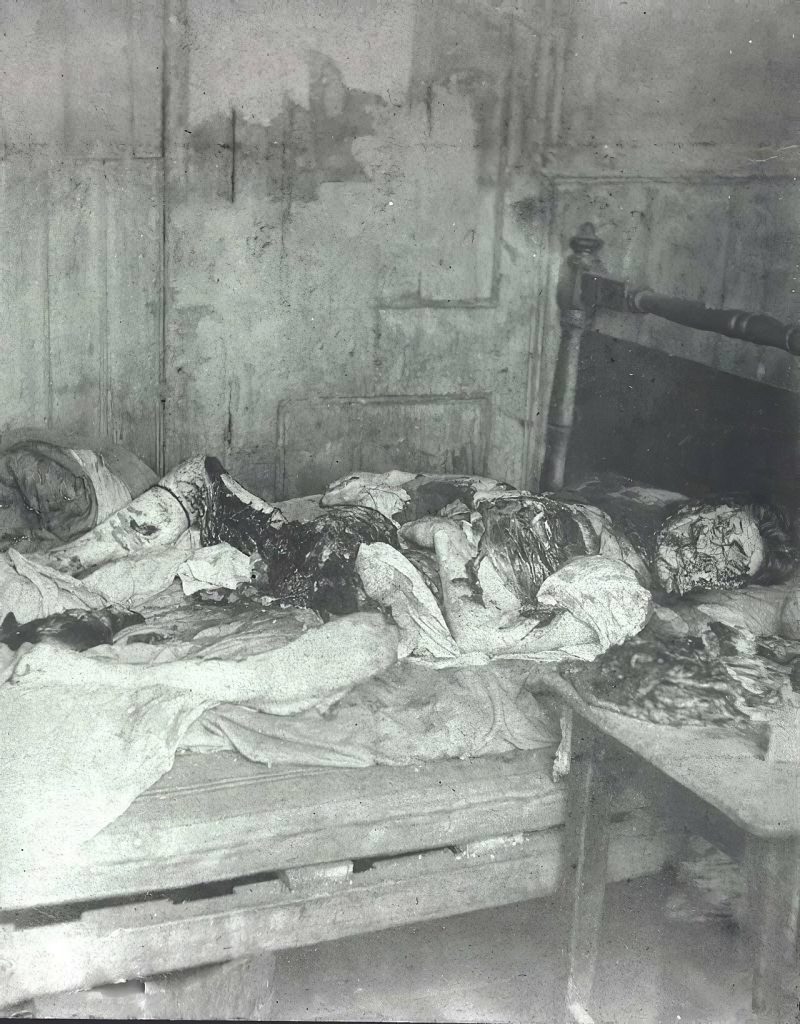
Photo: City of London police photograph of the body of Mary Jane Kelly as discovered in 13 Miller’s Court, Spitalfields, 9 November 1888, Unknown Photographer, via Wikimedia Commons
The public comparison of Jack the Ripper to the Austin killer began while the London murders were still occurring. In October 1888, the Atlanta Constitution reminded readers that more than half a dozen women had been murdered in Austin and that the culprit remained undiscovered. The newspaper described the London crimes as a duplication of the Texas mystery.
The two cases shared features that invited comparison. Both involved nighttime attacks on women, shocking violence, public panic, aggressive newspaper coverage and police forces who debated theories and entertained many suspects. In each city, the murderer appeared skillful in entering and leaving populated areas without being recognized.
However, there were also key differences in MO. Austin’s victims were usually attacked while sleeping inside homes or detached quarters, and several were carried into yards. The assailant often relied on an ax or another blunt instrument taken from the property. The Whitechapel victims were generally approached outdoors, with Mary Jane Kelly as the major exception, and the London killer used a knife. The patterns of injury also differed.
By November 1888, American newspapers were circulating a more specific story. A man described only as a Malay cook named Maurice had supposedly worked at Austin’s Pearl House during 1885 and left in January 1886. The Atchison Daily Globe repeated the claim that he had worked aboard ships, encouraging speculation that he could be the Austin killer and have reached London.
However, the report didn’t provide Maurice’s full identity, his employment record aboard a named vessel or firm evidence that he ever traveled to England. It also incorrectly treated proximity to the Pearl House as proof of opportunity. The story serves as an intriguing piece of 1888 journalism rather than a feasible theory tying Austin to Whitechapel.
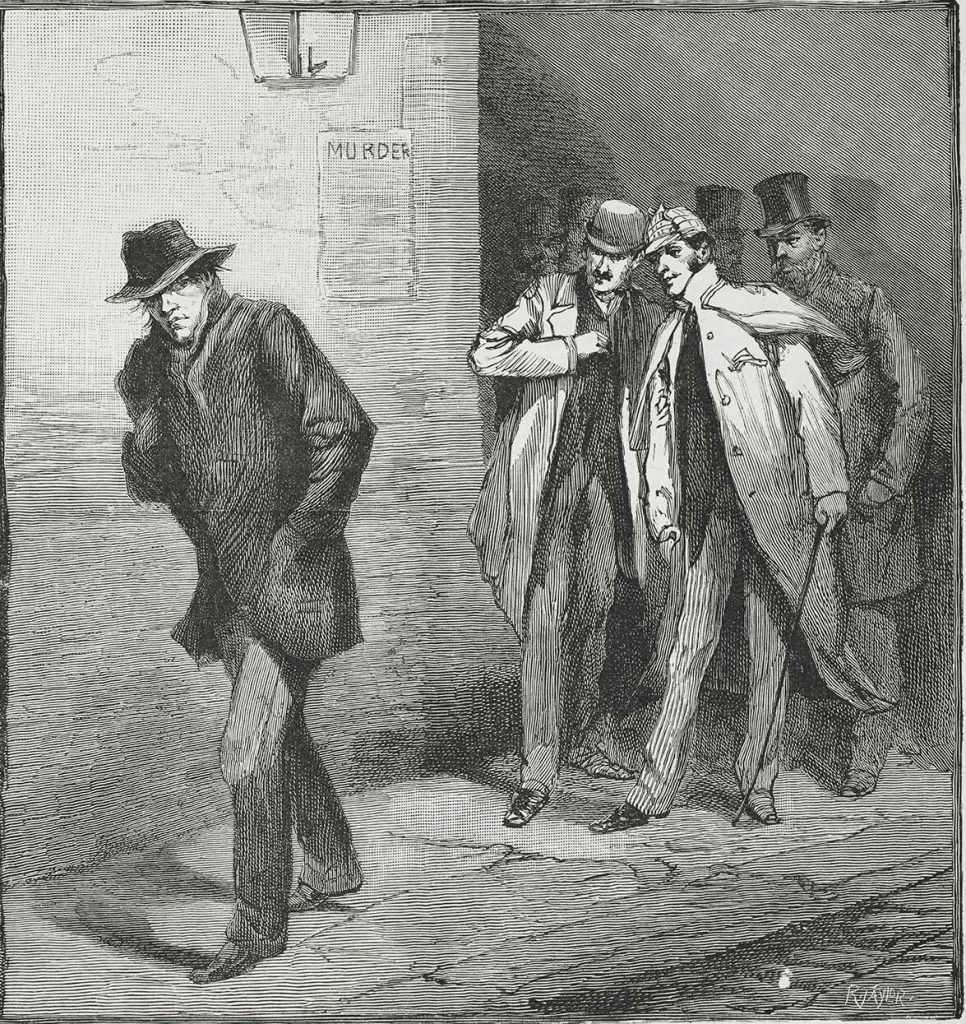
Photo: “With the Vigilance Committee in the East End: A Suspicious Character” from The Illustrated London News, 13 October 1888. R. Taylor (R. & E. Taylor (Firm)) via Wikimedia Commons
The Austin murders and the Jack the Ripper killings, are, however, linked as two early urban murder panics, even if the historical record cannot connect them to the same person.
Jack the Ripper became a permanent figure in popular culture because London hosted an eager press audience, because his name was memorable and because of the emergence of a stream of letters—many of them hoaxes—that kept the killer in the spotlight. Conversely, Austin’s murderer was largely forgotten, with no catchy name or lingering trails. The early victims also belonged to the Black population, whose lives were recorded disproportionately and whose deaths did not provoke the same public outroar as the later murders of white women.
Even the phrase “servant girl” reduces the victims to their employment while failing to describe half of the dead. The biographical record recovered by later researchers remembers their fuller identities.
Mollie Smith had traveled between Waco and Austin to find work and was the mother of a 10-year-old son named George. Eliza Shelley supported three young children and was remembered by her employers as a faithful mother and a woman of excellent character. Irene Cross was a Mississippi-born widow who made a home in Austin with her adult son and young nephew. Mary Ramey was an 11-year-old Austin child whose family included Edward Carrington, a respected community leader and owner of one of the city’s earliest Black-owned grocery stores. Orange Washington was the eldest son of a farming family that had settled in Brenham and earned his living working for Austin builder Michael Butler. Gracie Vance was a 20-year-old domestic worker, born in Texas to Charles and Eliza Vance; her mother supported the family as a washerwoman well into old age. Susan Hancock had moved across Texas with her carpenter husband and was raising two daughters, Lena and Ida, in the Austin home the family had recently purchased. Eula Phillips belonged to two early Travis County families, lost her mother as a teenager, married at 14 and became the mother of a son named Thomas before her death at 17.
A Christian view of this history begins with acknowledging each individual’s worth. Each victim bore the image of God. Their race, occupations, reputations and standing in 1885 Austin never reduced the value of their lives.
The mystery remains compelling because the murderer escaped both the police and public memory. The surviving records make room for several possibilities: the deaths could have been caused by one roaming killer, multiple attackers or a serial offender whose crimes became entangled with unrelated violence. Nathan Elgin may have been responsible, but any evidence died with him. The connection to Jack the Ripper is a matter of folklore rather than proven history.
Enjoyed This Series?
Read more untold Texas history from Katy Christian Magazines:
- The Great Hangings at Gainesville: Texas’ Darkest Chapter and the Largest Mass Hanging in American History
- The New London School Explosion: The Deadliest School Disaster in American History Happened in Texas
- Is Patterson Road Really Haunted? The Truth Behind Houston’s Most Haunted Road, Blue Light Cemetery and Devil Worship Legends
- The 10 Greatest Lost Treasures in Texas: Spanish Gold, Pirate Treasure, Buried Silver and Hidden Fortunes
- Before There Was Katy: 10 Ghost Towns and Lost Communities You Never Knew Existed
- The Battle of Medina: The Bloodiest Battle in Texas History, Yet Most Texans Have Never Heard of It
Feature photo: Mollie Smith