

The deadliest school disaster in American history happened in Texas, yet surprisingly, many Texans have never heard of it. On March 18, 1937, a natural gas explosion ripped through the London School in East Texas, killing nearly 300 students, teachers and community members. The tragedy forever changed natural gas safety laws and engineering standards, leading directly to the rotten egg warning smell millions of Americans rely on today.
To this day, the recordholder of the deadliest school disaster in American history is the Lone Star State, yet many Texans have never heard of the tragedy. Dubbed the “New London School Explosion”, a fateful disaster stole the lives of nearly 300 students and children. Shortly after 3 p.m. on March 18, 1937, a natural gas explosion tore through the London School in East Texas, claiming many young lives. The disaster changed natural gas safety and engineering law, and it is a primary reason utility companies mix natural gas with a smelly, rotten-egg scented sulfur compound called mercaptan to announce gas leaks.
The London School, which taught students ages 10 to 17 years old (or 5th through 11th grade) was neither impoverished nor neglected. The establishment educated children in one of the wealthiest rural districts in the country and was considered a showpiece of the East Texas oil boom. Its classrooms were modern, its structure was reinforced with steel and its football field had electric lights. However, the district made one fateful error: it wanted to save money on heat.
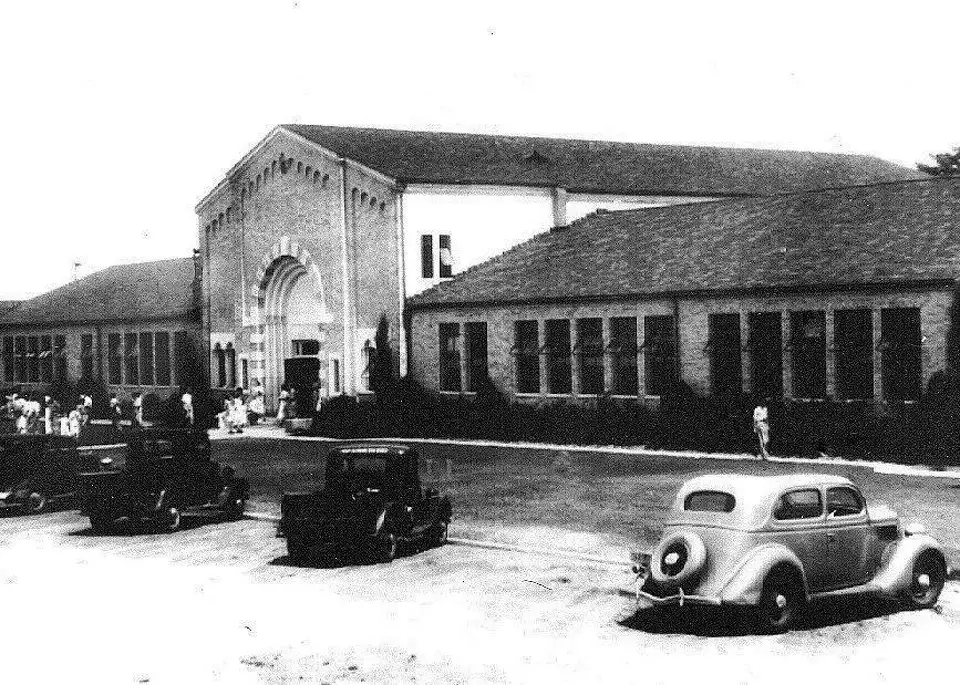

Photo: London School before the explosion, Public domain, via Wikimedia Commons
New London is in Rusk County, between Henderson and Kilgore and about 30 minutes east of Tyler. Oil discovered in the surrounding area in 1930 changed the community almost overnight. Workers arrived with their families and wells were quickly developed across the landscape, transforming previously modest land into a highly profitable production.
The local district became one of the richest rural school systems in the United States. Children from New London and nearby oil-field communities rode buses to a large, steel-framed school with classrooms, laboratories, vocational facilities and an auditorium. Oil derricks stood close to the campus, and the football team was known as the Wildcats, after the wildcatters who drilled exploratory wells.
The town was called New London by 1937, but the building was officially the London School. However, “New London School explosion” eventually became the standard name for the disaster.
The London School sat on sloping ground, leaving an enclosed area beneath much of the first floor. A federal investigation completed after the explosion described it as a largely unused space of about 65,000 cubic feet. It extended for more than 250 feet beneath classrooms and had little ventilation.
Leading up to the tragedy, the district had been buying natural gas from United Gas Co. for roughly $300 a month. On Jan. 18, 1937, officials stopped purchasing that gas and approved a connection to a residue line operated by Parade Gasoline Co.
Residue gas was a byproduct of oil production. It had so little commercial value that companies commonly burned it from flares, and people throughout the East Texas Oil Field tapped nearby lines to heat homes, schools and churches. The arrangement saved the district about $300 each month. That amount of money was significant in the 1930s, so the school district jumped at the new arrangement. However, they did not fathom the consequences.
The residue gas was untreated and carried no warning odor. Mercaptan, the sulfur compound that makes modern gas leaks smell like rotten eggs, had not been added, so gas could leak into a building completely undetected.
Somewhere beneath the school, it did.
Investigators determined that gas entered the enclosed space under the first floor and mixed with the air. Later histories generally attribute the leak to a faulty connection, although the federal report at the time did not name a definitive source. Its authors considered an improperly connected pipe the likely explanation while also examining seepage from nearby wells or the surrounding ground. Whatever its entry point, enough gas accumulated below occupied classrooms to turn the space beneath the school into an enormous concealed chamber.
The federal investigators calculated that about 4,225 cubic feet of gas mixed with the air would have been enough to create the most violent explosive concentration in that space. With active wells and gas lines surrounding the campus, that amount could collect quickly.
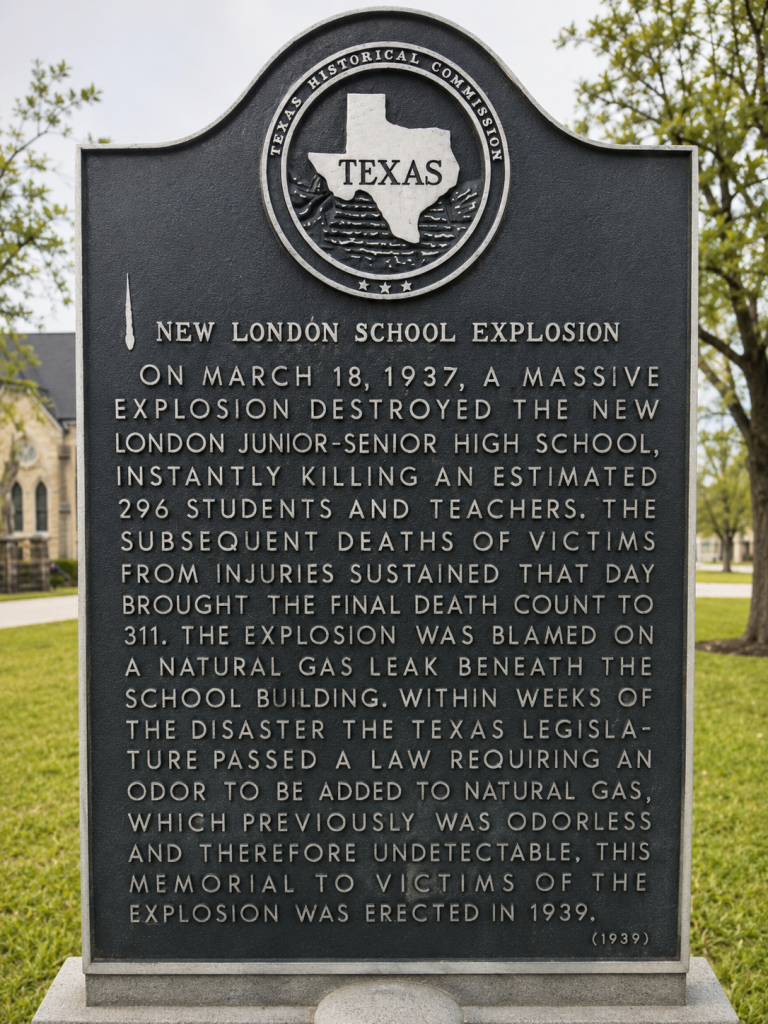
The Tragedy of March 18, 1937
It was Thursday, March 18, 1937, at some point between 3:05 and 3:17 p.m., during the final class period of the day. Within a matter of minutes, every student in the building would have been dismissed to return home to their families, eat snacks and complete homework.
Interestingly, the younger grades had just been dismissed, while hundreds of other students were away preparing for an academic and athletic meet in Henderson. A PTA meeting was underway in the detached gymnasium rather than the main building. These small changes in the normal schoolday flow actually spared many children and parents from what was about to transpire.
Inside the manual-training shop, instructor Lemmie R. Butler switched on an electric sanding machine. Investigators concluded that its electrical equipment produced a flash that ignited the gas beneath the floor.
The explosion lifted the floor, blew out the walls and brought the roof down over occupied classrooms. Steel beams, bricks and concrete collapsed together. People several miles away heard the blast and initially wondered whether something had exploded in the oil field.
Parents from the PTA meeting reached the ruins first. Oil workers soon arrived with cranes, cables, cutting torches and equipment designed for moving heavy material. Other residents climbed onto the wreckage and began digging by hand.
Rain fell while floodlights illuminated the school through the night. The Texas Rangers, Highway Patrol, National Guard, Army Air Corps, Boy Scouts, Red Cross, Salvation Army and volunteers from surrounding oil companies joined the effort. According to the Texas State Historical Association, workers cleared the site in about 17 hours.
Tyler’s Mother Frances Hospital had been scheduled to hold its formal dedication the following day. The ceremony was canceled, and the hospital opened its doors immediately for the injured. The Sisters of the Holy Family of Nazareth, who administered the hospital, became part of the emergency response described in the history of the Catholic Diocese of Tyler.
The number of wounded and dead overwhelmed nearby facilities. Community members offered their cars and work trucks as ambulances. Morgues were erected in buildings that were normally skating rinks, meeting halls or church basements. Volunteers worked to find personal possessions like shoes, books and jewelry from the rubble, objects which in some cases offered families their only means of identifying loved ones. Thanks to immense community efforts, each victim received a casket, a grave and a religious service.
The exact number of lives lost in the New London School Explosion has never been settled. The London Museum uses an estimate of approximately 294 deaths, while the Texas State Historical Association places the number at about 298. This discrepancy is likely because some reports contained duplicated names, and some badly injured victims died after being transported elsewhere. “Nearly 300” is the figure most historians now use.
Approximately 500 students and 40 teachers were believed to be inside the main building. Only about 130 students escaped serious injury. Many of the dead were buried at Pleasant Hill Cemetery near New London, where rows of markers still show the ages of the victims and the number of children some families lost at once.

The federal investigator sent to examine the ruins, David J. Price, recorded an eerie discovery in his official report. On the floor of the manual-training shop, he found a student’s chemistry textbook opened to a section titled “Explosions and Explosive Mixtures.” The lesson described how escaped fuel gas could destroy a building when ignited inside a confined space. Price noted that the pages were stained and stuck together.
News of the explosion traveled across the country. President Franklin D. Roosevelt and first lady Eleanor Roosevelt sent condolences. Adolf Hitler, then chancellor of Nazi Germany, also sent a sympathy telegram; the strange historical artifact is now held by the London Museum.
A young United Press reporter named Walter Cronkite arrived in New London on one of the first major assignments of his career. He would later report from battlefields, presidential campaigns, the Nuremberg trials and the Kennedy assassination, but New London never left him. In a recollection preserved by the museum, Cronkite said that “nor has any story since that awful day equaled it.”
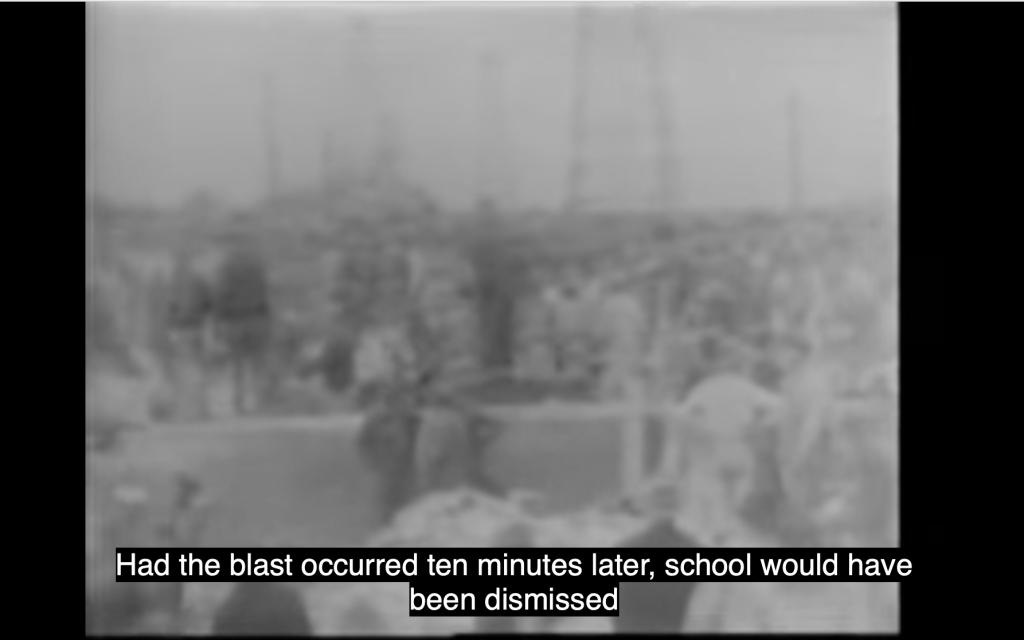
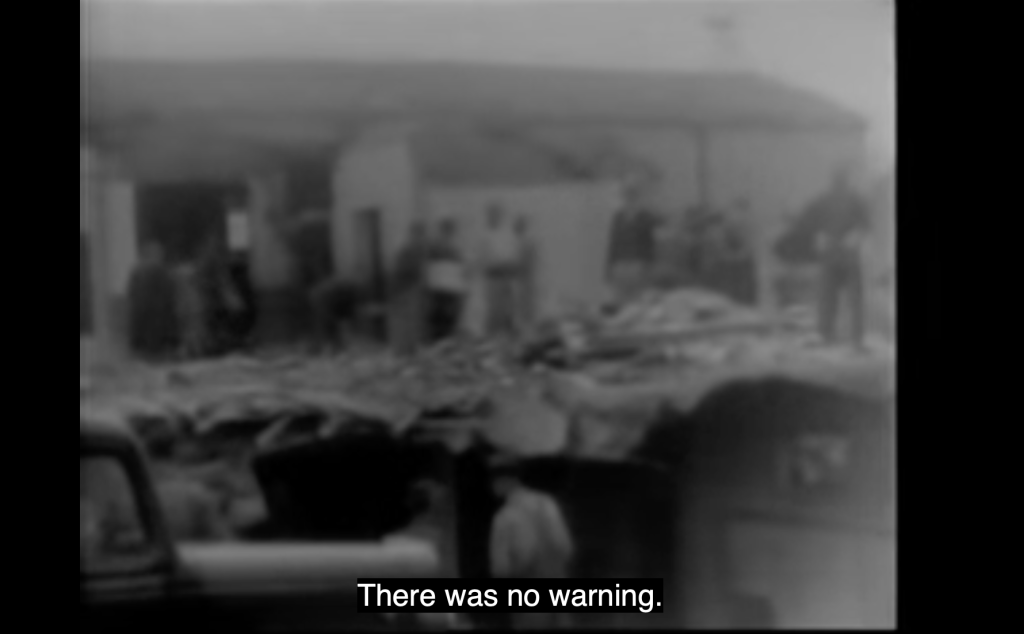
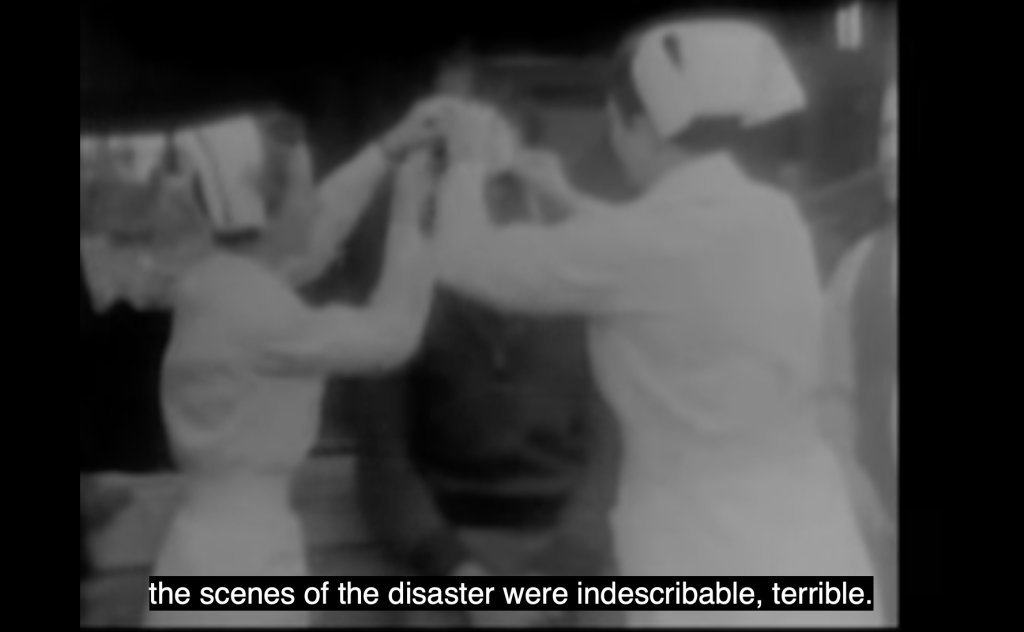
Screenshots: Special Release – 425 Children Die As Gas Explosion Shatters School, 1937/03/20 (1937)
So, Why Does Natural Gas Smell Like Rotten Eggs Today?
The gas beneath the London School was so devastating because it was completely undetected. After the explosion, investigators made odorization their first major safety recommendation. Any combustible gas used in public buildings, they argued, needed a strong odor that people could detect before it reached an explosive concentration.
Texas lawmakers responded during the 1937 legislative session. House Bill 1017 gave the Railroad Commission of Texas authority to regulate the odorization of natural gas and liquefied petroleum gases. The commission’s official history connects that authority directly to the New London explosion.
Utilities began adding sulfur-containing odorants commonly known as mercaptans. The odor is intentionally unpleasant and detectable at very low concentrations. Modern federal regulations for gas-distribution lines generally require gas to be recognizable by smell before it approaches an explosive level.
The explosion also forced Texas to confront its then-subpar engineering standards. At the time, almost anyone could describe himself as an engineer, and the public had little way to judge whether someone was qualified to design or supervise a complicated building system.
Gov. James Allred signed the Engineering Registration Act on May 28, 1937. Passed as emergency legislation, it established professional qualifications and state oversight for engineers. The Texas Board of Professional Engineers and Land Surveyors still identifies the New London disaster as the event that led to the law.
The school district had tried to save $300 a month. The explosion exposed exactly how expensive an uninspected connection, an unventilated space and an undetectable leak could become.
Why Did The Public Forget About London School?
New London held a large memorial service on Easter Sunday, only days after the explosion. Then the community became quiet.
The town was in deep grief. Almost every local family had lost someone or knew a child who had died. Survivors often refused interviews, and some parents never described what they had seen. The town’s next major public memorial observance did not take place for about 40 years.
Becky Tyner, an archivist at the London Museum, told the Texas Standard that she graduated from London High School in 1961 without knowing the full history. This is shocking when you note that her graduation was only 24 short years after the tragedy that devastated the entire town. She finally learned about it during a college chemistry class, when an instructor explained why odorants are added to natural gas.
Silence may have protected mourners from conversations they could not bear, but it also expedited the event’s erasure from public memory. Generations of Texans grew up recognizing the smell of a gas leak without knowing the children whose deaths helped put that warning there.
The district eventually rebuilt near the explosion site, completing a new school in 1939. A cenotaph made from Texas pink granite was erected that same year. It stands near what is now West Rusk High School and preserves the names of known victims.
Across the road, the London Museum & Cafe occupies an old drugstore. The collection includes survivor accounts, photographs, newspaper coverage, items recovered from the school and the telephone switchboard used to call for help. One display holds a child’s black shoe used for identification. Another tells the story of a boy identified by the pocketknife found with him.
The museum’s website currently lists hours from 9 a.m. to 4 p.m. Monday through Friday year-round and from 10 a.m. to 3 p.m. Saturdays between March and August. Admission is listed at $5 for adults and $3 for children. The cafe is open from 11 a.m. to 2 p.m. weekdays. Visitors should call (903) 895-4602 before making the trip to confirm current hours.
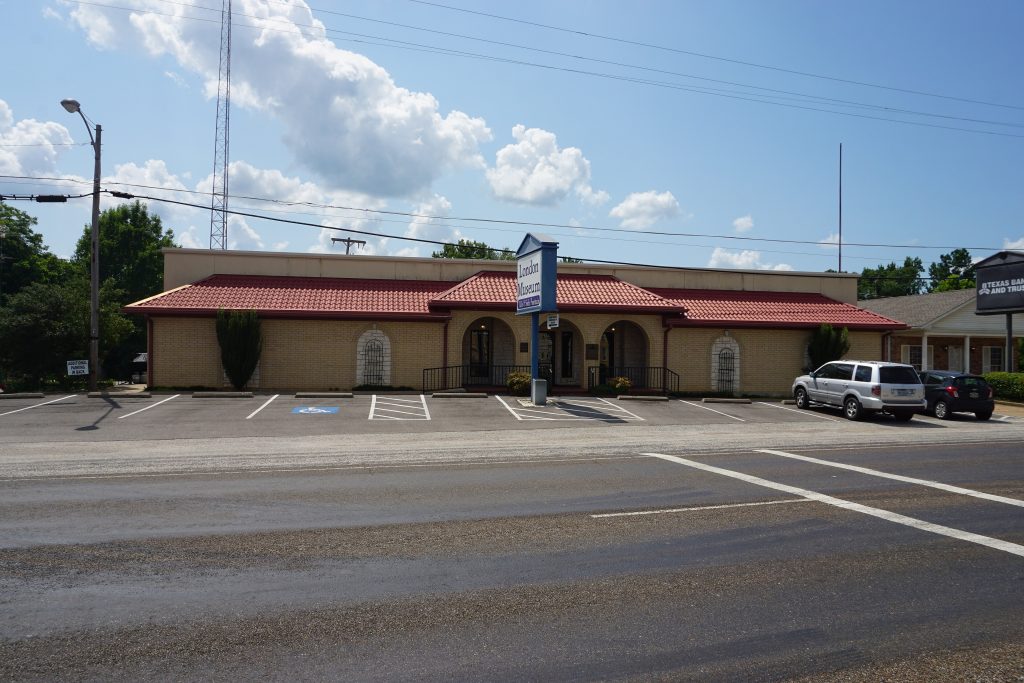
Photo: Michael Barera, CC BY-SA 4.0 <https://creativecommons.org/licenses/by-sa/4.0>, via Wikimedia Commons
The memorial and museum give New London something it lacked for decades: a place where the story can be recounted openly. Nearly 90 years have passed, but the disaster has shaped and will continue to shape American life for decades to come. Anyone who has smelled gas near a stove, furnace or water heater has received the warning that never reached the London School.
Enjoyed this piece? For more overlooked chapters of Texas history, read our stories on the Battle of Medina, the ghost towns near Katy and the legends surrounding Texas’ lost treasures and haunted roads. Each explores a part of the state’s past that is rarely covered in classrooms but remains relevant in the places, culture and stories Texans have inherited.