
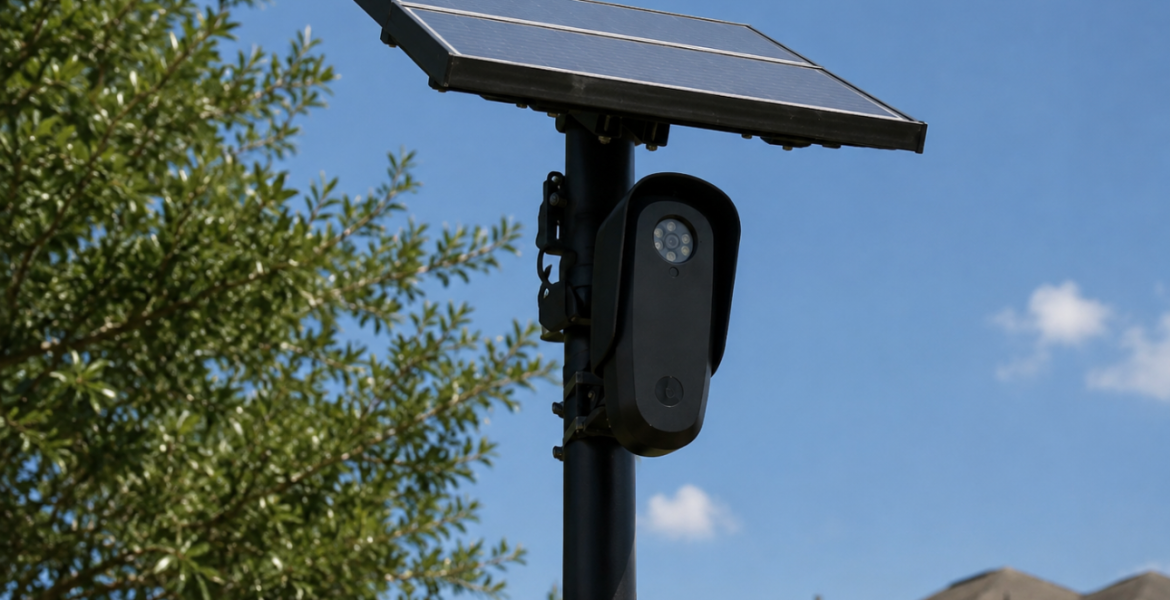
Six years ago, Katy installed 22 Flock automatic license plate readers with a simple promise: help police solve crimes faster by locating stolen vehicles and giving investigators new leads. Today, the city says that network has grown to 40 cameras. But as the system has quietly expanded, many basic questions remain unanswered. How much have taxpayers spent? Who can search the data? How often do these cameras actually help solve crimes? And what safeguards are in place to prevent misuse? This investigation examines what Katy has disclosed, what it hasn’t, and whether residents have enough information to judge whether the city’s growing Flock camera network is delivering the results it promised.
Katy has 40 automatic license plate readers positioned around the city, according to the Katy Police Department’s current description of its Flock Safety network. Six years ago, the city had 22.
The cameras were installed under the premise that they would give police more eyes on the road, locate stolen vehicles and provide detectives with leads faster than officers could gather them alone. The network has nearly doubled since then. Katy has not published a comparable accounting of its growth, including the total cost, who can search the system, how often it produces useful leads and what safeguards prevent personal use.
Those questions have taken on new urgency across Texas. On July 28, the Waller County Republican Party passed a resolution calling for strict limits on automatic license plate readers, warrantless drone tracking and cellphone-surveillance equipment. Party leaders described the measure as a way to preserve useful police technology while protecting Fourth Amendment rights.

Automatic license plate readers, commonly called ALPRs, photograph passing vehicles and convert license plate numbers into searchable data. Police can compare the plates with lists connected to stolen vehicles, warrants, missing persons and criminal investigations. Flock cameras also record details such as a vehicle’s color, make, model and distinguishing features.
Their usefulness extends beyond the city that purchased them. A recent examination of Flock’s growth in Texas found that departments participating in the company’s national lookup program can search records from other participating agencies across the country. Some searches run through more than 7,000 camera networks. The system can identify vehicles by characteristics such as bumper stickers or bike racks, even when a complete plate number is unavailable.
That reach places powerful investigative access in local police departments, where officers can search a vehicle’s movements from a computer. A patrol officer, detective or dispatcher may have access, depending on the policies and permissions established by the department.
Katy entered the Flock network in January 2020, when the City Council authorized 22 license plate readers around the Katy Mills business district and neighborhoods with high numbers of service calls. Then-Police Chief J. Noe Diaz presented the cameras as the equivalent of officers stationed around the clock.
A prototype on Katy Mills Drive had already counted 15,906 vehicles during one weekend. Police also said a camera installed south of Interstate 10 helped with a “significant crime” during its first week, although contemporaneous reports did not identify the case or its outcome.
The original agreement was reported as a two-year, $46,000 contract. Council discussion indicated that the department planned to cover the initial cost by giving up one vacant, budgeted police officer position. The cameras were presented as a force multiplier that could perform continuous work without the salary and recurring expenses of additional officers.

Diaz also described a broader capability. “Eventually we will have a perimeter where anyone who comes from out of the community, if you don’t live here, we will know you don’t live here,” he said during the 2020 council discussion.
At the time, police said captured information would be stored in the cloud for 30 days and would not be sold to third parties. The department also said it had adopted a policy governing officers’ use of the system. Katy has not made a current Flock policy, audit history or agency-sharing list readily available on the police department’s public website.
The network continued to grow. Ten more readers were authorized in January 2022, which would have brought the total to 32. The city now lists 40. Readily available public descriptions do not explain when the other eight were added, how they were funded or whether every camera is owned by the city.
Katy Christian Magazine asked the Katy Police Department about the network’s ownership, current cost, data-retention rules, access permissions, outside-agency sharing, audit practices and measurable results. The department did not respond before publication.
The absence of those figures makes it difficult to judge the program’s performance. A useful public accounting would include the number of plates scanned, alerts generated, searches conducted, traffic stops initiated, stolen vehicles recovered, missing people located, arrests made and criminal cases resolved. It should distinguish between a camera generating a lead, assisting an investigation, contributing to an arrest and helping produce a conviction.
Law enforcement agencies have documented legitimate successes with Flock. Texas police departments have credited the technology with locating stolen vehicles, finding suspects and assisting in missing-person cases. In July, the Texas Department of Public Safety cited a Flock alert that helped authorities locate four suspects following a San Antonio home invasion. Quick access to vehicle information can save hours when officers are searching for an armed suspect or an endangered child.
The same access can expose a person’s movements when used outside an investigation. Three Houston-area law enforcement agencies have recently examined allegations of officers misusing Flock data, including one case in Fort Bend County, where a portion of Katy and many surrounding communities are located.
Internal affairs records obtained by ABC13 showed that a Fort Bend County Sheriff’s Office lieutenant searched one license plate 148 times and another 41 times between January 2022 and December 2025. The lieutenant admitted that the searches were unrelated to official law enforcement work.

The investigation began after a resident accused the lieutenant of stalking and expressed fear for the resident’s family. The lieutenant said the vehicles had been “lurking” near the lieutenant’s home and maintained that the information was neither used nor shared. Internal affairs determined that department rules had been violated and imposed a two-day suspension. The lieutenant was not criminally charged.
In Pasadena, Sgt. Michael Palitz resigned during an internal investigation into allegations that he used the department’s license plate reader system to monitor and stalk a female officer. A Houston Chronicle account of the Pasadena investigation reported that the inquiry continued after his departure. Palitz was accused, not convicted, and publicly available records do not show that he was arrested or charged.
A Baytown police officer also resigned after the department opened separate internal affairs and criminal investigations into alleged misuse of Flock data. According to the department’s update reported by ABC13, both investigations remained active after the resignation. The results of the criminal inquiry are expected to be provided to the Harris County District Attorney’s Office. Baytown officials have not identified the former officer or described the conduct under investigation.
The three cases produced markedly different responses: a two-day suspension in Fort Bend County, an internal investigation followed by a resignation in Pasadena, and continuing internal and criminal inquiries in Baytown. Together, they show why access rules, routine audits and meaningful consequences matter as local departments expand their camera networks.
An updated Institute for Justice review lists 30 incidents involving officers accused of using automatic license plate reader systems to monitor romantic partners, relatives, colleagues or other people for personal reasons. Most were uncovered after someone reported suspicious conduct rather than through a department’s internal controls.
Katy Christian Magazine found no publicly reported Flock misuse investigation involving the Katy Police Department. Without a published access audit or departmental response, residents cannot independently assess how often Katy officers search the system, who reviews those searches or whether improper activity has ever been identified.
An audit log can reveal an improper search after it happens, provided the department reviews that log and acts on what it finds. Written policies determine who may conduct searches, what justification must be entered and whether supervisors regularly examine user activity. Public reporting allows residents to see whether those safeguards exist and how they work.
The Waller County Republican Party’s resolution proposes a statewide framework. It calls for the immediate deletion of vehicle scans that do not match a verified law enforcement hot list, search warrants before officers examine retained records, published agency policies, regular access audits and mandatory public hearings before local governments install surveillance systems.
The resolution would also require monthly reports listing total scans, alerts, stops and
convictions. It seeks to prevent law enforcement agencies from bypassing public oversight through camera feeds supplied by private businesses, commercial developments or homeowners associations. Additional provisions address warrantless aerial tracking and cellphone interception equipment.
“The Waller County Republican Party stands firmly with our law enforcement officers,” Chairwoman Cyndi Lawrence said when the party announced the privacy resolution. She said officers should have modern tools to protect the community, with those tools deployed “in harmony with our foundational principles.”
The resolution has no force of law. It asks the Texas Legislature to establish the proposed rules statewide and urges local governments to adopt them voluntarily in the meantime. Copies were sent to state Republican leaders, lawmakers and Gov. Greg Abbott.
The constitutional debate is developing alongside the technology. On June 29, the U.S. Supreme Court ruled in Chatrie v. United States that police conducted a Fourth Amendment search when they obtained a suspect’s Google Location History. The court found that people retain a reasonable expectation of privacy in cellphone location information, even when the records cover a limited period and are held by a third-party technology company.
Chatrie concerned cellphone location data, rather than Flock cameras, and the ruling did not decide the constitutionality of ALPR networks. Its reasoning has nevertheless become part of the growing argument over government access to privately stored digital records capable of reconstructing a person’s movements.
For Christians, conservatives and other residents who value limited government, support for law enforcement can exist alongside a demand for firm boundaries. Public officials are entrusted with both community safety and constitutional liberty. Taxpayers also deserve enough information to determine whether a costly public system is producing measurable results.
Katy’s 40 cameras continue scanning vehicles every day. The city’s public website gives residents one sentence about them: The cameras “help deter and fight crime.” Six years after the original purchase, Katy has not published a complete cost, an ownership breakdown, a list of participating agencies, current retention rules, access audits or detailed performance figures.
Publishing those records would allow Katy residents to judge the system on evidence rather than the promise made in 2020.