

One man was accused of assaulting his girlfriend and threatening his sister with a 10-inch kitchen knife. The other allegedly struck his girlfriend and pointed a firearm at her despite his felony record. Fort Bend County prosecutors rejected the first man’s felony charge and reduced the second man’s case to a fine-only offense. Each later killed a woman—and the second man murdered the same woman he had previously been accused of attacking.
FORT BEND COUNTY, Texas — Just over a year before Anthony Sorel Haywood murdered Coralyn “Shae” Hunt, Fort Bend County prosecutors had received a family-violence case naming Hunt as his victim. A later filing by District Attorney Brian Middleton’s own office says Haywood hit her with his hand or a blunt object and pointed a gun at her, a weapon he illegally possessed despite his felony record.
Middleton’s office directed that the Class A charge against Haywood be refiled as a Class C assault, an offense punishable only by a fine. About 13 months later, he shot Hunt to death inside her home.
It was one of two charging decisions that now confront Middleton as he campaigns for a third term. His office also rejected a first-degree felony referral against Sidney Seneca Newsome Jr. after police said Newsome assaulted his girlfriend and threatened his sister with a kitchen knife. Newsome fatally shot another woman little more than six months later.

The records do not identify Middleton as the individual prosecutor who reviewed either intake. Assistant district attorneys made both decisions inside the office he has led since January 2019. As the elected district attorney, Middleton sets the policies, supervision and priorities under which those prosecutors work.
In a written response to Katy Christian Magazine, Middleton’s office said the available evidence did not support charging Newsome, declined to discuss the Haywood case while his murder conviction is being appealed and denied that a Soros-backed political organization influenced its policies or charging decisions. The office also rejected the broader criticism that it has shown leniency toward violent offenders.

Brian Middleton, the Fort Bend County District Attorney, via Fort Bend County government website.
A Violent Assault on Nov. 20, 2020
Rosenberg police were called to a home on Pine Drive on Nov. 20, 2020, after Newsome’s mother reported that her 19-year-old son had “put his hands on” one of her daughters, leaving a knot on the woman’s head.
The incident report ultimately identified two alleged victims. Its synopsis states that Newsome physically assaulted his girlfriend and threatened his sister’s life with a deadly weapon. Police classified the threat as an aggravated assault involving a knife, and an officer later recorded securing a knife from the living-room couch.
Neither woman wanted to pursue charges, and both declined emergency medical treatment. Police, however, referred a first-degree felony aggravated-assault case involving a family or household member and a deadly weapon to the Fort Bend County District Attorney’s Office.
On Dec. 10, 2020, the Fort Bend County District Attorney’s Office rejected the charge. The intake form offered several possible reasons, including a request by the complaining witness. That box was left blank. A prosecutor instead marked, “Insufficient evidence to prove this case beyond a reasonable doubt, at this time.” The rejection was entered with leave to file the case later.
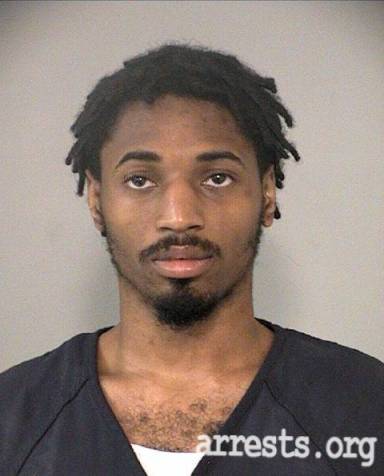
Mugshot: Sidney Seneca Newsome arrest on 06/15/2023 by FB ROSENBERG PD, retrieved via Arrests.org
When asked by Katy Christian Magazine why the case was rejected despite the police account and recovery of the knife, Middleton’s office said the “facts and available evidence did not support criminal charges at that time.”
“Evidence-based prosecution means that we must have sufficient evidence to pursue formal charges,” the office wrote. “The burden of proof to support an arrest is probable cause – a fairly low burden. A criminal conviction requires proof beyond a reasonable doubt – the highest burden of proof. Filing a charge without sufficient evidence to support a conviction is unethical and against the sworn duty of a prosecutor to seek justice.”
Katy Christian Magazine separately asked whether the women’s unwillingness to prosecute determined the decision and whether prosecutors tried to build a case without their cooperation. The office referred back to the same answer. It did not identify the missing evidence or describe what additional investigative steps, if any, were taken before the felony was rejected.
Domestic-violence cases frequently become difficult when frightened, financially dependent or conflicted victims pull away from prosecution. The U.S. Department of Justice’s framework for domestic-violence prosecutors advises offices to build cases from all available evidence and, where that evidence permits, proceed without the victim’s participation. The guidance notes that what appears to be a first offense may simply be the first offense known to authorities.
Just over six months later, Newsome was involved in another act of violence—this one fatal. On June 16, 2021, just 188 days after Fort Bend prosecutors rejected the aggravated-assault case, he shot a woman in the chest and killed her. The records provided to Katy Christian Magazine do not identify the woman or describe her relationship to Newsome.
Newsome later pleaded guilty to manslaughter, meaning he admitted to recklessly causing her death. A judge entered a deadly-weapon finding and sentenced him to 12 years in prison on Dec. 1, 2025.
Middleton’s office ultimately secured that prison sentence, but only after a separate encounter with Newsome had ended in a woman’s death.
Another Brutal Attack on Nov. 2, 2022
The second case began with violence against Hunt on Nov. 2, 2022.
Fort Bend County records show that Haywood was presented to the DA’s office on a Class A charge of assault causing bodily injury to a family member. A Class A misdemeanor can bring as much as one year in county jail and a $4,000 fine under Texas law.
An assistant district attorney reviewed the case on Jan. 30, 2023. The disposition form was marked “case rejected/dismissed” and carried a handwritten instruction: “Re-file as a Class C Assault.” A Class C misdemeanor carries no jail sentence and is punishable by a fine of no more than $500.
The form gives no further explanation for reducing a bodily-injury family-violence allegation to a fine-only offense. It does not identify the complainant.
A separate court filing from Haywood’s murder prosecution supplies the name and considerably more detail. On Jan. 27, 2026, Fort Bend County Assistant District Attorney Sunni Mitchell filed a notice of evidence the state intended to introduce at Haywood’s trial. The filing says the victim in the 2022 assault was Coralyn Hunt.
Middleton’s prosecutors alleged that Haywood struck Hunt with his hand or a blunt object. They also alleged that he pointed a firearm at Hunt, threatened her with imminent bodily injury and used or exhibited the gun during the assault.
Haywood’s felony record gave the firearm allegation independent legal significance. The state’s filing identifies an Aug. 5, 2015, conviction for aggravated sexual assault of a child in Harris County’s 209th District Court. Texas law classifies aggravated sexual assault as a first-degree felony, one of the state’s most serious categories of crime. During the punishment phase of Haywood’s murder trial, prosecutors presented evidence that he had previously served prison sentences for robbery and aggravated sexual assault of a child, according to FOX 26.
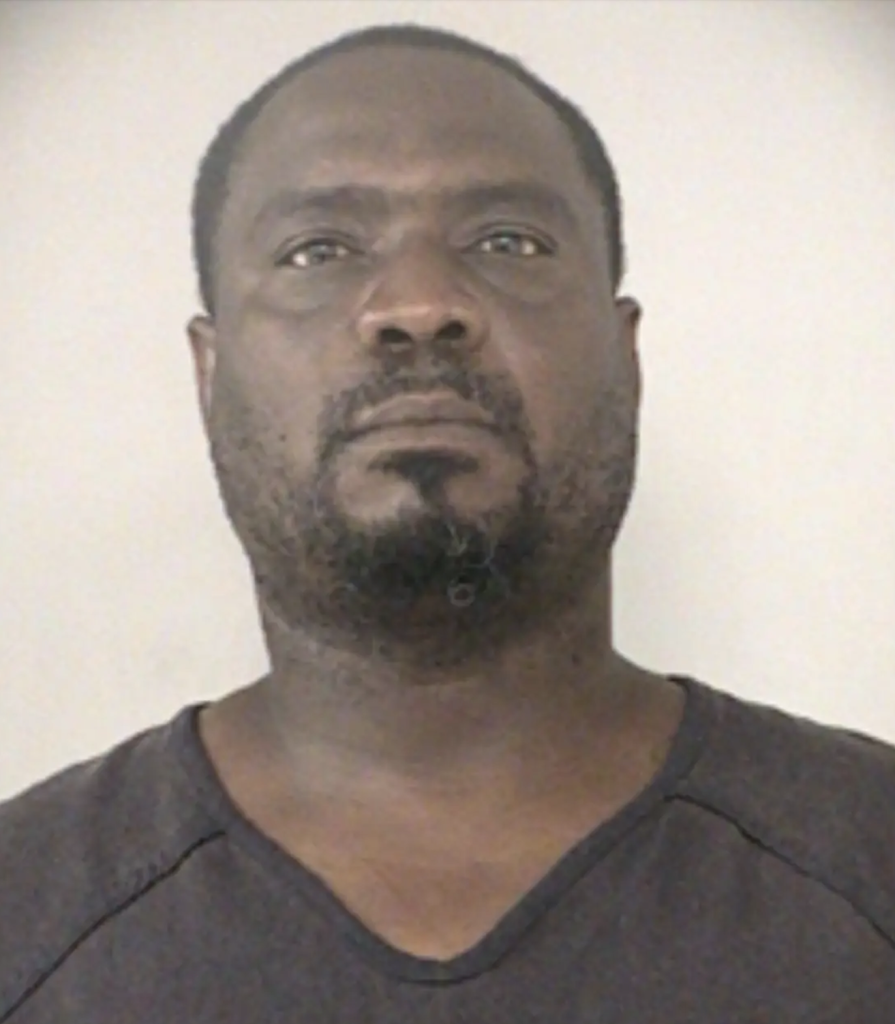
Mugshot: Anthony Sorel Haywood (Fort Bend County Sheriff’s Office)
Because fewer than five years had passed since Haywood’s release from parole supervision for the child-sexual-assault conviction, Texas law prohibited him from possessing a firearm. At the time of the alleged 2022 offense, unlawful possession by a felon under those circumstances was a third-degree felony punishable by two to 10 years in prison. The alleged gun possession represented a potential felony of its own, separate from the accusation that Haywood used the firearm to threaten Hunt.
It was also not Haywood’s first criminal case involving gunfire. In 2013, a Harris County jury convicted him of deadly conduct after a dispute over the price of marijuana. A Texas appellate opinion states that Haywood followed a man out of his apartment and fired toward the man’s departing vehicle, which also contained the man’s girlfriend and her 6-year-old son. The bullet struck the vehicle, although nobody inside was hit. Haywood received a six-year prison sentence.
While preparing to try Haywood for Hunt’s murder, Assistant District Attorney Sunni Mitchell filed a notice on Jan. 27, 2026, identifying evidence the state intended to present to the jury. The filing revisited Haywood’s Nov. 2, 2022, encounter with Hunt—the same incident that had reached the district attorney’s intake division three years earlier.
The 2026 filing described three alleged acts from that encounter. Prosecutors said Haywood struck Hunt with his hand or a blunt object, pointed a firearm at her while threatening her with bodily injury and possessed the gun before the fifth anniversary of his release from parole supervision for a felony conviction. The state said all three allegations arose from the same transaction. Prosecutors also planned to present evidence of other domestic-violence incidents between Haywood and Hunt.
The filing did not charge Haywood with new crimes arising from the 2022 incident. It served notice that prosecutors intended to use the earlier conduct as evidence during his murder trial. Still, it shows that by 2026, Middleton’s office was prepared to describe the encounter as involving physical violence, a threat with a firearm and unlawful gun possession by a convicted felon.
In contrast, the 2023 intake form presents a much narrower account. It lists only a Class A family-violence charge for causing bodily injury and directs that the case be reduced to a Class C assault, which carries a fine but no jail sentence.
Katy Christian Magazine asked why the office reduced the Class A family-violence case despite Haywood’s felony record, whether the Class C charge was ever filed and whether Hunt was the complainant.
The office declined to answer those questions, citing Haywood’s appeal.
“The murder conviction and life sentence for Anthony Haywood this office secured are currently being appealed,” the response said. “Because the disposition is not final, we cannot discuss details of the case to protect the integrity of the prosecution and any subsequent proceedings.”
The response leaves unresolved three central questions about the earlier case: whether the Class C charge was filed, what prosecutors knew about the firearm allegations in 2023 and why a case involving bodily injury to Hunt was reduced to a fine-only offense.
Haywood’s record was extensive. The state’s 2026 notice listed eight prior convictions dating to 2003. They included assault causing bodily injury in 2008, robbery in 2010, deadly conduct in 2013 and aggravated sexual assault of a child in 2015, along with criminal-mischief and marijuana convictions.
In the deadly-conduct case, an appellate opinion says Haywood fired at a departing vehicle occupied by three people, including a 6-year-old child. He received a six-year prison sentence in that case.
The same filing also listed a July 2023 criminal-trespass allegation and said prosecutors intended to introduce evidence of prior domestic violence between Haywood and Hunt.
On Feb. 19, 2024, Haywood shot and killed Hunt, his 38-year-old on-and-off girlfriend, inside her Fort Bend County home. According to FOX 26 Houston’s account of the trial, Hunt had been planning to leave the relationship and move. Her 17-year-old foster daughter found her body. Hunt’s 7-year-old son was asleep in the home when his mother was killed.
A Fort Bend County jury convicted Haywood of murder in May 2026 and sentenced him to life in prison. The judgment includes a deadly-weapon finding and finds the state’s enhancement allegations true. The Fort Bend County Sheriff’s Office had arrested him on the murder charge in March 2024.
Middleton’s office eventually secured a life sentence, but only after Hunt had been killed.
The Decisions vs. the Campaign Claims
Middleton is asking voters for a third term in the Nov. 3 general election. His campaign website calls him “tough on violent crime” and says his administration has “expanded protections for victims of family violence.” It presents his eight years in office as a record of promises made and results delivered.
His official county page says the DA’s office will “relentlessly pursue justice,” use evidence-based prosecution and protect public safety through accountability and fairness.
Those promises make the Newsome and Haywood records particularly important. These were not disputes over petty, nonviolent offenses. Both files concerned alleged violence against women. One contained a reported head injury, a death threat and a 10-inch knife. In the other, the woman named in the reduced case was later murdered by the same man—and Middleton’s prosecutors eventually alleged that he had pointed a gun at her during the earlier attack.
When law enforcement presents a case, prosecutors must decide whether the available evidence supports criminal charges and whether additional investigation is needed. Police had already brought Middleton’s office reports of violence involving both Newsome and Haywood before either man killed.
Further, the Justice Department cautions that meritorious domestic-violence allegations are too often declined and urges prosecutors to understand trauma, investigate beyond a victim’s willingness to participate and use admissible evidence creatively while respecting defendants’ rights. What work did Middleton’s office do before deciding that Newsome’s felony could not be proved and Haywood’s family-violence allegation deserved only a Class C charge?
Asked whether either decision was reviewed after the subsequent killings, Middleton’s office said the cases had been evaluated using the evidence available at the time. It also described a broader effort to improve coordination with police.
“Since that time, we have initiated a process to review investigations with law enforcement and discuss evidentiary considerations to produce better cases,” the office wrote. “This did not happen as a result of the specific cases you reference, but generally speaking, as a best practice Mr. Middleton encourages.”
The office called collaboration with law enforcement “a valuable and routine occurrence” directed toward public safety. Its response did not identify any policy or personnel changes resulting from a review of the Newsome or Haywood decisions.
Middleton points to broader statistics favorable to his administration. A county crime report commissioned by his office was prepared by independent researchers and portrays Fort Bend as one of the safer large counties in the region. His campaign cites new partnerships with law enforcement and programs directed at violent offenders and family violence.
A Larger Record of Controversy
Middleton’s handling of these cases is up for consideration in an election already shaped by disputes over prosecutorial judgment and accountability.
In September, Katy Christian Magazine reported that Fort Bend County paid journalist Justin Pulliam $250,000 after a federal judge found constitutional violations connected to his arrest. Middleton’s office continued prosecuting Pulliam after receiving video that contradicted important parts of the officers’ account.
The magazine has also examined the DA’s office in a dispute over 27 firearms seized from a Fort Bend resident and covered County Judge KP George’s allegations concerning Middleton and Democratic county politics.
Middleton’s 2018 rise also drew support from the Texas Justice and Public Safety PAC, a political committee funded by billionaire George Soros as part of a national effort to elect progressive prosecutors. Katy Christian Magazine previously reported that the PAC spent approximately $190,000 supporting Middleton’s campaign. That was outside political spending on his behalf, rather than a direct personal contribution from Soros to Middleton.
Asked whether the organization or its criminal-justice agenda influenced charging, diversion or prosecution policies, Middleton’s office answered, “No.”
“Our prosecutors have no contact with anyone from that organization, and they do not influence decisions on cases in our county,” the office wrote. “All of our decisions are based on the available evidence at the time, and each case is evaluated individually on its own merits and not pursuant to a blanket policy.”
Middleton’s denial addresses whether the PAC or its donors directly influenced individual cases. His critics raise a different issue: the prosecutorial philosophy promoted by the organization that spent money supporting his election.
That philosophy is commonly associated with the progressive-prosecutor movement, whose candidates have promised to reduce incarceration, expand diversion programs, change cash-bail practices and use prosecutorial discretion to reject or reduce certain charges.
Supporters describe those policies as criminal-justice reform. Critics contend that they can become dangerous when leniency is extended to repeat or violent offenders. Katy Christian Magazine has covered the same debate in Harris County, including concerns about progressive criminal-justice policies and former-Second Baptist Church Pastor Ed Young’s criticism of policies he linked to repeat violent crime.
These two cases show the stakes of charging decisions. Hunt had already been named as Haywood’s alleged victim before he murdered her. Middleton’s office later secured a 12-year sentence for Newsome and a life sentence for Haywood, but each prosecution followed a woman’s death.
The office rejected the suggestion that the cases reveal a pattern of leniency.
“This is not true,” the response said. “We consistently prosecute and win substantial prison sentences for violent offenders.”
Middleton’s Republican challenger, Shawn McDonald, said the two cases raise broader concerns about how the DA’s office handles allegations of serious violence.
“My heart goes out to the families of these two young women,” McDonald said in a statement to Katy Christian Magazine. “In both cases, the District Attorney’s Office had previously rejected criminal charges involving a deadly weapon against the individuals later convicted of taking their lives. These decisions raise serious questions about how violent offenders are evaluated and how victims are protected.”
McDonald also cited figures he said showed that 86 of 138 strangulation cases presented to the office in 2023—nearly two-thirds—were rejected at intake. He said a comparison with five similarly sized Texas counties placed Fort Bend first in dismissals and last in convictions.
“Every rejection involving violence deserves careful scrutiny,” McDonald said. “I’ve served as a prosecutor, a judge and a private attorney. I understand the importance of both fairness and accountability. Fort Bend County deserves a district attorney who takes every allegation of violent crime seriously, because lives may depend on it.”
McDonald is campaigning on stronger prosecution of violent offenders, support for law enforcement and better communication with crime victims. Fort Bend voters will choose between the candidates on Nov. 3.
Anyone experiencing domestic violence can contact the National Domestic Violence Hotline at 800-799-SAFE (7233), text START to 88788 or visit thehotline.org. Fort Bend-area readers can also contact the Fort Bend Women’s Center’s 24-hour crisis hotline at 281-342-HELP (4357). Katy Christian Magazine has previously published guidance on recognizing control, manipulation and emotional abuse and covered the Fort Bend Women’s Center’s work for survivors.