Two days after defeating Gov. Greg Abbott, Gov.-elect Gina Hinojosa said she had asked the Texas Parks and Wildlife Department to hold off on a proposed sale of state land near Boca Chica to Elon Musk’s SpaceX during the transition. She had campaigned on reviewing state incentives for Musk’s companies to see whether they were meeting their job commitments.
In Fort Bend County, Tesla is seeking a school property tax break worth an estimated $115.2 million for its proposed $10.1 billion solar factory south of Rosenberg. If the agreement still needs the governor’s signature when Hinojosa takes office Jan. 19, she would decide whether to sign it.
Fort Bend County has offered Tesla up to 35 years of tax breaks on eligible equipment. Tesla projects 9,712 permanent jobs at the factory. Starting in the fourth full calendar year after production begins, an average of about 8,741 workers would satisfy the county’s annual hiring test. The state program’s minimum for the project is 75 jobs.
Fort Bend commissioners voted 4-0 on Oct. 22 to approve four incentive agreements. Interim County Judge Daniel Wong abstained, citing his business relationship with Tesla, ABC13 reported.

The county’s meeting packet contains blank signature pages and placeholder exhibits, including the form Tesla would use to report compliance.
“It’s a very competitive project. That’s why the county needed to step up to stay in the running,” county economic development director Carlos Guzman told ABC13 after the vote. Tesla’s application said the company was also considering a site outside Texas.
At the proposed Fort Bend site near FM 762 and FM 1994, Nov. 8 aerial footage showed cleared and graded land, according to Texas Construction Hub.
On Nov. 9, Tesla CEO Elon Musk shared a post on X that said Tesla had begun building its Fort Bend solar factory. Musk added only the words “Project Crystal Sun.”
Project Crystal Sun
— Elon Musk (@elonmusk) November 9, 2026
The same name appears in a Sept. 15 permit application from Amrize South Central, which asked the state for permission to set up three temporary plants to mix concrete for the project. Whether crews have finished clearing and grading the site and have begun constructing the factory itself remains unclear.
Hinojosa’s challenge to Musk’s Texas deals
“Texas is not for sale,” Hinojosa said in an Oct. 17 campaign statement criticizing Abbott over a proposed sale of public land near SpaceX’s Starbase launch site in Cameron County. The proposal was absent from the published agenda for the Nov. 5 meeting when she made her request. SpaceX says its proposal covers about 1,200 acres around its launch site and excludes the beach itself.
In September, Hinojosa asked Abbott’s office for its correspondence with Musk and his companies, including records on tax incentives and grants. She sued Abbott in October for access to the unredacted records. A district judge granted her access, and an appeals court put the order on hold.
On Nov. 5, Hinojosa told CNN Texas could work with Musk’s companies “on our terms.” In a Nov. 7 post on X, Musk credited Tesla’s growth in Texas and SpaceX’s success to operating without what he called an “oppressive and extractive state government.”
Asked whether Musk had reached out since the election, Hinojosa told the Houston Chronicle on Nov. 13, “We have heard from some representatives of Elon Musk’s business.”
Asked about SpaceX’s proposed data center in South Texas, Hinojosa said she would pause state permits for data centers until lawmakers pass protections for water supplies and the power grid. “We should not be subsidizing the data centers,” she said.
In a separate Nov. 6 announcement, Musk said Tesla plans to wind down Cybertruck production near Austin around mid-2027 to make more Cybercab robotaxis. He said the next day Tesla would add a shift to fill as many truck orders as possible before dismantling the line. Tesla had already begun offering Cybercab rides in Austin in September. How the change will affect workers on the Cybertruck line remains unclear.
As a state representative, Hinojosa voted against the final version of House Bill 5 in 2023. The bill created the state program Tesla is using to seek its Fort Bend school tax break.
What Tesla would have to deliver to the community
Fort Bend would waive county property taxes on eligible equipment for 10 years, then refund 90% of those taxes for another 20 years. If Tesla averages at least 12,000 qualifying workers in each of two consecutive years during the initial abatement, it could earn five years of full rebates before the 20 years of 90% rebates, under the county incentive agreement.
Tesla would have to start construction by June 30, 2027, and begin commercial production by Dec. 31, 2030, subject to extensions. It would have to make $10 billion in qualifying investments by Dec. 31, 2031, or two years after production begins, whichever comes later, under the posted abatement agreement.
The hiring schedule begins in the first full calendar year after production starts. The targets rise from 2,500 workers in that first year to 5,000 in the second and 7,500 in the third. The annual abatement test is 90% of those targets, or 2,250, 4,500 and 6,750 workers, respectively. Fort Bend would average four headcounts taken during the year.
Qualifying permanent, full-time employees of contractors count alongside Tesla employees. The $55 hourly compensation requirement is a workforce average that includes employer-paid benefits and payroll taxes, according to the county agreement.
Tesla projects commercial production in early 2029. If production and the county tax break both start that year, Tesla’s first annual compliance statement would be due Sept. 1, 2031. That would put the first report in the third tax year of the abatement under the posted county terms.
When Tesla could lose its tax breaks or have to pay Fort Bend back
A hiring or compensation shortfall can cost Tesla that year’s tax benefit. Repeated misses can give Fort Bend grounds to end an agreement after notice and a chance to correct the shortfall. If the county ends the later rebate agreement over two consecutive hiring or compensation misses, Tesla keeps grants from years before the second miss.
Fort Bend could recover all taxes it had waived under the initial equipment abatement if the county ends that agreement for an uncured material default, such as a qualifying failure to build the factory or make the required investment. That agreement’s two-year hiring clause leaves open how Fort Bend would treat Tesla if the company repeatedly clears the 90% test while falling short of the full targets.
Fort Bend County would continue taxing Tesla’s land and buildings. The Drainage District’s posted agreement would waive its own taxes on qualifying equipment for 10 years. A separate agreement would reduce taxes on qualifying inventory if the site receives foreign-trade-zone status and is activated.
The county would also calculate an annual payment by applying credits against $2 million. Those credits include a quarter of the county real property taxes it receives from Tesla and certain other payments. Tesla would owe the difference if the credits fall short. The additional payment could be zero.
Tesla’s application estimates the factory would generate about $276.5 million in county general property taxes through 2063 without incentives. That estimate predates the October package. When commissioners approved the incentives, county officials gave ABC13 no total dollar estimate for the county tax breaks.
Katy Christian Magazine has reported on Fort Bend County spending and taxpayer oversight, property tax exemptions granted through the Rosenberg Housing Authority and how appraisals can raise Fort Bend tax bills even when the rate holds steady.
Where does the school tax deal stand today?
Lamar CISD trustees voted 7-0 on Sept. 15 to proceed with a school tax agreement under the Texas Jobs, Energy, Technology and Innovation Act. A final deal requires signatures from Tesla, Lamar CISD and the governor.
The state proposal would limit the taxable value of qualifying property to half its value for the district’s operating levy for 10 years. School debt-service taxes would still apply in full, and state aid generally offsets changes in local operating tax revenue, Lamar CISD says. In a KCM interview, state Rep. Mano DeAyala discussed having Texas cover more of the cost of public education to lower local property taxes.
Tesla would have to meet the state’s jobs requirement and make at least $200 million in qualifying investments by the end of the first incentive tax year. The comptroller also lists a minimum average annual wage of $133,820 and an $11.5 million proposed performance bond in its recommendation to the governor.
The governor’s office listed Tesla’s proposed school tax agreement as “approved and negotiating” as of Oct. 31. As of Nov. 13, Katy Christian Magazine could not confirm from public records whether all three parties had signed it. Hinojosa’s position on the Fort Bend agreement remains unclear.
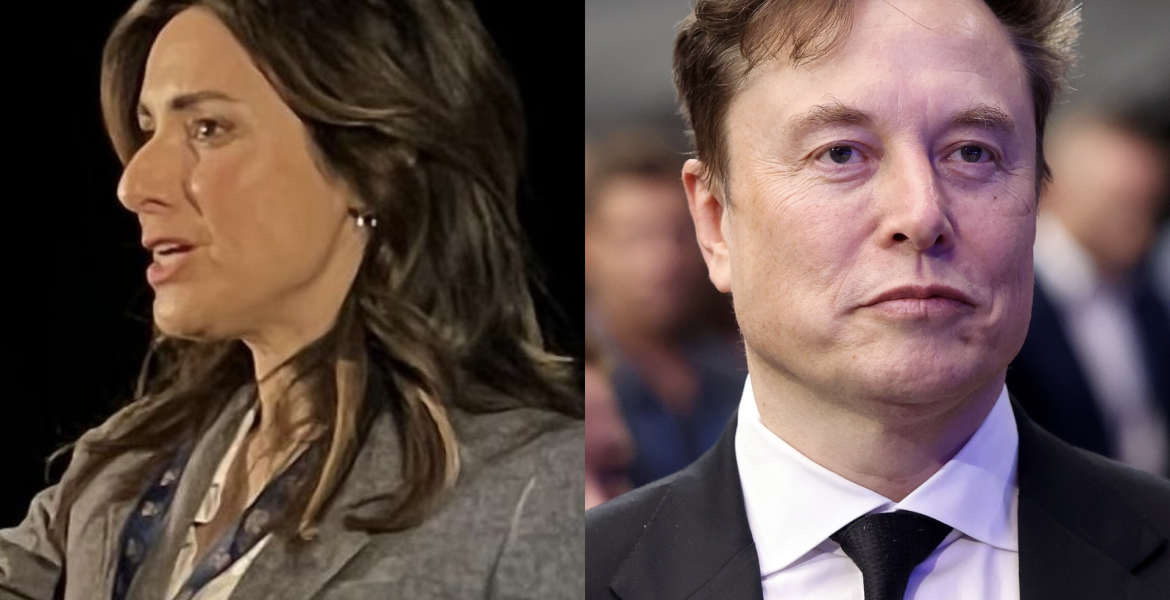
Feature photo: Texas Gov.-elect Gina Hinojosa, left, has pledged to review state incentives for Elon Musk’s companies while pushing back on certain components of the deal. Musk’s Tesla is seeking a school property tax break for its proposed $10.1 billion solar factory in Fort Bend County.