
Tuesday was a catastrophe for Texas Republicans.
Gina Hinojosa defeated Greg Abbott for governor. Vikki Goodwin and Nathan Johnson won the lieutenant governor’s and attorney general’s offices, and James Talarico defeated Ken Paxton for the U.S. Senate. Several candidates endorsed in KCM’s 2026 general-election voter guides lost. Calling it a blue tsunami hardly overstates the damage.
Republicans cannot expect families struggling to pay for housing, groceries and their children’s education to keep voting for them out of party loyalty. They need to explain how their policies will reduce those costs and follow through once elected.
Socialists promise dystopian relief through government subsidies, price controls and government-owned businesses. However, voters should ask what those programs will soon actually cost taxpayers and how much power officials would gain to set prices, direct spending and compete against private businesses with public money.

The Democratic Party’s socialist wing is gaining offices from which it can put those ideas into practice. New York Mayor Zohran Mamdani now has company in Washington’s mayor-elect, Janeese Lewis George. At least five DSA-backed congressional candidates won Tuesday: Claire Valdez and Darializa Avila Chevalier in New York, Melat Kiros in Colorado, Donavan McKinney in Michigan and Chris Rabb in Pennsylvania.
The Democratic Socialists of America (DSA) states its ambition plainly. After describing capitalism as exploitation, it says, “We must replace it with democratic socialism.” Its agenda calls for collective ownership of major economic sectors, including energy and transportation. The movement is seeking authority to carry out a fundamental change in who controls the economy.
Our January column, “Marxism Has a Zip Code,” warned about Mamdani’s housing agenda and its implications for private ownership. His grocery proposal now puts a dollar figure on another expansion of city government.
The mayor’s office has allocated $70 million in capital funding for five municipal grocery stores, with private operators handling daily operations. The city promises a 30% discount on a specified basket of goods. Its July announcement said the first store would open by the end of 2027.
Mamdani’s plan would make taxpayers help finance competitors to private grocers. Those businesses would still have to pay taxes and comply with city regulations while their government helped fund a rival. These subsidies can make a shelf price look cheaper by shifting part of the bill to someone else, or back to you, the taxpayer.
This blow will be devastating to private grocers; after repeatedly losing money, they will be forced to shut their doors. In contrast, their city-sponsored competitors can simply seek another appropriation. This system is places small business owners in jeopardy and will be much more costly to the consumer than they’re being led to believe.
Venezuelans have learned firsthand how much is at stake when independent institutions are incapable of saying no to the government.
Venezuela Had Election Receipts
Hugo Chávez won the presidency in 1998. His governing coalition later went after the courts that could restrain him.
In 2004, that coalition expanded the Supreme Court from 20 justices to 32. It filled the additional seats with allies. The law also weakened protections against removing justices. Chávez’s coalition used its legislative power to make the judiciary more dependent on the politicians it was supposed to restrain.
Venezuela continued holding elections, including a presidential vote on July 28, 2024.
Its voting system produced paper records. Poll watchers could obtain official polling-station tally sheets, known as actas. According to the Carter Center’s account, opposition watchers collected returns from 80% of precincts. Those returns showed Edmundo González Urrutia winning 67% of the vote.
The electoral council proclaimed Nicolás Maduro the winner without publishing the precinct results needed to substantiate that declaration. The Carter Center rejected the election’s democratic credibility.
The tally sheets gave Venezuelans documentary proof of the opposition’s victory. Maduro’s socialist regime kept power by refusing to honor them. The public had voted against him, and the officials controlling the state refused to obey.
Maduro’s rule ended with a U.S. military operation on Jan. 3, 2026, which captured him and brought him to the United States. It did not end with his acceptance of the 2024 vote.
KCM subsequently examined what his removal could mean for Venezuelan Christians. Almost ten months after his capture, Bloomberg reported another promise of elections from acting President Delcy Rodríguez, without an election date.
Cuba reached communist rule by a different route. Fidel Castro took power through revolution in 1959, overthrowing Batista’s dictatorship. Promises of constitutional government and democratic elections gave way to a communist government that crushed political opposition. Cubans did not elect Castro into office in a competitive presidential election.

Nicaraguans defeated the Sandinistas in 1990, and the government accepted the result. Peaceful transfers are possible when rulers submit to them. Venezuela shows how an elected government can dismantle those conditions while continuing to put ballots in voters’ hands.
Consider the Berlin Wall. The Berlin Wall Foundation documents its purpose: preventing East Germans from escaping to the West. Communist authorities fortified the border because their own citizens wanted to leave. The foundation records at least 140 deaths connected with the Berlin Wall’s border regime between 1961 and 1989.
Americans argue over who should be allowed to enter their country. East Germans risked death trying to get out of theirs. A regime that traps workers behind armed borders has forfeited any claim to speak for their liberation.
Communist Movements Are Exploiting Europe’s Unrest
Houston’s Dr. Johnny Teague recently challenged the promises behind France’s extensive government provision. France’s communists are using that discontent to demand more spending and greater political control over the economy.
The French Communist Party has publicly backed the student mobilization. In an Oct. 14 statement, it called for expanding the student movement and bringing workers into the demonstrations. The party sees an opportunity to turn economic frustration into support for its political program.
France’s Interior Ministry identified radical far-left and ultra-left activists among groups organizing attacks on police, people and property during the Oct. 24 demonstrations. Its provisional national tally listed 1,314 arrests and 53 injured officers. The clashes accompanied three successive weekends of demonstrations on Oct. 17, 24 and 31.
Germany has already experienced serious violence. Hesse’s Interior Ministry reported 54 arrests and more than 100 injured officers in Frankfurt following the recent Gen Z demonstration.
Shopkeepers and police are paying for this politics through damaged property and physical injuries. Officials who reward the attackers with concessions teach violent factions that intimidation works. The next business owner then faces a threat made more credible by the government’s previous surrender.
The danger of socialist state expansion is far more than financial devastation to the individual. Government control over employment and property gives politicians leverage over people’s livelihoods. Under communist one-party rule, captured courts help enforce that dependence, leaving opponents exposed to the authorities they are trying to challenge.
That history should govern how Europe responds to political violence today. People willing to batter police and destroy businesses to force concessions have demonstrated their contempt for the rights of others. Giving them greater state power would place their opponents’ livelihoods—and the institutions needed to protect them—within their reach.
The Powers Texas Must Preserve
Democrats have won broad new power in Texas. Conservatives should use every constitutional check still available to prevent a further concentration of it. Even a Democratic sweep of the statewide judicial races on this ballot would leave Republicans with a 5-4 Supreme Court majority and a 6-3 majority on the Court of Criminal Appeals. Republicans are also expected to retain their Senate majority.
The Senate’s constitutional responsibilities in confirming appointments give its members a chance to examine who will exercise public power. Senators should use that authority aggressively. Nominees should have to defend their records on private property, disclose conflicts of interest and explain how citizens can challenge an agency’s decisions.
Confirmation hearings should also establish how prospective agency leaders will respond to adverse court rulings. A nominee who treats independent review as an obstacle to a political agenda has no business exercising power over Texans.
The upcoming years will be tough. To minimize the impending wounds to democracy, conservatives should force the left to defend its proposals with actual budgets and clear limits on government authority. Socialist officials should have to explain how their plans affect taxpayers and private businesses, including people who rejected those plans at the ballot box.
Christians have an additional obligation to resist making a political leader the final authority over conscience. KCM’s examination of Talarico’s use of Scripture argued that he was twisting Christian teaching to fit a progressive political agenda. Last night’s election victory gives him no theological authority. As Christians, we must keep challenging those arguments.
Venezuelans produced the election receipts, and their socialist rulers stayed anyway. Conservatives must make sure the left never gains the power to make the voters’ verdict irrelevant in Texas.
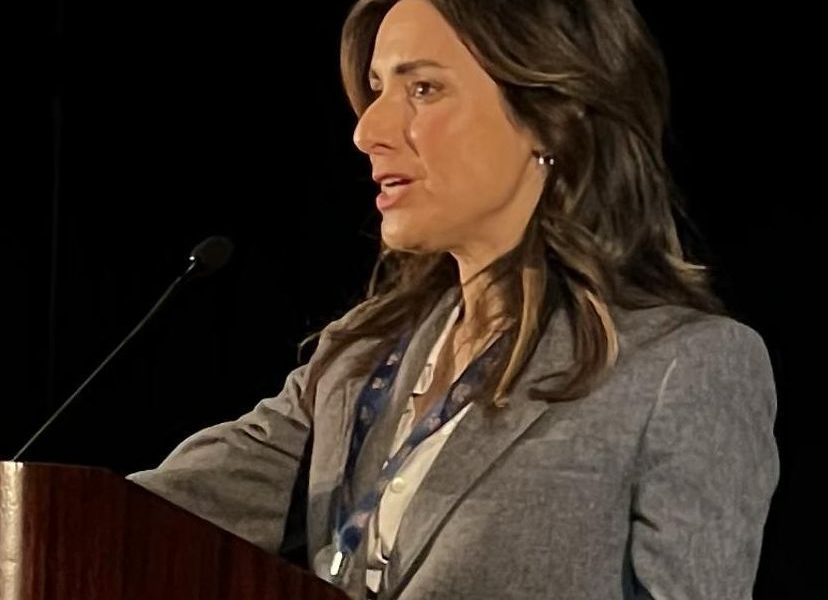
Feature photo: Gina Hinojosa, 2024, RRC1701, CC0, Public Domain, via Wikimedia Commons