

Sara Huff remembers sitting on the floor of her small apartment, holding her newborn son, Hector, surrounded by diapers, groceries and rent money brought by pro-life volunteers.
Not long before, she had seen the pro-life movement as the enemy.
Huff had spent years in feminist and progressive political activism in Brazil. She defended abortion publicly, viewed traditional family structures with suspicion and believed independence meant separating herself from the expectations she had been taught to reject. Then she found herself pregnant, alone and starting over.
“The people I had considered my closest allies had disappeared,” Huff said. “And the movement I had spent years publicly attacking, the pro-life movement, was the one that showed up at my door with diapers, groceries and rent money.”

That moment stayed with her.
“I remember thinking, these were supposed to be my enemies,” she said. “That moment broke something in me, and rebuilt something at the same time. It was the moment I understood that love is not a slogan. It shows up. It stays. And it does not disappear when things get inconvenient.”
Huff’s life began in Brazil, in the state of São Paulo, where she was born and raised. She describes her early years as marked by violence, instability and emotional survival. Crime and drug trafficking were close to home. Her brother, she said, became one of the leaders of trafficking in their city.
“Violence was never something distant or abstract to me,” Huff said. “It was part of daily life inside my own family structure.”
As a young woman, she experienced rejection and abandonment. At one point, she said, she was forced out of her home and left to survive on her own without protection, stability or direction. That period led her into prostitution. At the time, she said, she convinced herself that what she was doing represented independence and empowerment.
“Those ideas were reinforced by the feminist narratives I later embraced very deeply,” she said. “But looking back, much of what I called liberation was actually rooted in pain, survival and emotional fragmentation.”
Politics and feminism offered her language for her suffering. She said progressive activism helped her reinterpret her life through ideological categories, and for years she sincerely believed those ideas. She saw herself as fighting for justice and dignity for women.
“I was not just casually involved with feminism,” Huff said. “I was one of the most prominent feminist voices in Brazil. I held positions of influence, participated directly in progressive political activism, and publicly defended the feminist agenda with conviction and intensity.”
Inside that world, abortion was presented to her as part of female freedom and self-determination. When Huff became pregnant years ago, she said feminist friends persuaded her that abortion was the responsible choice.
“When I became pregnant, [these friends] convinced me that abortion was the right decision, the responsible decision, even the liberating decision,” she recalled.
After the abortion, Huff said, she suffered a severe hemorrhage. Her condition worsened, she developed sepsis and she ended up in the ICU fighting for her life. The experience forced her to face something she had only discussed before in the language of politics.
“In the middle of that nightmare, something became painfully clear to me,” she said. “None of the people who had encouraged me to make that decision were there when I was bleeding, terrified and close to death.”
Until then, abortion had been an argument, a right and a position. In the hospital, that abstract concept became tangible, affecting her own body and inflicting suffering. In her words, she was confronting death directly.
However, leaving feminism did not happen all at once. Huff described how much the movement had merged with her identity. It was her public image, her social circle, her political life and the foundation of how she understood herself.
“Questioning it meant dismantling an entire version of myself,” she said.
Her return to the Christian faith became central to that process. Huff was raised with Christian values. Her father is Evangelical, and her mother is Catholic. Even when she drifted from those beliefs, she said, the foundation remained.

“My father taught me integrity and biblical values,” she said. “He would constantly tell me stories from Scripture and helped shape my moral understanding from a very young age.”
Her mother taught her hard work, discipline, excellence and leadership. Through her return to the Catholic faith, Huff said she began rebuilding her understanding of womanhood, dignity, sexuality, motherhood and freedom.
“I stopped seeing sacrifice, responsibility and family as forms of oppression and started understanding them as part of what gives human life meaning,” she said.
Motherhood changed her again. Huff is the mother of a son with autism. Caring for him confronted her with vulnerability, responsibility and unconditional love in a way politics never had.
“Motherhood shattered many of the abstract narratives I had built my identity around,” she said. “Life suddenly became deeply human, sacrificial and real.”
Raising her son taught her patience and tenderness in ways she said she could never have learned intellectually. It also changed the way she understood love.
“It taught me to see love as something deeply connected to responsibility and service,” Huff said.
By the time Huff came to the United States in 2024, much of her inner transformation had already happened. She was no longer the same woman ideologically, spiritually or emotionally. Immigration came with loneliness and difficulty, but she did not experience it as the destruction of her identity. She saw it as a place to build.
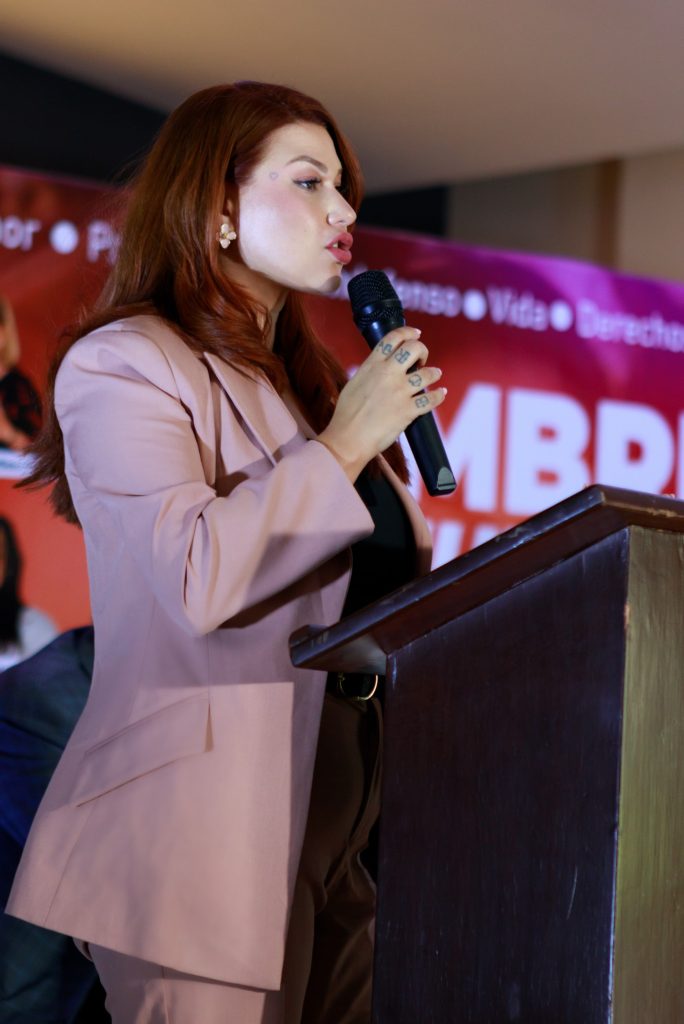
“Immigration was not simply a geographic move for me,” Huff said. “It represented a complete reconstruction of identity and purpose.”

Leaving Brazil meant leaving behind language, routines, extended family, professional identity and the version of herself people knew there. In the United States, Huff had to adapt to a new culture, new social expectations and the ordinary humbling tasks that come with starting over.
“People often underestimate how humbling immigration can be,” Huff said. “Even simple things like communication, bureaucracy, cultural nuances or building new friendships require emotional energy and patience.”
As a mother, the transition carried another layer of responsibility. She described the struggles of immigrant mothers who have to create security, routine and emotional stability for their child while trying to adapt to an entirely new life themselves. There is a constant pressure, she pointed out, to stay strong even during moments of exhaustion, uncertainty and loneliness.
Though immigration is an emotionally difficult process, Huff speaks about America with gratitude, especially its sense of freedom, civic participation, openness to reinvention and community. She also sees many of the same cultural struggles here that she saw in Latin America, especially around family, faith, identity and children.
“I watched these ideas being strategically introduced into Latin American culture through media, education and political activism,” Huff said. “So when I arrived in the United States, I recognized the patterns immediately. The language was different, but the ideology was familiar.”
In the United States, her Catholic faith became part of daily community life. She found a parish that became important to her family. She serves in the church choir, participates in a Catholic book club and prayer groups, and volunteers during Vacation Bible School.
It was also in the United States that Huff said she truly became a wife and began building a home with her husband, her son and her stepchildren. Marriage and blended family life brought her a new season of lessons.
“My husband and stepchildren also shaped me tremendously,” she said. “Building a blended family requires humility, forgiveness, emotional maturity and commitment. It taught me that family is not built only on emotions, but on daily acts of sacrifice, consistency and presence.”
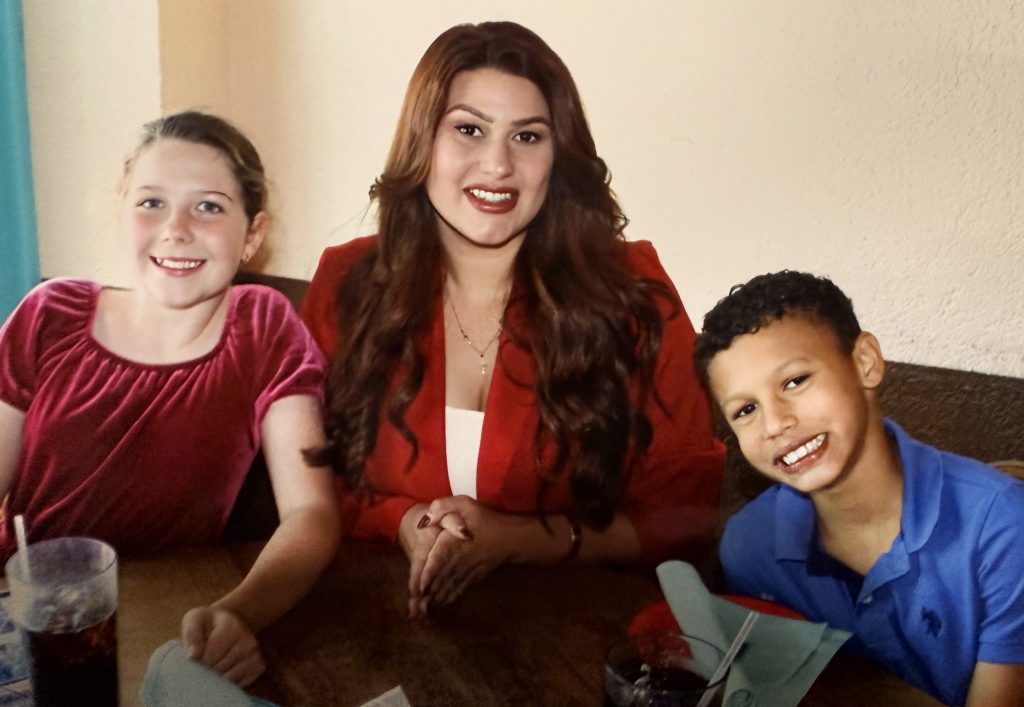
Because she grew up around instability, Huff said she is deeply aware of what a peaceful home can mean for a child. She now works to build a family culture rooted in faith, love, loyalty and stability. The values she wants to pass down are faith, integrity, gratitude, resilience, personal responsibility and love for truth.
“I want my children to grow up understanding that freedom is not simply doing whatever we want,” she said. “Real freedom requires moral responsibility, self-discipline and a sense of purpose.”
Her understanding of freedom is far from the one she once defended publicly. Huff said she now believes many women are offered a version of empowerment that asks them to disconnect from motherhood, family, femininity and even their own emotional nature. She no longer sees that as liberation.
Her pro-life advocacy comes from that history. She speaks about abortion, among other feminist issues, with the nuanced perspective of someone who once defended it, experienced it and then faced what came after.
That is part of why she spent years volunteering with pregnancy resource centers. She said she saw women receive practical help, emotional support and reminders that they were not alone.
“My approach is not to condemn women, but to welcome them, tell them the truth, help them see that there are other options available and be honest about the physical and emotional consequences abortion can carry,” Huff said.
She does not frame women and unborn children as enemies.
“A healthy society should be capable of protecting both,” she said. “Women deserve support, truth, community and real alternatives. Children, including unborn children, also deserve protection and recognition of their humanity.”
Her convictions are now tied to her faith, her motherhood and her memory of being helped by people she once thought stood against her.
For Latinx and immigrant readers, Huff wants to challenge the idea that immigrants can be spoken for by any single political movement. She rejects the assumption that Latinos automatically belong to progressive politics or left-wing activism because of their background.
“Very often in the United States, immigrants, especially Latinos, are portrayed through a very narrow political lens, as if we all automatically agree with progressive ideologies or left-wing activism simply because we are immigrants or minorities,” Huff said. “But that has never reflected my experience or the experience of many Hispanic families I know.”
For many Latino families, she said, culture is bound up with Christian faith, respect for family, love for children, hard work, resilience and community.
“Those values are part of our culture, our upbringing and our identity,” Huff said. “They existed long before modern political movements tried to redefine who we are supposed to be.”
She also wants immigrant women to know they do not have to see themselves only through struggle.
“There is dignity in building a family, creating stability, preserving your values and contributing to your community,” Huff said.
Huff still carries Brazil with her. She thinks of the warmth of Latin American culture, the directness, the hospitality and the instinctive sense of community.
“In Brazil, you do not eat alone if someone else is at the table,” she said. “You do not let a neighbor struggle in silence if you know about it. There is a generosity of presence that I carry with me everywhere.”
She feels most at home around people who take faith seriously, not as a social habit, but as something that shapes how they see the world, raise their children and treat strangers. That combination of warmth, faith and family loyalty, she said, is deeply Latin American, and she refuses to leave it behind.
“I would want them to know that your past does not have to define your future,” Huff said. “It is never too late to rebuild your life, your faith or your sense of purpose.”
Her life now is still being built in ordinary ways: through marriage, motherhood, parish life, family routines and the work of making a home. Huff is Brazilian. She is Catholic. She is a wife and mother. She is an immigrant. She is someone who had to let an old identity burn down in order to rebuild.