
Submission by Patti Johnson, American Policy Center
Alarm bells are sounding across the USA on one of the hottest bipartisan issues of the 2026 elections: AI data centers. Voters from both parties are united in their opposition, and many are heading to the polls with this question front and center: Will this candidate actually protect and represent us, or sell out to Big Tech and its massive AI data centers? In Florida, this growing backlash is hitting especially hard, as residents watch Rep. Byron Donalds’ gubernatorial campaign get flooded with millions from AI billionaires eager to turn the Sunshine State into their next profit playground at the expense of our water, air, power bills, and quality of life.

Byron Donalds: Florida’s Next Governor or Silicon Valley’s Water Boy?
As a Florida resident deeply opposed to the unchecked invasion of AI data centers in our state, I see Rep. Byron Donalds’ gubernatorial campaign for what it is: a direct threat to our quality of life. While Donalds touts himself as a leader backed by President Trump, his biggest new supporters aren’t everyday Floridians. They are billionaire AI titans pouring millions into his race to turn Florida into their next profit playground.
A pro-AI super PAC called Leading the Future, funded by heavy hitters like OpenAI President and co-founder Greg Brockman and the founders of Andreessen Horowitz, has pledged about $5 million to boost Donalds’ bid for governor, according to NBC News and Florida Politics. This marks the group’s first major push into a state race. Their strategist claims Donalds “gets” the economic upside of AI. But what about the real costs Floridians will bear?
These massive AI data centers are resource-devouring behemoths that drain watersheds, spike electric bills, pollute the air, generate sickening noise, and destroy communities. One large facility can consume up to 5 million gallons of water per day for cooling, enough for a town of 10,000 to 50,000 people, according to a USA Today report and analysis from the Lincoln Institute of Land Policy. Nationwide, AI-related data centers could consume up to 32 billion gallons annually by 2028. In water-stressed Florida, with our aquifers already under pressure and springs at risk, this would be catastrophic.
Rural communities across America also deserve fierce protection from this invasion
Some claim that placing these centers in rural areas, forests, and farmland would solve the problems by keeping them away from cities where complaints are increasing. I live in the country precisely to escape industry and overdevelopment. I do not want these facilities anywhere near my farm, draining my watershed, polluting my air, or blasting noise that makes people and animals sick. Even if promoters swear electric bills will not rise or watersheds will stay safe during droughts, those are empty promises. These centers would destroy our beautiful countryside, turning peaceful rural landscapes into industrial wastelands with no regard for the people who call them home, echoing concerns outlined by the World Resources Institute.
The constant sound you hear living one-half mile from an AI data center: X video clip
We chose country life for its clean air, quiet nights, productive farmland, and natural beauty, not to become dumping grounds for Silicon Valley’s greed. Data centers pave over hundreds of acres of prime farmland with concrete and steel, erasing agricultural land forever while offering minimal local jobs. In rural Georgia, a Meta facility left residents hauling water in buckets because their wells filled with sediment and turned undrinkable. Northern Virginia’s rural expanses have lost thousands of acres, with constant generator exhaust worsening asthma and heart issues. In Texas and Arizona, rural families endure jet-engine noise causing insomnia, vertigo, migraines, and plummeting property values as profits flow out of state. Florida’s rural areas must not suffer the same fate. We need ironclad protection to keep these thirsty, noisy polluters out of our countryside entirely.
National forests also targeted
No place is sacred to Big Tech. President Trump has aggressively loosened environmental restrictions and fast-tracked permitting on federal lands through executive orders aimed at rapidly building AI data centers on public property to bypass community opposition. Now America’s playgrounds, the national forests and wild spaces where families camp, hunt, and escape industrial sprawl, are being eyed as prime locations for these sprawling tech fortresses. It is like a game of whack-a-mole: citizens protest and stop a data center from opening near their community, and the mole pops up somewhere else — the national forests.
Across the country, the destruction is undeniable. Projects in places like Palm Beach County, Florida, already highlight the nightmare in my state: massive footprints chewing up land, constant noise from cooling systems and generators, and fears of higher utility rates as power grids strain. Residents report nonstop low-frequency hums that disrupt sleep and health, plus air pollution from backup diesel generators linked to respiratory issues, asthma flare-ups, and worse, according to reporting from The Invading Sea and the Environmental and Energy Study Institute.
In Northern Virginia’s Data Center Alley, thousands of massive diesel generators spew particulate matter and nitrogen oxides, worsening asthma and heart disease. Data centers consumed nearly 2 billion gallons of water in 2023 alone. In Newton County, Georgia, a Meta data center uses 500,000 gallons daily, turning wells brown for nearby residents. New proposals threaten to more than double that. In Arizona and Texas, facilities devour water in already stressed regions, driving up electricity rates as utilities revive dirty plants and pass massive costs to families. Noise levels reaching jet-engine roars cause headaches, insomnia, vertigo, and plummeting quality of life in rural spots. Farmland vanishes under concrete. This list goes on and on.
The United States already has too many AI data centers
According to Cloudscene, a comprehensive database often cited for total facilities, there are approximately 5,427 data centers in the United States.
Here are links for other maps of U.S. data centers, big and small:
Cleanview U.S. Data Center Map & Tracker: Interactive map showing operating and planned facilities across the country. Updated weekly with a full project list.
NREL Data Center Infrastructure Map: Shows more than 4,000 data centers alongside energy and communications infrastructure.

DataCenterMap.com USA: Lists more than 4,280 facilities, with clickable state-by-state locations.
TrackDataCenters.com: Citizen-run collaborative map focusing on proposed projects, with site boundaries and footprints for better scale understanding.
Widespread grassroots opposition

Residents in many states are organizing to fight this tech Goliath threatening their way of life. Here are some citizen pushback examples:
Oregon: Strong resistance in areas like Cascade Locks, where a project was blocked, and ongoing concerns in high-desert and rural zones competing with agriculture and water needs, according to a Data Center Watch report.
Indiana: Heavy protests in Indianapolis and central Indiana against Meta, Google, and others over water use, including Eagle Creek Reservoir, and quality-of-life issues. Multiple projects have been delayed or withdrawn due to public outcry, according to USA Today and Data Center Watch.
Ohio: Pushback in rural and suburban areas near large Google and Meta campuses; concerns over farmland loss and grid strain.
Missouri: Towns like Peculiar blocked projects through zoning changes, and residents in other areas voted out council members who approved data centers, according to Data Center Watch.
Broader trend: More than $64 billion in projects have been blocked or delayed nationwide due to local, often bipartisan, opposition, according to Data Center Watch. Common issues include millions of gallons of daily water use, diesel generator pollution, constant noise, higher electric bills, and loss of farmland.
Call them what they really are: AI Surveillance Centers
Byron and other candidates and elected officials claim we need these facilities for national security, to win the AI race, and to bring jobs to Florida. But the only real winners will be the tech billionaires and the politicians whose campaign coffers they fill. The true purpose of these massive AI data centers is to spy on everyday Americans, not just illegals, by collecting data on every aspect of our lives for the ultimate goal of tying us into a system of globalist control. They are not tools for our freedom or safety, but the exact opposite. These centers will link every street-corner camera, smart appliance, automobile, Ring doorbell, phone GPS location, and countless other devices into centralized databases that track and control us all.
Recently Erika Donalds, wife of Florida gubernatorial candidate Byron Donalds, said her goal for Florida’s public schools is to use AI instead of hiring teaching assistants: “We’ve always wanted teachers to have a teaching assistant in every classroom. This gives them 12 teaching assistants or more.” Her comments were circulated in a PatriotTakes video clip. Her goal for Florida fulfills a long-held Technate dream of replacing human teachers with AI agents. If her husband is elected, she will start the ball rolling by replacing human teacher assistants with AI agents.
Dustin Heuston of Utah’s World Institute of Computer Assisted Training (WICAT) stated:
“We’ve been absolutely staggered by realizing that the computer has the capability to act as if it were 10 of the top psychologists working with one student…Won’t it be wonderful when no one can get between that child and that curriculum?”
Erika Donalds is the founder and CEO of Optima Ed, an online education technology company. She stands to make millions by placing AI teaching assistants in every Florida classroom by routing funds from the nonprofit Optima Ed to her for-profit companies, a practice she has previously used with taxpayer dollars from charter schools.
Because who wouldn’t want to reduce our children’s ability even further to interact with other human beings? And won’t every child just love never leaving the classroom by going on virtual field trips? Could this be another reason Byron Donalds wants more AI data centers in Florida? Aren’t they concerned about the health dangers of children’s developing brains exposed to radio frequency emissions and the effects of unnatural light hitting their eyes from the daily use of VR headsets in the classroom?
Byron Donalds: Ready to Sell Out Florida
Donalds’ team talks about “responsible innovation” and American leadership in AI. But his silence on the super PAC and his alignment with the data center push signal he is ready to sell out Florida’s future to out-of-state billionaires. While Gov. Ron DeSantis pushed measures to force these centers to pay their own way and protect ratepayers, Donalds’ backers want fewer guardrails so they can expand faster, according to FOX 13 News and the Executive Office of the Governor. This is not leadership. It is being bought. Donalds has raised big money overall, but this $5 million injection comes straight from investors with billions tied up in AI tech. Not from retirees, farmers, or small-business owners worried about their rising bills and drying wells.
Florida citizens deserve a governor who puts our watersheds, clean air, affordable power, and peaceful neighborhoods first, not Silicon Valley’s bottom line. The Washington Examiner has also reported on Donalds’ financial interests and technology-related policy positions.
Our water, air, and future are not for sale
Several Republican Florida gubernatorial candidates have raised alarms about unchecked data center growth, calling for stronger oversight or pauses. Byron Donalds, backed by AI billionaires instead of everyday citizens, would be a disaster for our state. We need leaders who protect Florida’s precious resources, not auction them off for tech profits.
All across the country, angry citizens whose eyes have been opened by watching the destruction of their states by AI Surveillance Centers are basing their votes in the next election on whether a candidate is a tech sellout or will truly represent the people. We do not need more data centers for national security. America can lead in AI without sacrificing our communities, water supplies, health, schools, and rural way of life to billionaire profits, a concern also explored by the American Enterprise Institute.
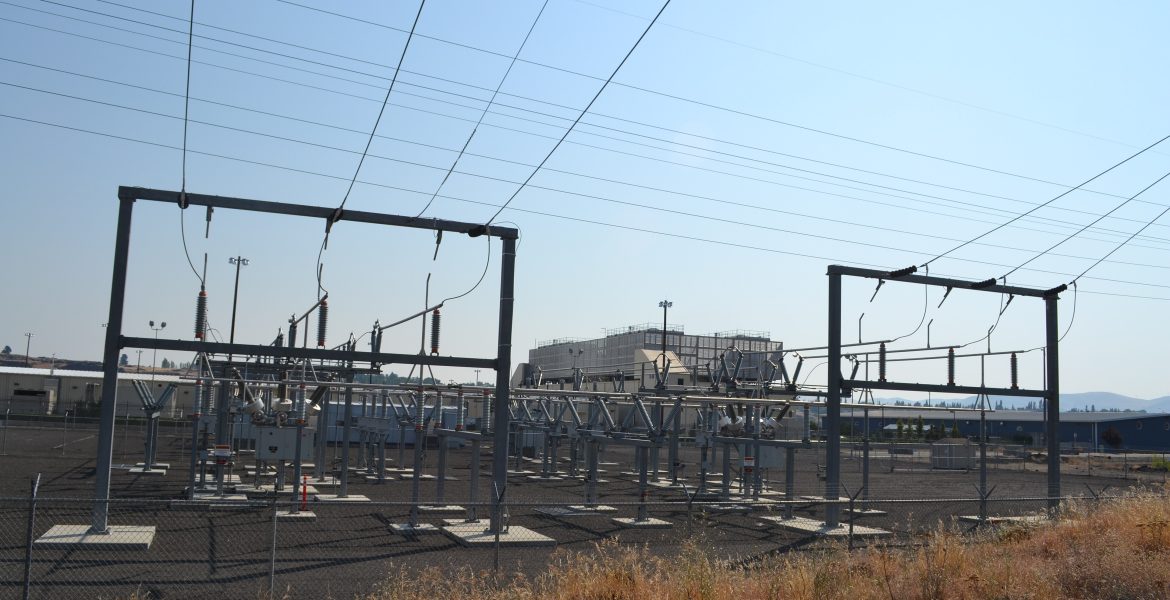
Feature photo: Visitor7, CC BY-SA 3.0 <https://creativecommons.org/licenses/by-sa/3.0>, via Wikimedia Commons