Fort Bend County has agreed to pay independent journalist Justin Pulliam $250,000 after a federal judge found that Sheriff Eric Fagan and a sheriff’s lieutenant violated his constitutional rights, while records raise new questions about why Fort Bend County District Attorney Brian Middleton’s office continued prosecuting Pulliam after prosecutors received video that contradicted key claims used to justify his arrest.
FORT BEND COUNTY, Texas — Fort Bend County has agreed to pay independent journalist Justin Pulliam $250,000 after a federal judge found that Sheriff Eric Fagan barred him from a news conference because he was not considered part of the local media and that a sheriff’s lieutenant later arrested him without probable cause while he recorded deputies conducting a welfare check.
In a detailed 45-page ruling, U.S. District Judge George C. Hanks Jr. found that Fort Bend County officials violated Pulliam’s First and 14th Amendment rights in two encounters six months apart. Hanks also issued a permanent injunction prohibiting the county and the Fort Bend County Sheriff’s Office from treating journalists differently because they publish through social media rather than television, radio or newspapers.
The ruling settled the constitutional questions in Pulliam’s civil case. However, the record behind it raises another critical question for Fort Bend County District Attorney Brian Middleton: Why did his office continue prosecuting Pulliam after receiving videos that contradicted the sworn account used to justify the arrest?

Emails between Pulliam’s defense attorney and the district attorney’s office show that prosecutors received the footage 16 days after the arrest and more than four months before a grand jury indicted Pulliam.
The office acknowledged receiving the videos and promised a thorough review. It later took the case to trial, where five of six jurors voted to acquit him, and kept the charge pending for more than another year before dismissing it.
“They had the video all along,” Pulliam told Katy Christian Magazine. “Knowing that the police officers had made material misrepresentations about what happened, they continued to pursue the charges.”
Pulliam runs The Corruption Report, an independent outlet covering police and local government through YouTube and other social media platforms. His confrontational reporting style has made him a familiar and unwelcome presence among some Fort Bend County officials, but Hanks repeatedly separated Pulliam’s abrasive language from conduct that police could lawfully punish.
The first encounter examined by the court occurred July 12, 2021, after authorities recovered a vehicle believed to contain a woman’s remains from a lake at Jones Creek Park. Reporters gathered for a news conference while Pulliam stood apart from the media group and livestreamed from behind a line of sheriff’s deputies.
Fagan directed a detective to remove him, telling the officer, “If he don’t do it, arrest him, ’cause he’s not part of the local media.” Pulliam complied and was moved roughly 80 feet away, beyond the point where he could hear the speakers, while reporters from established outlets remained.
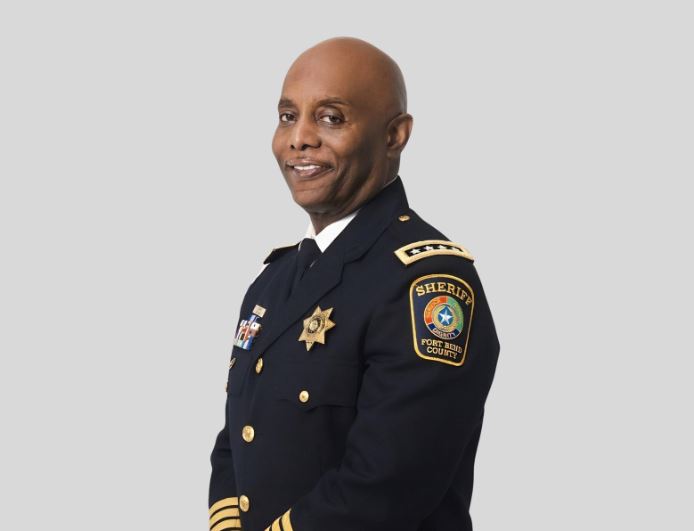
Image: Fort Bend County Sheriff, Eric Fagan, via Fort Bend County government website.
The exclusion was especially difficult to dismiss as an unfamiliarity with news conferences. Fagan had spent years working on the Houston mayor’s security detail, a position that regularly placed him around media events, and Katy Christian Magazine has covered him leading conventional briefings, including a 2022 news conference on school safety.
Fagan relied on a sheriff’s office policy that defined media as people associated with television, print, electronic or radio news services and generally excluded social media. Hanks found that the policy discriminated against Pulliam based on the form of journalism he practiced and denied him equal protection under the law. A version of that policy posted on the county’s website continues to say that the term “media” generally does not include social media.
At the federal trial, Fagan said he eventually addressed the incident at every sheriff’s office roll call, told deputies he had been wrong and instructed them that Pulliam and other independent journalists had the same right to record and cover the department as traditional media. Hanks credited that testimony but found a permanent federal order was still needed.
“He very much knows how press conferences work, yet he decided to violate my First Amendment rights,” Pulliam said. “The motivating factor, I assert, is personal animosity towards my speech and my publication.”
The second encounter began Dec. 21, 2021, when deputies went to a rural property in Damon to check on Edwin Kraft, whose family feared he was experiencing a mental-health crisis. The property included a mobile home and a closed convenience store beneath a gas-station canopy. Property owner Frances Kraft gave Pulliam permission to record from the store area, about 130 feet from the mobile home.
Deputy Ricky Rodriguez told him to stay back, and he did. Two mental-health workers from Texana Center arrived and stood in the same general area. When then-Sgt. Taylor Rollins reached the property, he ordered Pulliam across the road but permitted the Texana workers to remain and speak with deputies. Pulliam asked why he alone was being removed. According to the court’s minute-by-minute reconstruction, Rollins arrested him for interference with public duties about a minute after arriving.
A short video of the encounter captures how quickly the arrest unfolded. Pulliam also published a synchronized presentation of the available camera views, including the dash-camera recording later shown to the criminal jury and provided to the district attorney’s office in January 2022.
That footage became the central evidence in Hanks’ findings. It showed Pulliam walking backward as deputies advanced toward him, while other civilians remained closer to the mobile home. Hanks found that Pulliam neither physically obstructed the deputies nor created a safety problem. Rollins’ hostility toward Pulliam’s speech, the judge concluded, was the reason the journalist went to jail.
The court’s reconstruction also dismantled the claim that immediate danger required Pulliam’s removal. Deputies did not learn that Edwin Kraft might have a weapon until about 38 minutes after the arrest. They waited several more minutes before directing the remaining civilians to leave. Rollins had meanwhile placed the handcuffed journalist inside a patrol vehicle in the area deputies later described as a possible line of fire.
Rollins signed a probable-cause affidavit under oath stating that Pulliam refused to move, remained in front of a potentially armed man and had been warned that he would be arrested if he did not comply. Hanks found that the affidavit contained erroneous and misleading statements about the conduct at the heart of the charge. The recording showed Pulliam moving backward; it contained no warning matching the one described in the affidavit; and it showed that civilians had not been cleared from the area before his arrest.
Sheriff’s office investigator Travis James also wrote that Pulliam could be heard refusing an order. During the federal trial, James acknowledged that Pulliam never expressly refused. Hanks found no probable cause for the arrest and concluded that the grand jury’s decision had been “tainted” by inaccurate and misleading information in the officers’ reports.
Pulliam’s criminal-defense attorney, Coby DuBose, began warning the district attorney’s office about those discrepancies before the case was filed. In his Jan. 6, 2022, email to Chief Assistant District Attorney Laurel Ellisor, who led the Intake and Grand Jury Division, DuBose supplied video from Pulliam’s livestreamed body camera and his wife’s dash camera. He wrote that the footage showed Pulliam had the owner’s permission to be there, remained more than 100 feet from the mobile home and was targeted for retaliation by deputies who knew his reporting.
Ellisor replied Jan. 10 that the office would conduct a thorough review before making a charging decision. DuBose followed up Jan. 31 and March 15. Ellisor wrote March 17 that she was still waiting for additional evidence from the sheriff’s office. When DuBose pressed for an answer April 26, she replied May 6 that the requested material had arrived on a disc and that she intended to review it within the next few weeks.
The grand jury indicted Pulliam May 16. The federal ruling says Rollins and James did not testify before the grand jury; jurors relied, at least in part, on written reports containing the accounts the videos later disproved.
Pulliam also supplied Katy Christian Magazine with a screenshot of a text-message exchange that he said came from Fagan and Middleton. A message sent the morning after the indictment states: “Grand jury approved charges against Justin Pulliam yesterday on charges filed by Rosenberg Police Department. So be on the lookout. He will likely be recording everywhere and protesting.”

The reference to Rosenberg police is unexplained in the supplied record because Pulliam’s welfare-check arrest was made by sheriff’s deputies. The warning that he would be “recording everywhere,” however, singled out the same newsgathering activity Hanks later ruled was constitutionally protected.
Prosecutors took the case to trial March 28, 2023. Rollins initially testified that Pulliam had not moved backward, while Rodriguez said Pulliam continued getting closer to the deputies. Both officers changed their testimony after the defense played the recording. Five jurors voted to acquit Pulliam and one voted to convict, producing a mistrial.
The district attorney’s office left the charge pending until May 2024, when it moved to dismiss the case and said the state declined to prosecute further.
Hanks compared Pulliam’s arrest with approximately 30 other Fort Bend County interference cases filed from 2020 through 2022. Those arrests generally involved physical obstruction, threats, violence, disorderly conduct, intoxication or false statements to officers. Pulliam was the only journalist in the group, the only person accused based solely on speech and the only defendant prosecutors indicted and tried. Twenty-six of the other cases were dismissed or otherwise not pursued.
“It was in retaliation for my speech that is often critical of those in the Fort Bend County government,” Pulliam said.
The Pulliam prosecution joins other disputes Katy Christian Magazine has covered involving Middleton’s office and the use of government power. Attorney Larry McDougal previously documented the office’s unsuccessful attempt to prevent a citizen from recovering 27 lawfully owned firearms after the underlying charges were dismissed.
Katy Christian Magazine has also examined Middleton’s campaign funding and proposed election task force and reported allegations by then-County Judge KP George that Middleton’s office engaged in selective prosecution and political retaliation. Middleton has denied wrongdoing in the George case.
Fagan has faced separate scrutiny over his political association with former county chief of staff Taral Patel and his publicly stated desire for the sheriff, district attorney and county judge to work “side by side” on a shared progressive policy agenda. Pulliam argued that the same political culture helped turn his critical reporting into a target.
“The policies and the training, and really the culture needs to be reformed to where they uphold the Constitution,” he said. “I think the bigger thing here is that it is a cultural thing that’s unfortunately pervasive in Fort Bend County, is this idea that we can weaponize the county government to take out the people who we don’t like. You know, it’s basically political payback.”
Pulliam spent about five hours in custody after the Damon arrest. He was strip-searched, and authorities kept portions of his reporting equipment for years. The case damaged his standing with some sources, affected background checks and cost him his license to carry a handgun, according to the federal findings.
After a three-day bench trial in July 2025, Hanks awarded Pulliam $75,199.66 for lost business income, replacement equipment, data-protection expenses, criminal-defense fees, reputational harm and emotional distress.
The court’s initial final judgment ordered the sheriff’s office to return Pulliam’s equipment and barred the county from continuing to treat social media journalists differently. A corrected judgment entered March 30 states the final damages total and requires Fort Bend County to add Pulliam, along with any other journalist requesting notice, to its media lists.
Pulliam told the Fort Bend Star shortly after the ruling that he felt vindicated and relieved, particularly because the recordings he made had become the evidence that carried his case.
Pulliam appealed the final judgment. Three different federal judges had ruled consistently in his favor on liability during the litigation, but the final judgment assessed Fagan only $1 in nominal damages for excluding him from the 2021 news conference. Pulliam appealed that damages award, and the $250,000 post-judgment settlement resolved the remaining gap. He dismissed his appeal in June 2026.
Pulliam said the county had authorized an offer for the same amount in February 2025, before the federal trial, but he rejected it and continued litigating to secure a ruling and permanent injunction protecting other journalists, despite the risk that he could be held responsible for the county’s trial costs if he lost.
“I pursued this with great personal cost,” Pulliam said. “Eventually I settled for $250,000 a couple months ago. But getting that ruling, getting that injunction, that was a big stand.”
Hanks’ injunction now protects any journalist covering the county, not only Pulliam. It forbids Fort Bend County and the sheriff’s office from using either written rules or informal practices to reserve access for favored forms of media, and it gives reporters a federal judgment they can invoke if county officials return to the same conduct.
“Fort Bend County needs to shape up,” Pulliam said. “They need to not just stop retaliating against and not just tolerate, but to invite and treat equally everyone who covers and commentates about our local government, even the people who they don’t like, even the people who are criticizing them.”
For county residents deciding which reporting they trust, Pulliam said, the government should have no role in choosing for them.
“We all have the same rights,” he said. “It’s time to cut the nonsense and to let the people, through what they consume and what they find credible, make up their own minds instead of our county government trying to control the message.”
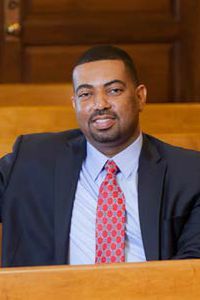
Featured photo: Brian Middleton, Fort Bend County District Attorney, via Ballotpedia