
Submission by Dr. Justin Chelette, OD, FAAO, COEP
Every year, thousands of children pass their school vision screenings with no problems, yet many still struggle to read, lose their place on the page, complain of headaches or avoid homework altogether. Parents often assume these difficulties must be caused by dyslexia, ADHD or another learning disability. But in some cases, the real issue is something schools simply aren’t testing for: the visual skills required for comfortable, efficient reading. Understanding the difference could help explain why a child with “20/20 vision” is still having a hard time in the classroom.
Every fall, parents breathe a small sigh of relief when the school nurse sends home a note saying their child “passed” their vision screening. It feels like one less thing to worry about heading into the school year.
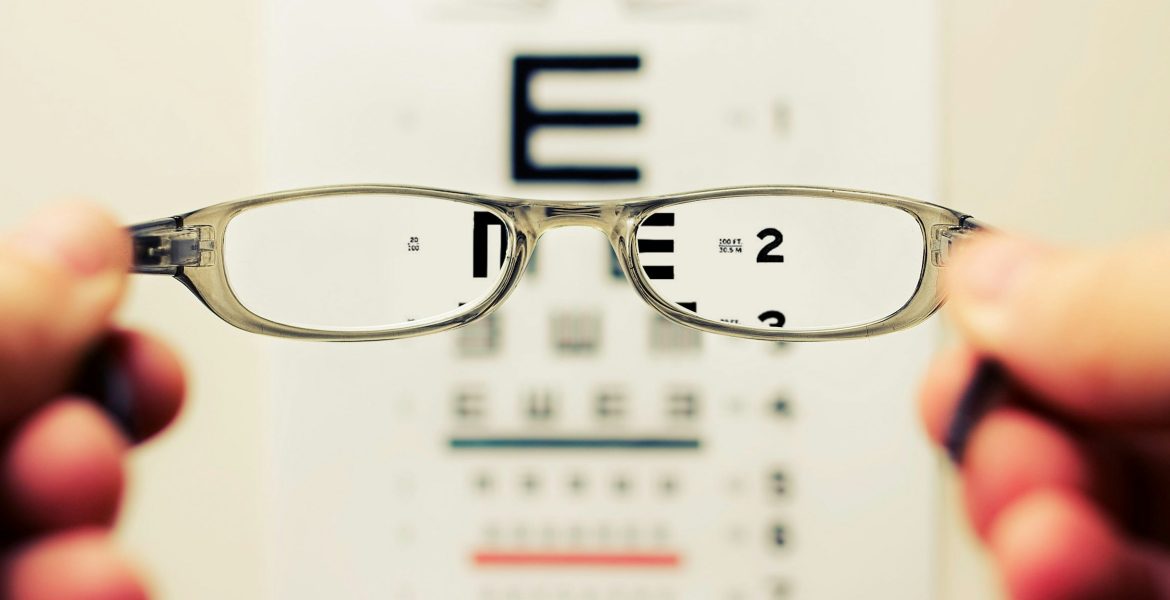
Unfortunately, most parents don’t realize that many school screenings focus primarily on whether a child can read letters on a chart from 20 feet away. They may tell you little about whether your child’s eyes can do the job reading requires up close: tracking accurately across a line of text, working together as a team so words appear single rather than doubled or staying focused through a page of work without fatigue.

A child can pass a school screening with flying colors and still struggle in ways that have nothing to do with intelligence or effort. Parents and teachers commonly observe symptoms such as:
- Losing their place while reading
- Skipping words or rereading the same line
- Mixing up letters like b and d
- Blending parts of two different words together
- Complaining of headaches after reading
- Rubbing their eyes frequently
- Avoiding homework or reading because it feels exhausting
Because schools may not screen for these skills in the first place, they have no way to catch every problem.
And that’s where things get confusing for families. A teacher may suggest testing for dyslexia or ADHD. A private tutor may focus on phonics. Everyone is working hard to help, but if an underlying issue is visual rather than purely language-based, those approaches may not fully solve the problem because they are treating something else.
It’s also worth clearing up a common assumption: This isn’t unique to school screenings. Even a routine comprehensive eye exam—the kind most families think of as “going to the eye doctor”—may not include a detailed evaluation of every functional skill reading requires, such as how well the eyes team together, track across a line or hold focus over time. That takes a more specialized evaluation. A child can therefore have a normal eye exam and still have an undiagnosed functional vision problem.
Vision Problems and Dyslexia Are Not the Same Thing
This is one of the most common misunderstandings I see in my practice. Dyslexia is a language-processing difference. It affects how the brain decodes sounds and symbols into words. A functional vision problem is different: It affects how efficiently the eyes gather and deliver visual information to the brain in the first place.
A child can have one, the other or both.
Some outward signs can overlap, including slow reading and avoidance of books, which is exactly why the conditions are confused so often. But the underlying cause and appropriate treatment are not the same.

What to Watch for at Home
You don’t need special training to notice the signs. Watch your child while they read or do homework, and ask yourself:
- Do they lose their place often or use a finger to track even though they’re old enough not to need it?
- Do they skip words, reread the same line or complain that words seem to “move” on the page?
- Do they confuse similar letters like b/d or p/q well past the age when that’s typical?
- Do they get headaches, rub their eyes or seem unusually tired after short periods of reading?
- Do they avoid reading altogether, even when they enjoy being read to?
Any one of these on its own isn’t necessarily a red flag. But a pattern of several, especially alongside a “passing” school screening, is worth a closer look.
What a Functional Vision Evaluation Looks Like
A comprehensive functional vision evaluation goes well beyond an eye chart. It measures how well a child’s eyes team together, how smoothly they track across a line of print, how quickly they can shift and refocus between near and far distances, and how much effort it takes to sustain those skills over time—not just for a few seconds, but through an entire homework session or reading assignment.
The encouraging news is that certain diagnosed functional vision problems can improve with targeted treatment. Depending on the child’s condition, a structured program of vision therapy may improve skills such as eye teaming and focusing while relieving associated symptoms.
If This Sounds Familiar
If any of this resonates with what you’ve noticed in your own child, take heart. This is not a reflection of how hard they’re trying, and it’s not something you missed as a parent. It’s simply a piece of the puzzle that a standard school screening may not have been designed to catch.
A conversation with a developmental optometrist—someone trained specifically to evaluate these functional visual skills—is a good next step toward finding out whether this is part of your child’s story.
Dr. Justin Chelette is a developmental optometrist and owner of Texas Vision Therapy in Katy. He hosts the podcast “See It Differently,” focused on helping parents and educators understand the connection between vision and learning.
Feature photo by David Travis on Unsplash