
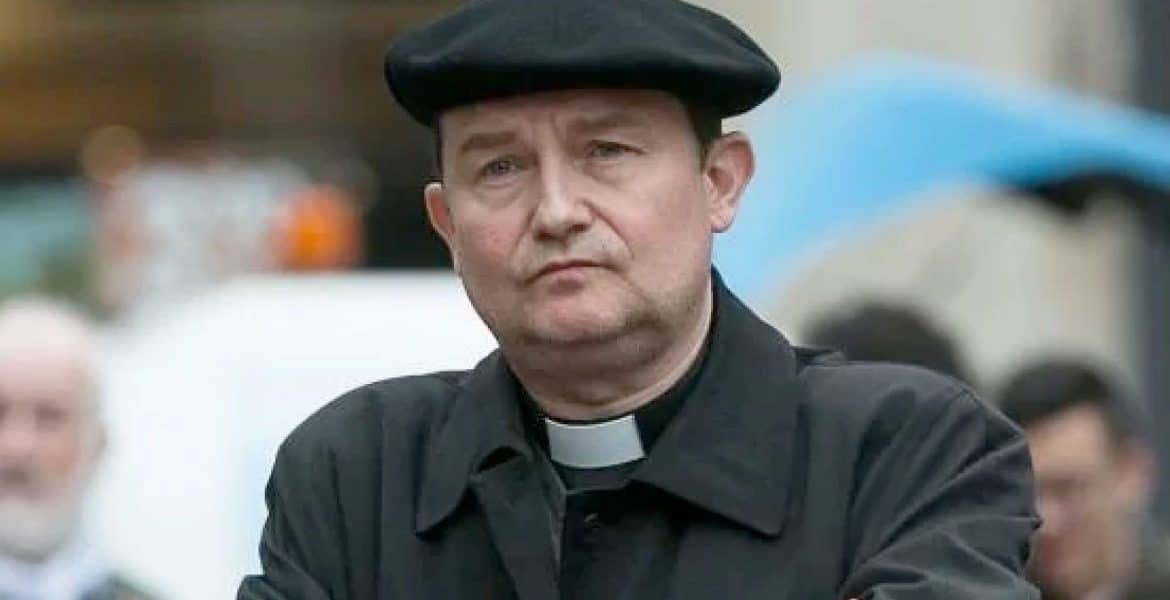
A Catholic priest in Spain faces up to three years in prison after being found guilty of what prosecutors called “Islamophobic” remarks, raising concerns about religious freedom and free speech across Europe.
Father Custodio Ballester, a longtime parish priest known for his defense of traditional Catholic teaching, was charged after he questioned Cardinal Juan José Omella’s 2016 statement that dialogue with Islam was “necessary.”
In a letter, Ballester wrote, “This renewed revival of Christian-Muslim dialogue, paralyzed by the alleged ‘imprudence’ of the beloved Benedict XVI, is far from a reality. Islam does not allow for dialogue. You either believe or you are an infidel who must be subdued one way or another.”
In a 2017 YouTube post, Ballester also warned that Islam poses a threat to Europe. The Association of Spanish Muslims Against Islamophobia later filed a complaint, accusing him of hate speech.

“The survival of freedom of expression in today’s Spain depends on the ruling in this case. Otherwise, we’ll be headed toward a new Cuban dictatorship. One where you were arrested for what you said as well as for what you thought, if it differed from what [Cuban communist dictator] Fidel Castro decided,” Ballester said to the Catholic News Agency.
Ballester’s sentence has not yet been announced. He could face fines or up to three years in prison and has said he will appeal to the European Court of Human Rights if jailed.
More than 28,000 people have signed a petition calling for his acquittal. Spanish President María García appeared to offer support, saying the prosecution risked punishing a priest “simply for warning, in the exercise of his freedom of expression and conscience, about the threat of radical jihadism.”
“Defending religious freedom also means protecting the freedom of those, like Father Custodio, who warn of realities that have already caused deaths in our country and in Europe,” García was quoted as saying by the Spanish Observatory for Religious Freedom and Conscience.
The president referenced a 2023 attack in southern Spain in which a jihadist killed a sacristan and injured a priest during Mass. “Is the crime committed by those who denounce violence or by those who carry it out?” she said.
Catholic and civil rights groups have described Ballester’s case as a test of Europe’s commitment to free expression. The Catholic News Agency and the Observatory for Religious Freedom noted that his remarks, while controversial, fall within the rights of conscience and public debate.
Critics say Spain and other European nations are increasingly criminalizing speech that challenges progressive or secular orthodoxy. The European Parliament and several national governments have passed laws intended to curb hate speech, but many Christian organizations argue those laws are being used to silence religious voices that speak out against radical ideologies.
In much of Western Europe, expressions of faith are often viewed through a political lens. Ballester’s case, many Christian leaders say, shows how quickly religious conviction can be treated as a criminal act when it conflicts with the dominant cultural narrative.
As the court prepares to announce its decision, Ballester’s supporters argue the issue extends beyond one man or one case. To them, it represents a broader struggle over whether Europe will continue to uphold the freedoms that once defined its Christian roots.