
A submission by Kathleen Marquardt, American Policy Center
This story will be followed by some background information to help you understand why, what, and whom all it involves. The beginning paragraphs are directly from the victim’s mouth.
Just because a group calls itself “environmental” doesn’t mean it is wise or even knowledgeable about how to conserve land. This story is about how environmentalists got it wrong and, to make matters worse, unjustly bankrupted and deliberately punished an honest and dedicated conservationist. It gives new meaning to the term eco-terrorism.

The environmental group Scenic Hudson claims to have a lofty goal: protecting the Hudson River Valley from development. However, the tactics they use are far from lofty. In fact, their approach is that of a bully or predator.
An innocent and well-meaning retired widow in upstate New York may be the latest – but not the only – victim. Her case demonstrates just how litigious, unreasonable, and poorly informed Scenic Hudson’s bureaucrats are, and it raises serious questions about the group’s agenda and ultimate goals.
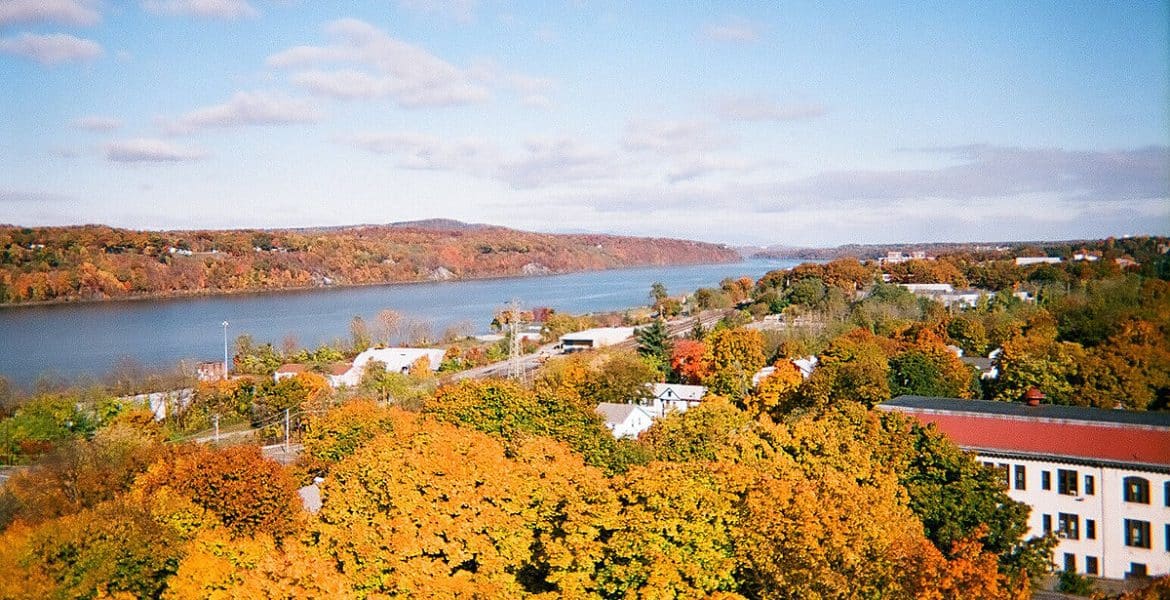
Anne Hohenstein’s family has lived on the Hudson River south of Albany, NY, for four generations (~100 years). Anne’s grandmother and her infant daughter are buried in the small family graveyard on the property, near an old farmhouse and barn, where Anne and her family kept horses and goats. A former environmental lawyer, Anne was taught by her grandmother to revere the land and the beautiful Hudson River.
Maintaining the land in its natural state is important to Anne, as is continuing to farm the fields near the forest. She enjoys country life and finds it both peaceful and inspiring.
In 2012, Scenic Hudson purchased an easement – not the land – to Anne’s family property on the Hudson River in New Baltimore, New York, for $258,850. The property consists of multiple parcels, remnants of a historic fruit farm, and is composed of forests and agricultural fields mostly held by family trusts.
The easement protects undeveloped property from future development. It requires the landowner to preserve the Hudson River Valley and its native species, and it bans mechanical vehicles except on existing farm roads. Trying to comply with these conditions is what got Anne in trouble with the environmentalists.
Scenic Hudson repeatedly urged landowners to partner with them to protect open spaces along the Hudson River. Initially, the landowners and Scenic Hudson were just that – partners – because they shared a common goal. Soon, however, the landowners found themselves as subordinates, with Scenic Hudson assuming the role of a despot.
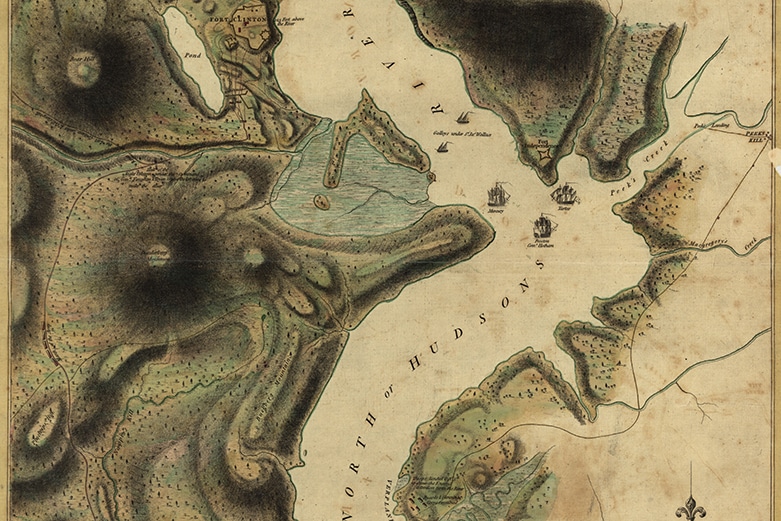
Anne fully embraced her ancestors’ desire to preserve the land. Her grandmother, a biologist who attended Russell Sage, knew decades ago that open space in the Hudson River Valley would soon be in high demand, particularly on the river’s west side. She specifically asked Anne to protect her legacy by safeguarding the land from development and promoting agriculture and science. Anne made that promise, and the easement requires her to do just that – preserve Hudson Valley land in its natural state.
Anne said, “Scenic Hudson disagrees with our interpretation of the easement. They are seeking to crush me punitively, without acknowledging the science of the situation, which is that the forest is healthier now, except for damage by Scenic Hudson after the cut.”
To comply with her preservation goals, Anne requested the New York State Department of Environmental Conservation (DEC) develop a forest management plan. A DEC forester visited the property and advised her that the forest, primarily native hardwoods, was long overdue for a protective cut.
He explained that there were dead and dying trees, some invasive species, and other trees that were preventing the regrowth of healthier, younger trees. Some trees could even pose a danger to people using the forest (hunters, birdwatchers, hikers, etc.). A protective cut removes dead, dying, or dangerous trees to allow the native trees to regrow.
When Anne approached Scenic Hudson about the issue, an easement manager (not a professional forester) claimed that the cut couldn’t be done because the easement didn’t permit it. However, the easement document does not specifically prohibit a protective cut. It only prohibits new buildings, new roads, or any form of development.

Anne escalated the issue to the conservation manager’s superiors. One returned her call to say that Scenic Hudson would like to help but acknowledged that the group no longer employed a professional forester.
Who should Anne believe – the DEC or Scenic Hudson’s conservation manager? To make an informed decision, Anne hired a professional forester recommended by the DEC. He confirmed the DEC’s analysis. Anne then hired a reputable local logger/forester. The project took several months to complete carefully, without causing collateral damage.
Just as the logger’s work was finishing, a stop-work order was posted, and Scenic Hudson sued the family trust and Anne personally for “damage” to the forest and violation of the easement.
Scenic Hudson is seeking restoration, planting new trees, legal fees, payment for the value of the removed trees, and other damages. The lawsuit demands over half a million dollars in damages – a sum significantly greater than the property’s value.
Anne hired an attorney and a professional forester, who together provided ample technical evidence that the forest is now much healthier than before the cut. Scenic Hudson claims to have done its own post-cut “restoration” work, which was performed poorly and at excessive cost. Anne offered to do the restoration work herself, but Scenic Hudson refused.
Scenic Hudson claims costs exceeding $650,000 and demands that Anne pay for them, but has provided no backup or evidence to support the alleged work. Anne has already spent over $100,000 of her own money on legal fees while trying to resolve this dispute, and the bill continues to grow. On the advice of her attorney, Anne was eventually forced to file for bankruptcy.
A trial on Scenic Hudson’s lawsuit was scheduled for July 17, 2023, but has been postponed until April 2025. Scenic Hudson and Anne have had some settlement conferences, but the “offer” was for Anne to pay hundreds of thousands of dollars (which she doesn’t have). This is not a genuine attempt to settle.
In essence, Scenic Hudson forced Anne into bankruptcy and is now attempting to gain control of her land – all because Anne was trying to care for the land and follow expert guidance. She wasn’t developing the land; she was preserving it.
Scenic Hudson clearly operates as a bully and eco-terrorist, trying to force this landowner and her family to surrender all their rights while hiding behind a façade of do-gooder environmentalism. Anne is not the only landowner to suffer from the group’s aggressive and punitive actions. Her elderly next-door neighbor, who, like Anne’s family, has been farming and protecting his family’s land for generations, has also been a target.
This neighbor is suffering from a brain tumor, but the same Scenic Hudson conservation easement manager has harassed, disrespected, and ignored him. For minor alleged easement violations, Scenic Hudson pursued him, and even though it was later determined that the landowner was right and Scenic Hudson was wrong, the group made him pay its legal fees.
This neighbor may be reluctant to speak to the press out of fear of Scenic Hudson and its arbitrary use of power. These landowners are not wealthy. They are hardworking, ordinary people trying to preserve their land from development, not profit from it. Their land is still farmed, and they work tirelessly to maintain it.
Is Scenic Hudson’s goal to protect the land or to force the landowners to give up their family land? Is this conservation or retaliation? This is conservation gone wrong. It looks like eco-terrorism.
And not just looks like eco-terrorism – it is eco-terrorism.
Background (thanks to Robert Powell)
– 1892 – Departments at the University of Chicago, Columbia University, and the University of Wisconsin, with E.A. Ross, whose career was full of socio-communist relations. Ross’s book Social Control (1901) became a textbook teaching how a few can gain control over society. Albin W. Small, the first chair of the sociology department at the University of Chicago, taught sociology as history, economics, and political science. This department and Albin W. Small were funded by the Rockefeller Foundation.
– 1908 – Philanthropic foundations entered the picture, alongside the Federal Reserve, creating false economics and third-party funding of subversive activities under a social cover. Alger Hiss was President of the Carnegie Foundation. The Rockefeller Foundation funded Sociology Chair Albin W. Small at the University of Chicago. The idea was: There is crime in the slums; therefore, slums cause crime – eliminate the slums, and eliminate crime. Guilt by association.
– 1913 – Roscoe Pound and Saint-Simon promoted socialized law, substituting appointed administrators for judicial law to adjust social interests over individual rights. Supreme Court Justice Frankfurter spoke of “throughgoing overturning” of society. It must be done from the outside and translated by those in office.
– 1913 – As the old Red dictum goes, “Communism must be built with non-Communist hands.” To engage non-Communist dupes, though, requires rhetorical camouflage and deception. A prime example is the judicial revolution launched in 1913 with the Conference on Legal and Social Philosophy, organized by Fabian Socialists Harold Laski, John Dewey, Morris Cohen, and Roscoe Pound.
– 1916 – Socialist leader John Dewey’s textbook from 1916 is still in use today. Dewey claimed dependency is power, while individuality is an illness. Consequently, the sane are insane, and the dependent are sane, as they need the community. The collective is the norm. In 1934, the League for Industrial Democracy had student groups in 150 colleges.
Most information came from: The Great Deceit by Dobbs, research by Lt. Robert K. Powell, Creature from Jekyll Island by Griffin, and Lost Illusions by Freda Utley.