James Talarico Invokes the Bible. Do His Teachings Hold Up Against Scripture?
At his Oct. 14 town hall with CNN and Jubilee, James Talarico told a voter that “the Bible is silent on the issue of abortion.” This was a sweeping claim from a politician who regularly leverages Scripture to explain his politics.
When a candidate invokes Jesus to defend their political position, they should expect Christians to open their Bibles and scrutinize that argument. This approach applies regardless of party affiliation.
Talarico has taught publicly on abortion, gender and other religions, and in several instances, his conclusions reach far beyond the actual diction of the passages he cites.

Abortion existed in the ancient world, though not to the scale they’re performed today. The drugs and technology used today came much later. Mifepristone, one of the medications used to conduct an abortion, received FDA approval in 2000. The World Health Organization estimates that about 73 million induced abortions take place worldwide each year. That is the scale of abortion Christians are confronting today.
It makes little sense to expect the Bible, an ancient text, to discuss those drugs, procedures and medical systems in the language we use now. We routinely apply the Constitution to circumstances its authors never imagined. The Fourth Amendment’s protection against unreasonable searches applies to smartphone data, for example, despite being written centuries before smartphones existed. Christians can likewise apply Scripture’s teachings about human life to the medical decisions we face today.
In Psalm 139:13–16, David praises God for forming him in his mother’s womb and seeing him while his body was still developing. His poem describes God knowing him before his birth. Pro-life Christians read those words and see a child whose life already matters to God.
In Luke 1:39–44, Mary visits Elizabeth, and John leaps in Elizabeth’s womb at the sound of Mary’s greeting. Elizabeth calls Mary “the mother of my Lord.” Luke describes both women as mothers and their children as having identities before either child has been born.
Genesis 1:27 teaches that human beings are made in God’s image. Pro-life Christians understand these passages together to mean that unborn children deserve the protection owed to every human being. That argument deserves an answer beyond pointing out that Scripture never uses the word “abortion.”
Talarico also referenced Mary’s pregnancy. During his July 18, 2025, conversation with Joe Rogan, he said “God asks for Mary’s consent” and argued that “creation has to be done with consent.” He offered this as part of his biblical case for abortion rights.
The passage he is referring to is Luke 1:26–38. Gabriel tells Mary she will conceive and give birth to Jesus. When she asks how this will happen, the angel explains that the Holy Spirit will come upon her. Mary answers, “be it unto me according to thy word.”
Gabriel announces what will happen; he never asks Mary whether she would like to become pregnant. Mary’s answer shows her willingness to accept God’s calling. Talarico takes that willingness and uses it to defend abortion, even though the passage says nothing about ending a pregnancy.
Mary’s agreement to bear Jesus does not establish her right to have instead ended the pregnancy. Talarico still has to explain why ending an unborn child’s life would be consistent with the Bible’s teachings about human worth. The story he cites gives him no answer.
His statement that “God is nonbinary,” currently played in political commercials across Texas, also must be scrutinized. In his 2021 Texas House speech opposing restrictions on transgender students’ participation in school sports, he appealed to masculine and feminine Hebrew terminology in the opening of Genesis. His reasoning drew on the grammatical gender of words used for God and spirit.
To qualify, Talarico has since altered his original statement. In a September 2026 interview, excerpted in CNN’s transcript, he acknowledged being provocative and explained that “you can’t use human categories to define God.”
Historic Christian theology already understands God’s divine nature as spiritual and beyond human biology. The Westminster Confession of Faith describes God as a spirit without a body. Jesus teaches that “God is a Spirit” in John 4:24. Scripture also uses maternal imagery: in Isaiah 66:13, God compares his comfort to a mother comforting her child. Jesus, meanwhile, teaches his followers to address God as “Our Father” in Matthew 6:9.
A Hebrew noun being feminine does not, by itself, establish anything about human gender identity. It’s similar to the Spanish “la” luna, meaning the moon, and “el” sol, or the sun. Neither actually have genders; these usages are just part of the language’s design. Further, when God compares his comfort to a mother’s, he is describing his care for his people. To give his statement any credibility, Talarico would need to explain how either example supports his position on human sex and gender.
Genesis also says that God created human beings “male and female” in his image. Talarico is right that God transcends human categories. That still leaves him with a verse about human beings, in the very chapter he is citing, that he needs to address.
In his Oct. 22, 2023, sermon at St. Andrew’s Presbyterian Church in Austin, Talarico spoke against using Christianity to coerce people or gain political power.
“There are so many pathways to the sacred,” he said during the sermon. He went on to describe God as bigger than any one religious tradition and praise practices from other faiths.
Now, it’s true that in pursuit of religious freedom, Christians should defend a Muslim’s right to pray, an atheist’s right to disbelieve and everyone’s right to live free from religious coercion. It’s also true that non-Christian religions have some teachings that are kind or wise.
But does Talarico speak about the wisdom people can find in other traditions or saying those religions offer salvation apart from Christ? The difference is significant. It is possible for Christians to learn from a neighbor of another faith, but salvation comes through Jesus.
In John 14:6, Jesus says, “I am the way, the truth, and the life: no man cometh unto the Father, but by me.” Acts 4:12 says salvation is found in no one else, and 1 Timothy 2:5 names Jesus as the one mediator between God and humanity.
If Talarico believes other religions can save people apart from Christ, he needs to explain how he reconciles that belief with these passages.
Talarico is right to insist that Christians care for vulnerable people. For a struggling mother, that might mean groceries, rent assistance or someone willing to watch her children. Churches should be ready to help in those ordinary, often inconvenient ways.
Jesus also calls people to repent and obey him. “If ye love me, keep my commandments,” he says in John 14:15. Christians have to reckon with those words as well as with his teachings on mercy.
At Katy Christian Magazine, we believe Talarico is twisting Scripture and distorting Christianity to fit his political agenda. His interpretations give biblical cover to positions the passages themselves do not support. For those reasons, we are endorsing Ken Paxton for U.S. Senate.
Early voting in Texas runs Oct. 19–30. Election Day is Tuesday, Nov. 3, 2026. Find the rest of our endorsements in the KCM Voter Guide for Harris County and Fort Bend County.
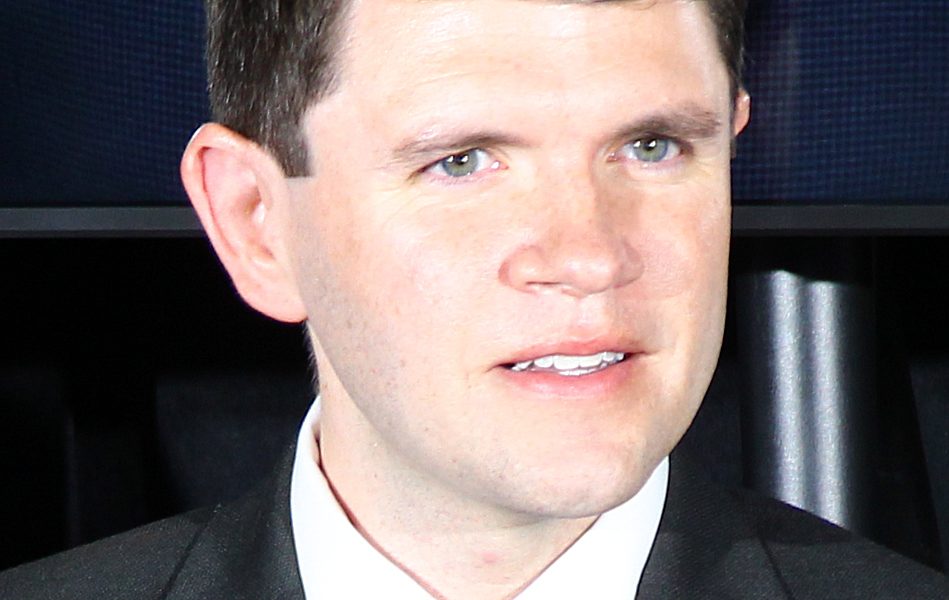
Feature photo: James Talarico Open Congress Austin 2023, Larry D. Moore, CC BY 4.0 <https://creativecommons.org/licenses/by/4.0>, via Wikimedia Commons