
For years, Elon Musk was publicly associated with atheism, as a futurist billionaire more inclined to discuss Mars, artificial intelligence, and simulation theory than Jesus or matters of faith.
Recently, that has changed.
In podcast interviews and public remarks, Musk has said he no longer considers himself an atheist. He has spoken about believing the universe came from something and that God is the Creator. He has described himself as a “cultural Christian” and said he believes the teachings of Jesus “result in the greatest happiness.”
He has not claimed adherence to a denomination or described a personal conversion. However, Musk has clearly moved away from atheism, and for a figure of his prominence, that shift is notable.

The phrase “cultural Christian” has gained visibility over the past few years as other public intellectuals have adopted it. It typically refers to someone who values Christian moral teachings, traditions, and civilizational influence, even without affirming the core theological principles and Scriptures.
In America, Christianity has shaped law, education, family life, and many moral codes. For some, identifying as culturally Christian signals appreciation for that inheritance.
In Musk’s case, his comments suggest he sees that many societal norms he values, including stability, family structure and moral responsibility, grew out of a Christian framework. He has also suggested that declining religious belief may be connected to falling birth rates, implying that faith once provided a sustaining vision for family and future.
Musk’s comments are notable simply because one of the most technologically ambitious minds of this era is not dismissing Christianity as outdated.
For decades, faith and intellectual seriousness have often been portrayed as incompatible. However, history does not support that assumption. Some of the most influential scientific thinkers have held belief in a Creator alongside rigorous inquiry.

Consider figures such as Isaac Newton, who devoted extensive study to theology alongside his work in physics, or Johannes Kepler, who described his scientific discoveries as “thinking God’s thoughts after Him.”
James Clerk Maxwell, whose equations transformed modern physics, was open about his Christian faith. In more recent history, geneticist Francis Collins, who led the Human Genome Project, has spoken publicly about seeing no contradiction between belief in God and scientific rigor. Their lives complicate the assumption that intellectual achievement requires religious disbelief.
Musk’s recent remarks show that technological progress does not eliminate deeper questions about origin, purpose, and morality. If anything, those questions press harder in an age of artificial intelligence and genetic engineering.
America has seen church attendance decline, while the number of people identifying as religious “nones” has grown. Many in that category are not active atheists; they describe themselves as “nothing in particular.”
Calling oneself a “cultural Christian” is not the same as being a Christian; it’s a belief that exists somewhere in the space between rejection and commitment.
For Christians, that distinction matters. Christianity is not primarily cultural. It centers on a personal relationship with Christ. However, cultural Christianity is important in that it acknowledges that Christianity shaped the moral architecture of Western civilization.
Movements often begin with recognition. Respect for the teachings of Jesus can open the door to deeper questions about Him, and it could one day save souls.
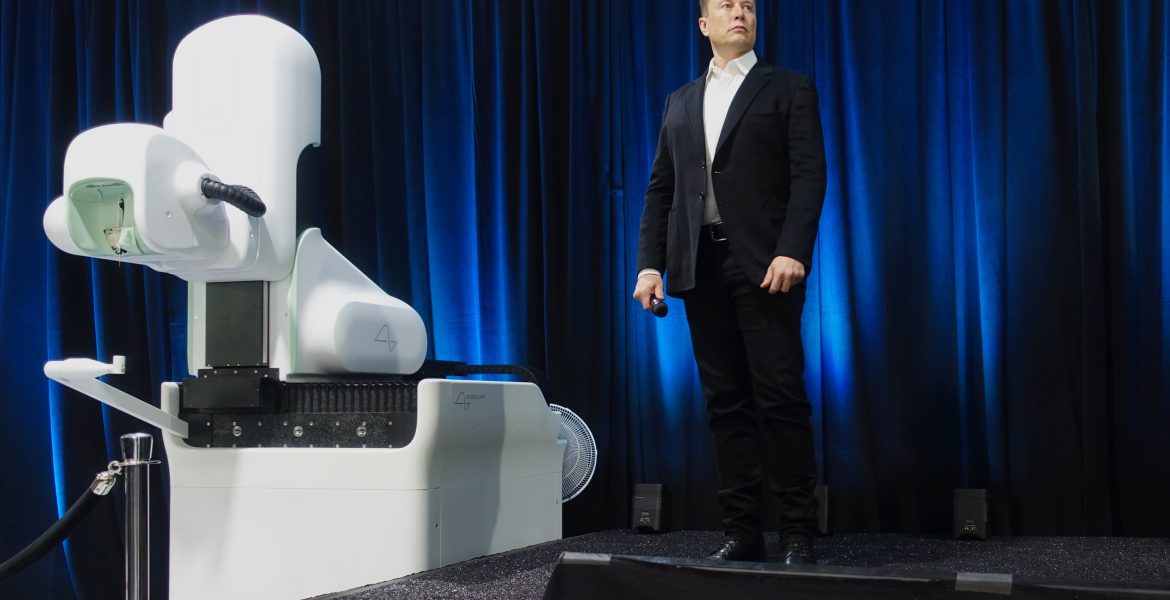
Feature photo: Steve Jurvetson, CC BY 2.0 <https://creativecommons.org/licenses/by/2.0>, via Wikimedia Commons