Jewish and Christian conservatives watching America’s universities now face an uncomfortable truth: activism in the name of Palestine is crossing into organized antisemitism, and lawmakers are beginning to respond.
During the 2024–25 academic year, Hillel International documented 2,334 antisemitic incidents on U.S. campuses — the highest number since it began keeping records. A joint survey by Hillel and the Anti-Defamation League found that 83 percent of Jewish students have experienced or witnessed antisemitism since Oct. 2023, but fewer than one in ten of those incidents were reported to school authorities.

Sen. Tom Cotton’s recent call for the Treasury Department to revoke the tax-exempt status of the Palestinian Youth Movement (PYM) reflects a growing recognition that some campus organizations have evolved into ideological fronts for movements with links to foreign terrorist groups.
In a letter to Treasury Secretary Scott Bessent, Cotton urged the department to “immediately investigate both PYM and Honor the Earth,” arguing that no organization “that supports terrorism, breaks U.S. law, and sows antisemitic discord should receive any benefits from the American tax system.”
The escalation from protest to policy addresses a broader concern that universities have failed to protect Jewish students from targeted hostility. The Department of Education’s Office for Civil Rights recently warned 60 universities that they could lose federal funding if they do not address antisemitic harassment under Title VI of the Civil Rights Act.
Separate investigations have already found violations at institutions including Columbia and Harvard, while the Justice Department has launched a task force to visit campuses where serious incidents occurred after the Oct. 7, 2023 Hamas attacks.
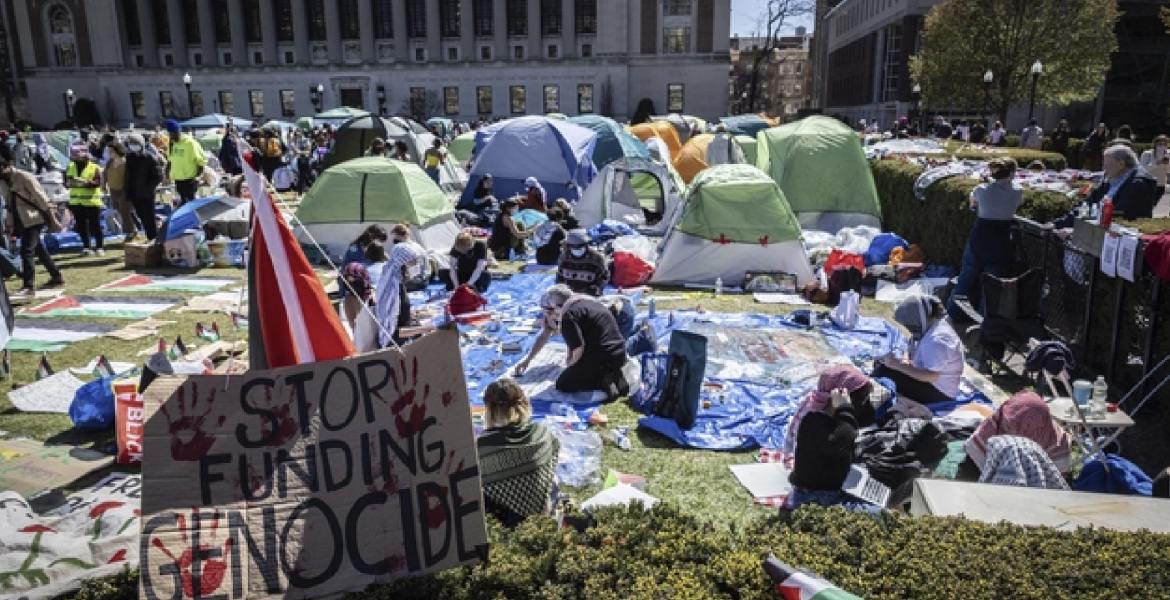
Across the country, Jewish students describe an atmosphere of intimidation and hostility.
According to Hillel’s campus survey, nearly one-third say faculty have promoted environments hostile to Jews, 23 percent say they have taken additional security measures, and more than half say pro-Palestinian protests have made them feel unsafe.

The Institute for the Study of Contemporary Antisemitism has documented how anti-Israel networks use social media to coordinate messaging and recruit students through ideological education sessions, online campaigns, and “direct action” training.
Meanwhile, the NGO Monitor reports that PYM maintains ties to the Popular Front for the Liberation of Palestine, a U.S.-designated terrorist organization, and has publicly justified Hamas’s Oct. 7 assault as an “unprecedented liberation struggle.”
Defenders of campus activism argue that pro-Palestinian students are exercising free speech and that criticism of Israel should not be conflated with antisemitism. Civil-liberties groups and university associations such as the American Council on Education caution that aggressive federal oversight could suppress dissent.
Yet that argument falters when protest becomes harassment, exclusion, or glorification of violence.
Free speech does not include the right to threaten or dehumanize Jewish students. When campus groups exploit nonprofit status, accept funding from entities with extremist ties, and use university grounds as staging arenas for ideological warfare, they cease to be student organizations and instead become instruments of radicalization.
The federal government has both the authority and the responsibility to intervene when institutions will not. If universities cannot guarantee safety and fairness for all students, oversight from Congress and the Treasury represents accountability, not censorship.