
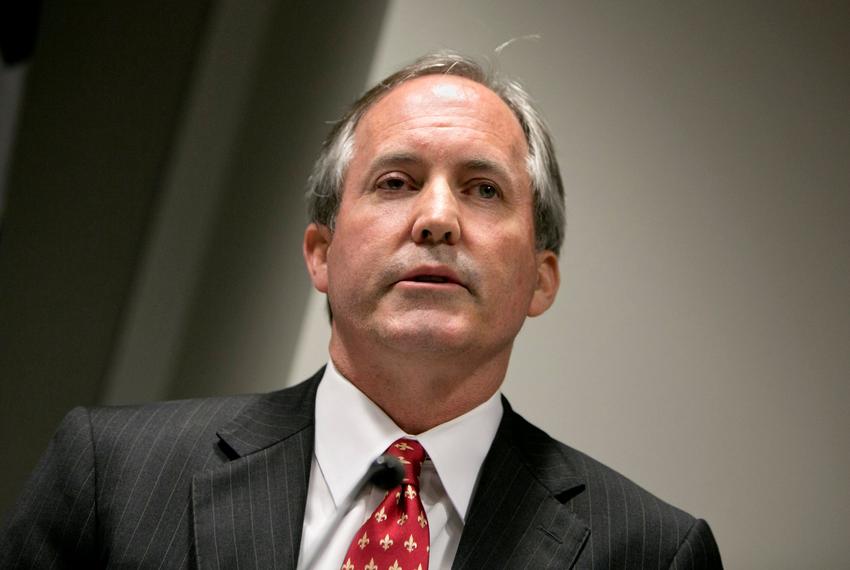
Texas Attorney General Ken Paxton is speaking out following his office’s major takedown of an alleged vote harvesting operation in Frio County—a sweeping investigation that has led to charges against multiple public officials and political insiders.
“Under my watch, we will always fight for free and fair elections and ensure that those attempting to rig our democratic process face justice,” Paxton declared in a new statement to Katy and Fort Bend Christian Magazines.
“Texans must be able to trust our elections, and a core part of that trust is ensuring that those trying to cheat are caught and prosecuted. I will continue to partner with Frio County DA Audrey Louis in this case and work to hold anyone who tries to steal elections accountable.”
The high-profile announcement follows the latest indictments in what Paxton described as a years-long effort to expose election fraud in South Texas. His office’s Election Integrity Unit and the Frio County District Attorney’s Office have charged a total of 15 individuals over two waves of indictments this year, accusing them of orchestrating a coordinated scheme to manipulate ballots during the 2022 election cycle.

“Election integrity is the bedrock of our democracy,” Paxton said in an earlier statement. “Any official trying to scam voters will get crushed by the law. My office will hunt down anyone trying to silence Texans’ voices.”
The investigation began in August 2024 when Paxton’s Criminal Investigations Division carried out search warrants across Frio, Atascosa, and Bexar Counties based on credible tips about illegal ballot harvesting. A grand jury returned the first set of indictments in May 2025, followed by a second round on June 30. All charges were filed under Senate Bill 1, a 2021 law making compensated vote harvesting a third-degree felony punishable by up to seven years in prison and $10,000 in fines.
The suspects include campaign operatives, former candidates, and elected officials. Among those indicted in the most recent round are Manuel Medina, Chief of Staff to State Rep. Elizabeth Campos; former State House candidate Cecilia Castellano; Frio County Commissioner Raul Carrizales; former Dilley Mayor MaryAnn Obregon; and former Dilley City Council member Inelda Rodriguez. Others charged include Davina Trevino, a former candidate for Pearsall City Council; Pearsall ISD Trustee Mari Benavides; Susie Carrizales; and Rachel Leal.

The June charges build on an earlier round of indictments that named Frio County Judge Rochelle Camacho; former elections administrator Carlos Segura; Pearsall City Council members Ramiro Trevino and Racheal Garza; Pearsall ISD Trustee Adriann Ramirez; and alleged vote harvester Rosa Rodriguez. Prosecutors allege a coordinated effort to influence elections by targeting elderly voters and offering cash incentives through apps like CashApp in exchange for mail-in ballots. In one case, Segura is accused of destroying physical evidence to hinder the investigation.
The sweeping investigation has drawn both praise and pushback. While many Republicans hail Paxton as a champion of election security, critics—including civil rights organizations such as LULAC—condemn the operation as politically motivated. They argue that the charges disproportionately affect Latino communities and Democratic strongholds. Concerns have also been raised over law enforcement tactics, including a reported raid on an 87-year-old volunteer.
Paxton has faced similar scrutiny in the past. A voter fraud case he pursued in 2018 against four Hispanic women fell apart in 2023 after a court ruled he lacked authority to prosecute. Opponents argue that his actions suppress voter turnout in vulnerable communities and rely on a 2021 law—Senate Bill 1—that remains under legal challenge. Although a federal court questioned its constitutionality in September 2024, Paxton’s appeal has kept the law in force for now.
Still, Paxton is standing firm in his commitment to the case. “The people of Texas deserve elections they can believe in,” he said. “We’re not backing down.”