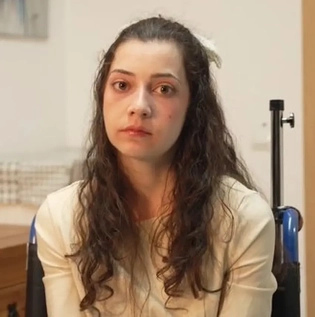
Noelia Castillo was 13 years old when child protection authorities in Spain took custody of her.
Her parents had lost their home. Their marriage collapsed under the pressure. The young girl became displaced, moving through state-run facilities absent of structure, oversight and safety.
According to court filings and statements from her father’s legal team, Castillo was brutally raped.
Her father alleges that the attackers were Muslim teenage migrants of North African origin who were also connected to the child protection system. According to filings, one of them returned later with others, and the assault escalated into a gang rape.

Some reports have suggested a different version of events, placing the assaults in a nightlife setting. But her father’s legal filings directly contradict that account, and what is not disputed is this: Castillo reported what happened, and nothing was done to protect her.
The system that had taken her from her family did not intervene.
Dismissed by authorities, Castillo’s psychological and emotional damage compounded. She developed severe mental health conditions, including obsessive-compulsive disorder and bipolar disorder. She attempted to end her life by jumping from a fifth-story building.
She survived, but the fall left her paralyzed from the waist down.
You would think that at that point, every system around Castillo—medical, legal and social—would recognize how damaged she was, and would work to stabilize her and help her rebuild a life from the wreckage.
However, in 2024, Castillo was offered a different solution: euthanasia. After learning about it as a legally permissible option, she formally requested euthanasia under Spain’s legal framework, beginning a structured medical and legal process.
Her case was reviewed by a regional oversight commission in Catalonia, which approved her eligibility, with sign-off from multiple physicians as required by law.
Her father challenged the approval in court, triggering a two-year legal battle that moved through regional courts, the High Court of Justice of Catalonia, Spain’s Supreme Court and Constitutional Court, and ultimately the European Court of Human Rights.
Each level upheld the decision, confirming that all legal requirements had been met. After nearly two years of delays due to litigation, the process resumed, and in March 2026, her euthanasia was carried out.
At 25 years old, Castillo was euthanized.
She was a registered organ donor. According to reports, she was sedated and transferred to another facility for organ extraction prior to her death. Some accounts indicate that she expressed hesitation and asked for a delay, but by that point, the process was already underway. It was too late for Castillo.
Neal Shusterman’s dystopian novel Unwind paints a disturbingly similar story.
The government allows parents to retroactively “abort” their children between the ages of 13 and 18. Control of language is a central theme in this dark world. The killings are not called murder, or even death.
Their children are instead “unwound,” the process of ripping them from their homes and taking them to facilities where the children, fully conscious, are surgically dismantled and every part is used for transplants. The justification is that nothing is truly lost because every piece of them continues to live on in someone else. It’s presented as a compromise, a solution to conflict, something society agrees to accept so it doesn’t have to deal with harder problems.
The disturbing, fragile world is upheld through control of the language. It avoids calling the heinous process what it is. Once words change, reality becomes easier to tolerate.
The mechanism is familiar.
We’re witnessing something similar across the world today. The shift has already begun with our language. Death is called “euthanasia,” and it is treated as care or relief. The act remains the same, but the words surrounding it have morphed to cloak the act as compassion.
25-year-old Noelia Castillo was not unwound, but the logic that governed her end is shockingly similar.
Castillo was not dying of a terminal illness. She was the product of a series of failures; failures to protect her, to respond to her reports, to intervene when she was harmed and to treat her trauma before it became permanent.
Then, the system that failed her offered her a permanent exit.
In Spain alone, euthanasia was legalized nationwide in 2021, and Castillo’s case unfolded within that legal framework. What happened to her followed an established process.
And Spain is not an outlier. Across the West, similar systems have taken shape.
In Canada, Medical Assistance in Dying (MAID) has expanded beyond end-of-life cases to include individuals whose deaths are not reasonably foreseeable. Parliamentary review bodies have examined extending MAID to “mature minors,” considering whether individuals under 18 could qualify under certain conditions. The country has also debated extending eligibility to those suffering solely from mental illness—a policy delayed, but not abandoned.
In the Netherlands, euthanasia is permitted for minors. Children as young as 12 can access it with parental consent, and those aged 16 and 17 can proceed with parental involvement but without full parental approval. The Dutch government has also extended provisions to include certain cases involving younger children with terminal conditions.
Belgium has removed age restrictions entirely. Euthanasia for minors has been legal there for years. While cases remain rare, they are documented and processed within the system.
Each country presents these policies as tightly regulated and rooted in compassion.
In Unwind, the killings of minors are framed as necessities. In reality, these deaths are framed as compassionate care.
Make no mistake that Castillo did not enter the state system as a suicidal person asking to die. She entered it as a child who needed protection.
At each stage, the institutions around her made decisions. They placed her. They ignored her reports. They failed to intervene. They allowed her damage to deepen. Then, they evaluated her condition and determined that her suffering qualified her for euthanasia. Courts reviewed the case and upheld that determination. Every appeal by her desperate father was denied.
For two years, he fought to keep his daughter alive. He challenged the process at every level available to him, arguing that her life had been shaped by trauma and neglect that had never been properly addressed.
He lost.
At the end, there was no public reckoning. No system correction.
Fictional societies like the one in Unwind serve to warn us. They exist in exaggerated form so that we can recognize the danger before it arrives.
What happened to Noelia Castillo disturbingly revealed how close this work of fiction is to our current reality.
It happened within systems that already exist, under laws already passed, through procedures already normalized.
We’re already living in the dystopia.
Feature photo: YouTube via Antena 3