Editor’s note: This column includes descriptions of religious persecution and violence that some readers may find disturbing. Reader discretion is advised.
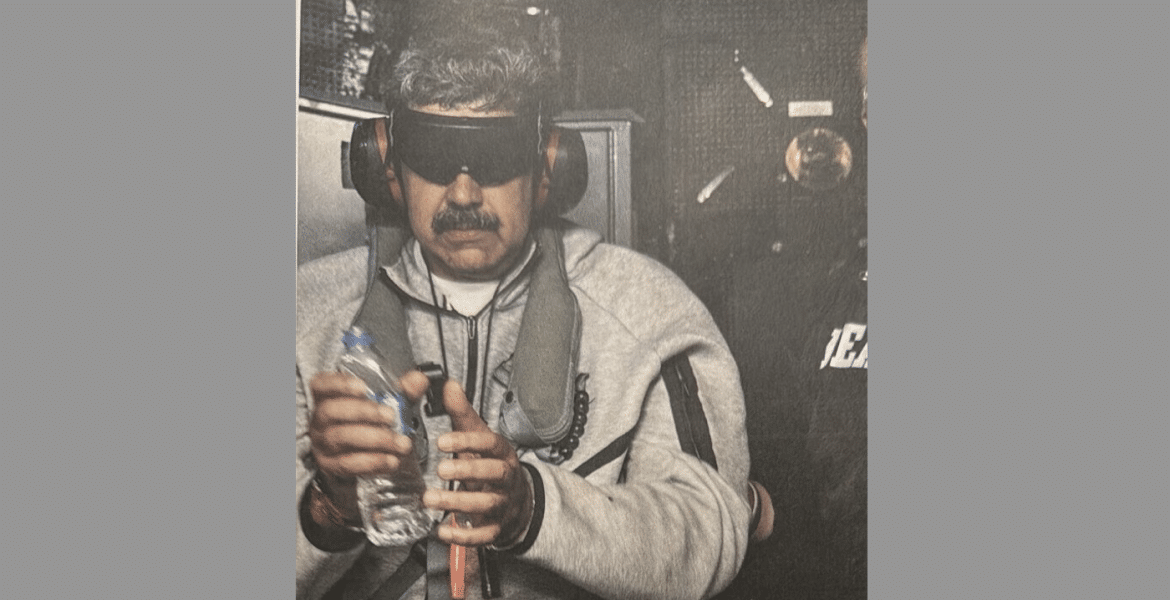
On December 28, 2025, Venezuelan dictator Nicolás Maduro was removed from power in a U.S. military operation that struck the Fuerte Tiuna military complex in Caracas and led to his capture, confirmed by President Donald Trump during public remarks on January 3, 2026. The long-standing leader of Venezuela’s socialist government now faces federal charges in New York, according to Associated Press reporting.
For Christians who have lived under Maduro’s regime, this geopolitical development is a pivotal moment that could reshape the landscape of religious freedom in Venezuela, a nation where church leaders have spent years navigating surveillance, intimidation tactics and legal obstacles that infringed on religious liberty.
Maduro’s rule followed decades of authoritarian governance that eroded civic space in Venezuela, a federal presidential republic of nearly 30 million people.

Independent oversight organizations, including the U.S. Commission on International Religious Freedom (USCIRF), have documented patterns of harassment, arbitrary detentions, bureaucratic restrictions and legal pressures on faith communities that do not align with the state’s interests. Religious leaders and laypeople alike have been threatened, summoned by intelligence agents, or subjected to surveillance simply because their ministries were seen as autonomous from government control.
One incident that captured international attention involved the Men of Valor Christian Restoration Center in Mérida, a ministry offering support to young men recovering from addiction. In February 2021, armed members of a pro-regime group reportedly entered the center, injuring attendees and staff, marking and beating them, and forcing some to chew pages of Scripture. This attack was documented by the Latin American Observatory for Religious Freedom as part of a broader pattern of intimidation targeting ministries whose work was perceived as independent of state oversight or contrary to official interests.
These acts of violence and harassment did not occur in isolation. Throughout Maduro’s tenure, the Venezuelan government tightened control over nongovernmental and faith-based organizations by expanding registration requirements and demanding detailed reports on activities, funding sources, and beneficiaries. These rules, presented as “anti-terrorism” measures, functionally forced churches and charities to operate under constant official scrutiny, limiting their ability to minister freely and maintain confidentiality with those they serve.
During the COVID-19 pandemic, these restrictions intensified as the regime sought to control the distribution of humanitarian aid. Faith-based groups that traditionally provided food, medicine, and care to struggling communities were required to submit to state supervision or risk having their work curtailed. Critics argued that this approach was not about public health, but about consolidating control over all forms of social support, pointing out that basic public services had long deteriorated.
Pressure on religious freedom in Venezuela fits within a regional pattern that human rights monitors have observed in Cuba and Nicaragua, where state mechanisms have been used to limit independent religious expression. In its 2025 update, USCIRF classified these nations as engaging in analogous repression of faith communities, noting that Venezuela’s approach, while not always as severe, still restricted the exercise of religion through legal and extralegal means that placed independent churches at a distinct disadvantage.
Beyond administrative hurdles, Christians have faced direct acts of intimidation and violence. Religious leaders who refused to align publicly with the regime have been subjected to arbitrary detention or threats. In 2025, Catholic radio journalist Carlos José Correa Barros was arrested by masked military personnel, detained for nine days without clear charges, and later released, an incident documented in USCIRF’s reporting on the repression of clergy and media voices tied to the church.

For many believers inside Venezuela, churches became places of quiet resistance and refuge. Congregations continued to meet, pray, and serve their communities even as public space shrank. Evangelical churches provided food and shelter, supported families in mourning, and offered hope in a nation beset by economic collapse and social fragmentation. Their testimony was not loud. It was persistent.
The capture of Maduro opens a window of opportunity for a reset, but Christians everywhere should approach it with sober reflection rather than triumphalism. Authoritarian systems do not vanish with the detention of a leader. They leave behind legal frameworks and societal habits that tend toward centralization and control. The removal of one individual does not instantly restore religious freedom or civil society.
At the same time, this moment offers a chance to reaffirm clearly held principles. Religious liberty, for Christians, is not a political line in the sand. It is the right to live one’s faith openly, to gather for worship without fear, and to serve neighbors without having to seek approval from a secular authority. Freedom of conscience sits at the heart of Christian anthropology. It is rooted in the belief that each human being bears the image of God and answers ultimately to a higher moral authority. Protecting that freedom for others, including those with whom we may disagree, is a matter of justice.
The global Christian community should hold space for Venezuelan believers not with rhetorical platitudes, but with sustained prayer, visible solidarity, and concrete support for ministries that have borne the brunt of repression. The world must remember that persecution does not always arrive in dramatic headlines. It shows up in blocked registration, delayed humanitarian aid, intrusive reporting requirements, and the quiet disappearance of pastors into detention cells.
Some of those pastors and faithful are still absent from their congregations. Some are in exile. Some hold scars that will not soon fade. Their testimony matters because it is not born of ideology, but of endurance.
If a new chapter is beginning in Venezuela, it will not be written solely in courtrooms or on TV screens. It will be written in the everyday restoration of communities of faith, in the reopening of ministries once hemmed in by regulation, in the return of exiles to their homes, and in the ability for families to gather in worship without fear.
Christians in Venezuela, and those who stand with them, should pray for wisdom for any emerging leaders, that they safeguard religious freedom as a foundational good and not a negotiable privilege. They should pray for the churches that remained steadfast through years of pressure. They should pray for the victims of violence whose wounds are still healing. And they should call for a society where the freedom to worship is taken for granted, not granted as a concession.
In the capture of Maduro, there is reason for cautious hope. But hope always carries responsibility. For Venezuelan Christians, freedom will be measured not by the fall of a regime, but by the restoration of their right to live and proclaim their faith in peace.
Featured Image: US Military, Public domain, via Wikimedia Commons.