
Submission by Joseph Menslage
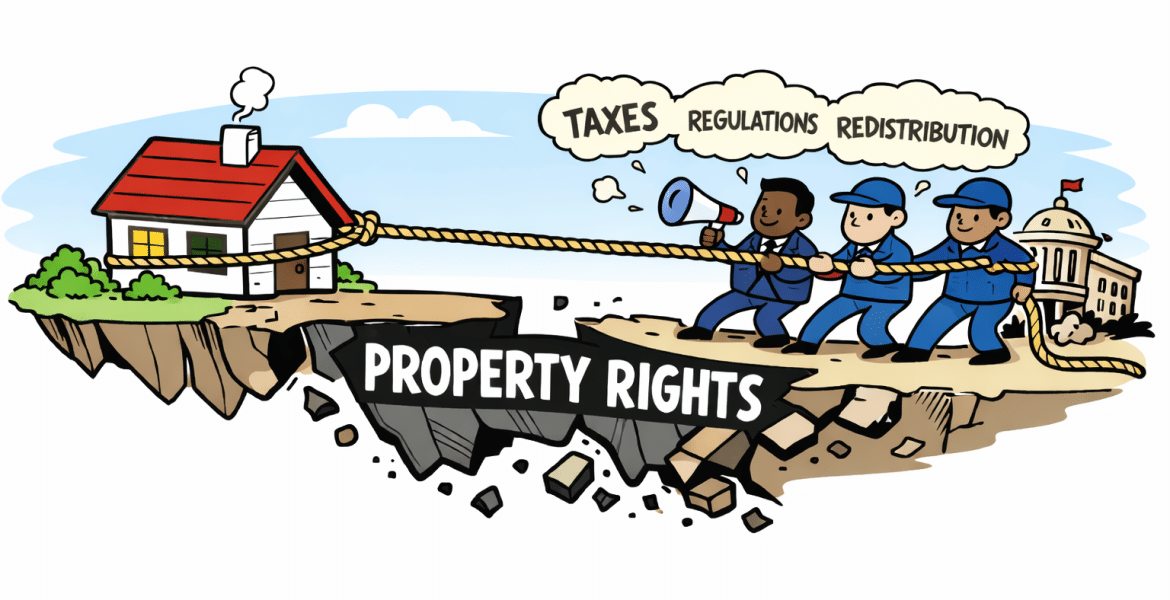
New York City is quietly rebuilding the machinery that governs housing, elevating to power people who are ideologically aligned on redefining property itself. Mayor Zohran Mamdani recently named Cea Weaver as director of the newly revitalized Mayor’s Office to Protect Tenants, an agency charged with coordinating the city’s response to unsafe housing conditions, landlord violations, and tenant harassment.
On paper, the role sounds administrative. In practice, it places a committed ideological advocate inside the city’s housing enforcement structure at the same moment Mamdani is pushing an aggressive agenda that includes freezing rents on roughly one million rent-regulated apartments. That proposal would require approval from the Rent Guidelines Board, but the direction is already visible. The city is preparing to treat ownership as a problem to be managed, rather than a constitutionally protected right.
Weaver is far from a no-name appointment. She is a nationally recognized tenant advocate and a member of the Democratic Socialists of America. She previously worked as a campaign coordinator for Housing Justice for All, an organization that has long argued for sweeping limits on landlord rights and expanded government control over housing. During Mamdani’s 2025 mayoral campaign, Weaver served as a policy adviser, helping shape the very platform she is now positioned to implement.

Personnel choices are dead giveaways of priorities. “Revitalizing the Mayor’s Office to Protect Tenants” while staffing it with activists who view private property as inherently suspect signals a shift in how the city intends to treat ownership. Enforcement is no longer just about safety or compliance. It becomes a vehicle for moral judgment and sociopolitical ideology.
New York has played this role before. Policies incubated in the state rarely stay at a state-level. They expand outward, perhaps softened in language but consistent in aim, carried by advocacy networks and policy templates. What begins as a city initiative often becomes a national model.
Property is an issue at the center of debate because it anchors independence. A family that owns its home has leverage. It can plan beyond the next lease renewal. It can pass something down between generations. It can resist pressure in ways renters often cannot. That independence has always made collectivist movements uneasy.
(“As for me and my house, we will serve the Lord.” — Joshua 24:15)
From a Christian perspective, ownership is assumed throughout Scripture as a framework for stewardship. People are called to generosity, but “generosity” loses all meaning when it is forced. When the state asserts authority to freeze, dictate or restructure property relationships as a moral corrective, power shifts away from families and toward bureaucracy.
(“You shall not steal.” — Exodus 20:15)
(“Each one must give as he has decided in his heart, not reluctantly or under compulsion.” — 2 Corinthians 9:7)
The rhetoric surrounding this movement strives to rebrand ownership by associating it with collective guilt. Housing activists speak of “rebalancing” and “correcting” inequities by targeting entire categories of people rather than specific abuses. Christianity does not recognize moral guilt assigned by group identity. Responsibility and justice are both personal to an offence and an offender. Collectively blaming entire neighborhoods or demographics corrodes both principles.
(“The soul who sins shall die. The son shall not suffer for the iniquity of the father.” — Ezekiel 18:20)
Housing regulation does not blatantly announce itself, but it does arrive through subtle layers of control. We’ve seen this in cities before; limits on rent become limits on maintenance. Limits on maintenance become limits on improvement. Limits on improvement become disincentives to invest at all. Over time, the property still bears an owner’s name, but the decisions belong to the state.
That process reshapes neighborhoods, discourages small property owners and concentrates power in large institutions and government agencies that are unscathed by the consequences of said regulations. The families most harmed are often actually the ones activists claim to protect.
(“The borrower is servant to the lender.” — Proverbs 22:7)
None of this requires denying that housing insecurity is real. Renters face genuine pressures. Unsafe conditions do exist. The question is whether the solution strengthens families and communities or replaces them with administrative dependence.
Churches and local communities have addressed housing needs for generations through charity, mutual aid and personal responsibility. Those efforts rely on human to human trust, not on coercion and centralized enforcement offices staffed by ideological advocates.
(“For God is not a God of confusion but of peace.” — 1 Corinthians 14:33)
With Weaver’s appointment, the stance New York is subtly taking is to treat property ownership as morally suspect and dependence as virtuous.
Christians watching this unfold should not dismiss it as distant urban politics. The same language now used in New York already appears in zoning boards, housing authorities, and city councils across the country. Titles change. Offices get renamed. But the underlying logic remains.
(“Woe to those who call evil good and good evil.” — Isaiah 5:20)
A line needs to be drawn early, before enforcement becomes precedent and precedent becomes permanence. I urge you to not become angry, but to become demanding of your liberties. Private ownership is one of the safeguards that allows families, churches, and communities to exist with liberty and independence.
(“If you keep silent at this time… you and your father’s house will perish.” — Esther 4:14)
(“We must obey God rather than men.” — Acts 5:29)
New York is showing what happens when that safeguard is violated. The rest of the country would be wise to pay attention.