HOUSTON — Real estate veteran Al Hartman built his company on a simple promise: disciplined investment and steady returns for everyday shareholders. But now, after a hostile takeover and a string of alleged financial missteps under new leadership, Hartman is waging a public fight to reclaim what he says was stolen: his company and its integrity.
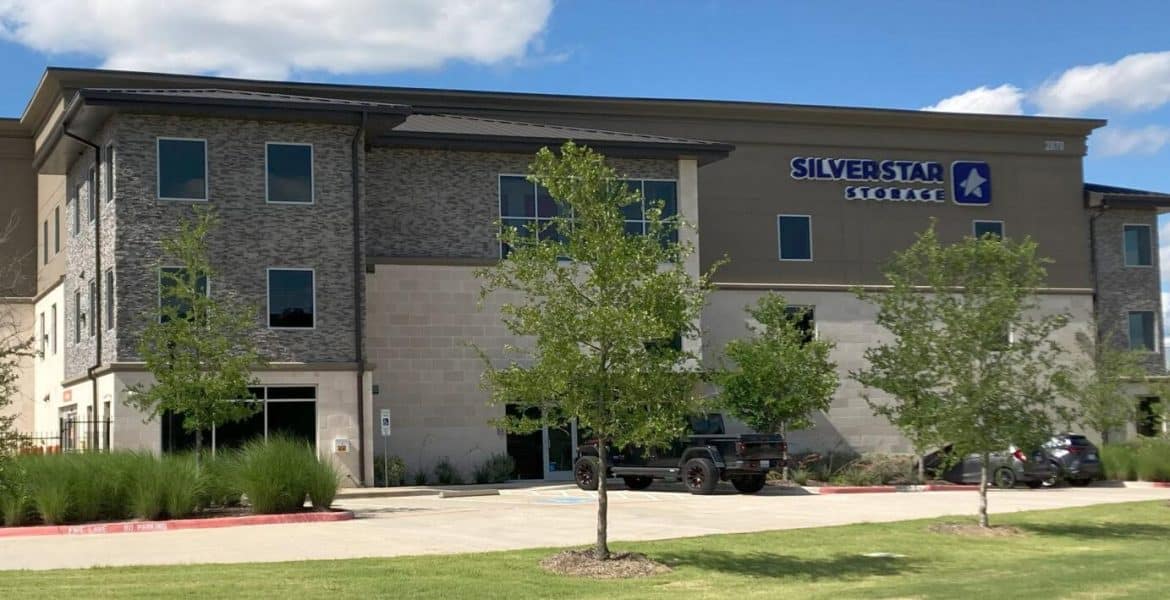
The disputed company is Silver Star Properties, formerly known as Hartman Short Term Income Properties XX, Inc., a real estate investment trust (REIT) with holdings across Texas.
Since Hartman’s ouster in 2023, the company has faced mounting financial strain, culminating in a series of loan defaults, allegations of deceptive communications, and accusations of discriminatory treatment toward shareholders.
“This isn’t mismanagement,” Hartman wrote in a recent letter to investors. “It appears to be systematic fraud that could result in legal consequences.”


His claims, detailed across multiple shareholder letters and supported by filings with the U.S. Securities and Exchange Commission (SEC), have ignited a battle for control ahead of an early October shareholder vote that may determine the company’s future.
The most recent flashpoint came in early September, when Silver Star’s management filed an 8-K report with the SEC confirming that the company had defaulted on a $57.8 million loan tied to a portfolio of Walgreens-leased properties.
The filing revealed that the loan matured on August 9, 2025, and that management failed to refinance or repay it. Just four days later, the lender declared a default, triggering penalty interest on roughly $50 million in outstanding debt.
For Hartman, the event confirmed what he had warned shareholders about for months — a pattern of “reckless borrowing” and “incompetent leadership” that he believes is eroding shareholder value.
“The Walgreens portfolio was 100 percent financed at inflated prices,” Hartman wrote. “They bailed out Benefit Street Partners from a non-performing loan and then failed to manage it responsibly.”
According to Hartman’s analysis, Silver Star’s management — led by CEO Gerald Haddock — purchased the Walgreens properties at the top of the market, using expensive debt to finance what he describes as “speculative, tax-driven acquisitions.”
The result, he argues, has been a cascade of underperforming assets and mounting liabilities.
The Walgreens default, Hartman says, is only one symptom of deeper dysfunction. In a series of letters to shareholders dated September 9, 11 and 16, 2025, Hartman and the Hartman Shareholder Alliance outlined what they describe as “a deliberate pattern of concealment and manipulation.”
Among the allegations are concealment of financial records, self-dealing with related parties, discriminatory stock distribution, and misleading filings with regulators.
Hartman alleges that management refused multiple “books and records” requests, preventing shareholders from accessing financial information even as properties entered foreclosure proceedings.
He points to transactions with Benefit Street Partners, which earned at least $14.4 million in interest payments while serving as both lender and beneficiary of the defaulted loans. Roughly 20 percent of investors, Hartman says, were denied rightful stock allocations because they were “part of the Hartman group” — a claim allegedly corroborated by a text message from CEO Haddock.
Further, in a DFAN14A filing, Hartman contends that management failed to include revocations of consent in its proxy materials, thereby misrepresenting shareholder participation in a critical vote.
“These are not clerical errors,” Hartman wrote. “They’re deliberate actions to mislead regulators and suppress shareholder rights.”
Adding fuel to the controversy are reports that Silver Star representatives have called investors directly, suggesting that liquidation under Hartman’s plan would result in “zero return,” while simultaneously offering to buy shares at 42 cents per share.
In one message from a financial advisor, shared with Hartman’s team, a shareholder described being told by a Silver Star representative that “a liquidation as you recommend will result in zero return to investors after banks and vendors are paid,” but that there was an option to sell shares for “42 cents per share to other investors.”
Hartman has called the communications misleading and unethical.
“Any legitimate offer would be properly disclosed to all shareholders simultaneously,” he said, “not pitched through individual phone calls.”
He has urged investors not to respond to such solicitations, framing them as part of a larger strategy to depress share values and consolidate control ahead of the proxy vote.
Central to Hartman’s criticism is the company’s ongoing refusal, he says, to release updated financial statements — a legal requirement in connection with consent solicitations and proxy communications. The only public financials available, Hartman notes, are those included in Silver Star’s original proxy statement earlier in 2025. Since then, he says, management has “refused to provide legally required financial information” despite ongoing defaults and foreclosures.
“This is concealment, not compliance,” Hartman wrote in one letter. “Shareholders deserve to know where their money went and why it wasn’t distributed as it should have been.”
Hartman’s narrative is consistent across all his communications: new management ignored warnings about excessive leverage, sold core assets to chase speculative deals, and failed to stabilize the portfolio.
“Instead of paying down debt,” Hartman wrote, “they fire-sold properties to fund risky new investments.” The result, he argues, is a balance sheet saddled with defaults, penalty interest, and properties that “can’t generate sufficient income to service their debt.”
The September 8-K filing confirms that the Walgreens debt — originally acquired from Benefit Street Partners — remains outstanding and has triggered default penalties. Hartman’s team estimates that the losses could reach into the millions for shareholders.
In perhaps his most pointed language yet, Hartman has called for a criminal investigation into what he describes as “potentially fraudulent concealment of material facts from shareholders.” He announced plans to hire a criminal attorney to pursue possible charges tied to undisclosed related-party transactions, stock distribution irregularities, and the concealment of financial records.
“The evidence of fraud requires criminal investigation,” Hartman wrote. “We know they are concealing financial information and potentially misappropriating shareholder assets.”
Despite the turmoil, Hartman insists that Silver Star’s underlying portfolio still holds significant value — approximately $130 million, by his team’s estimate. In a detailed presentation to shareholders, he outlined a “Return of Capital Plan” that would unwind the company’s debt, liquidate key assets, and deliver direct payouts to investors.
The plan includes the immediate sale of the Walgreens and mini-storage properties to pay off existing loans, stabilization of remaining assets through improved leasing and operational management, gradual liquidation over two years with proportional distributions to shareholders, and the hiring of a forensic accountant to review suspected fraud and restore transparency.
“Our plan is simple and clear,” Hartman said in his September 16 letter. “We will return capital directly to you and put shareholders first — with transparency, accountability, and real returns.”
Silver Star’s leadership has largely dismissed Hartman’s allegations as false and self-serving, though the company has not yet issued a detailed rebuttal to the most recent claims.
Meanwhile, shareholders remain caught in the middle of a bitter proxy war that has spilled into the public sphere — one marked by competing letters, dueling legal filings, and sharply divergent accounts of the company’s health.
For many longtime investors, the choice has become a referendum on trust: between the legacy founder who built the portfolio and the executives now accused of dismantling it. Hartman’s campaign carries a tone of both frustration and faith — faith that transparency can still win in a system he believes has been corrupted by greed.
“The properties are there,” he wrote. “The $130 million in underlying value is real. What’s missing is competent leadership focused on returning capital to the shareholders instead of enriching themselves.”
He’s asking shareholders to vote for a new slate of directors — including himself — who will focus on disciplined liquidation, reduced executive compensation, and full disclosure.
“This isn’t just about a company,” Hartman wrote in his most recent letter. “It’s about restoring trust and protecting the people who believed in what we built.”
The October shareholder vote will determine more than control of Silver Star Properties. It will decide whether the company’s founding principles — transparency, accountability, and faith in ordinary investors — still have a place in corporate America.
Editor’s Note: This analysis is based on publicly available SEC filings, shareholder communications, and letters issued by the Hartman Shareholder Alliance. All hyperlinks point to official filings or primary-source materials referenced in the reporting.