
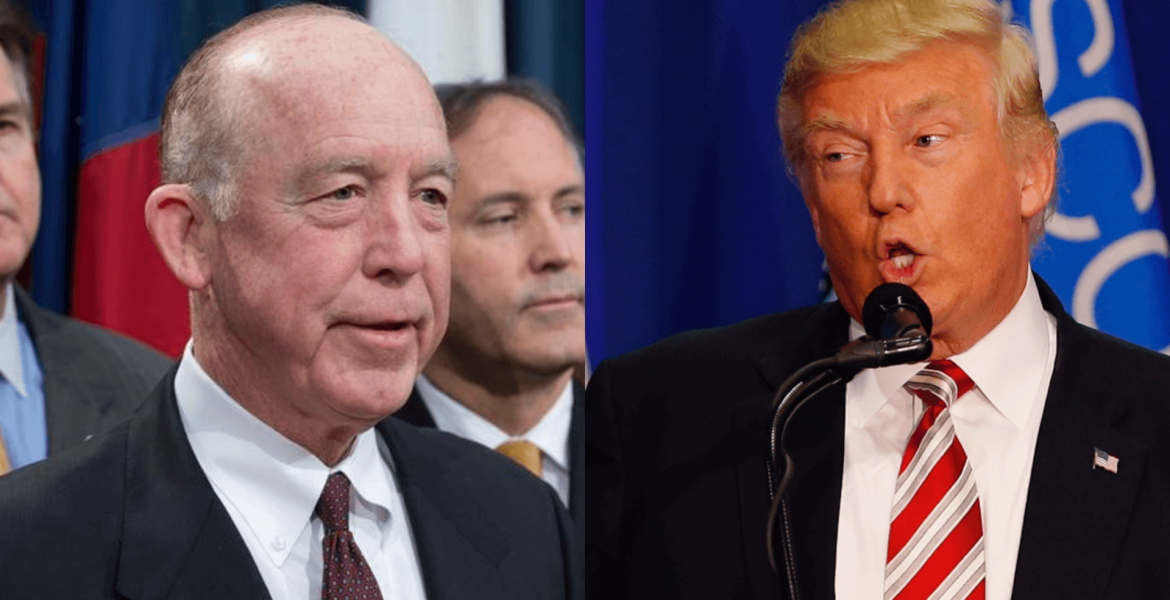
Donald Trump built his reputation on being the outsider who refused to bow to Washington. He didn’t come from politics, didn’t play by the rules of the establishment, and when critics tried to knock him down through endless investigations, he only grew louder. Harris County has its own version of that fight in Dr. Steven Hotze, a physician-turned-activist who has spent decades taking on the political machine in Texas.
Both men share a defining trait: they have been targeted not for crimes, but for challenging the wrong people. Trump has been hounded with lawsuits and indictments since leaving office, a strategy designed to drain his time and resources.
Hotze has faced the same tactics locally. When he raised questions about irregularities in Harris County elections, pushed for cleaning up voter rolls, opposed unconstitutional vaccine mandates and demanded accountability, he wasn’t debated on the facts. Instead, he was dragged into courtrooms and branded an extremist. The goal in both cases is the same—silence through intimidation.
For Trump, the issue at the center of many battles is election integrity. He questioned the expansion of mail-in voting, warned about ballot harvesting, and made the security of the vote one of his central causes. Hotze has done the same in Texas. He has pointed out problems in voter registration, challenged officials who resisted oversight, and organized grassroots efforts to monitor polling places. Critics may disagree with his methods, but few can deny that he has been relentless in pressing the case for transparent elections.

The parallels don’t end there. Neither man is a product of polished politics. Trump came out of the business world and bulldozed his way into the presidency. Hotze is a holistic doctor who built a successful alternative medicine practice and used his platform to advocate for conservative causes. Their lack of political polish, often mocked by opponents, is the very reason supporters trust them. They speak plainly, refuse to hedge their positions, and treat politics as a fight worth having rather than a career to be protected.
Faith is also central to Hotze’s activism. While Trump’s appeal to evangelicals often came through policy decisions—such as appointing pro-life judges or protecting religious liberty—Hotze has lived it directly in Texas. He has opposed radical gender ideology, fought for the unborn, and defended traditional family values. His critics call him uncompromising. His supporters call it conviction.

And then there’s resilience. Trump, despite a mountain of indictments, held rallies, dominated media cycles, and commanded loyalty from millions of voters. Hotze, despite lawsuits and public attacks, has refused to retreat from Harris County politics. Both men understand something that frustrates their opponents: every time they are attacked, they only become more determined to push forward.
Dr. Steven Hotze has never run for president. He doesn’t command national rallies or 24/7 cable coverage. But in Harris County, he has carved out a reputation as a man unwilling to bend to political pressure, unafraid of controversy, and unwilling to stay silent in the face of corruption. That is why many see him as the Donald Trump of Harris County—not because he imitates Trump’s style, but because he shares his fight.
The comparison matters. Trump’s battles have national stakes; Hotze’s battles shape Texas politics at the ground level. Both remind us that politics is not just about compromise and backroom deals. Sometimes it is about standing firm, even if it means being sued, mocked, or vilified.
In the end, what ties the two men together is their willingness to take personal hits in order to defend what they see as the foundation of American life—faith, freedom, and fair elections. For Trump, that means challenging Washington. For Hotze, it means challenging Harris County. And for their supporters, it means believing that even in the face of overwhelming opposition, one determined voice can still make a difference.