
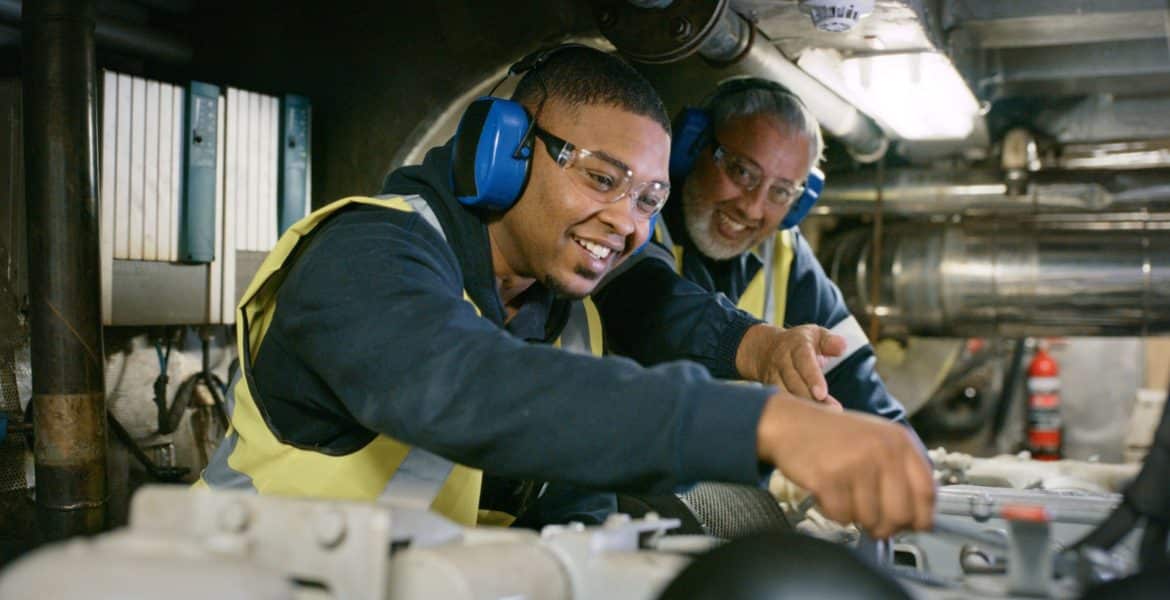
Let’s be honest. When your AC goes out in the middle of a Texas summer, you don’t call someone with an MBA. You call someone who knows what they’re doing; a skilled technician who can actually fix the problem. That’s the thing about trades: they’re real, necessary, and right now, they’re in high demand.
We’ve spent the past few decades pushing college as the gold standard. And for some students, it is. Some careers are entirely gatekept by college degrees, and for fields like surgery, rightfully so.
But attending university is far from the only path to success—and for many young people, it may not even be the best one. Trade school is a massively underrated option, and it’s one that’s finally getting the attention it deserves.
Further, universities are oversaturated with students, and the workforce is oversaturated with recent graduates to the point where bachelor’s degrees have become nearly obsolete, and master’s degrees have become the new bachelor’s degrees.

I’ve known brilliant young adults—one a computer programmer, another a finance grad—who spent years job-hunting after graduation, living out of their childhood bedrooms. These adults were massively qualified. Both had worked numerous internships. One had a bachelor’s degree, while one had a master’s and still couldn’t find decent work.
Meanwhile, skilled trade workers are earning great money, often without debt, and launching careers straight out of school.
This isn’t to pit college against trades; a diversely qualified working force is essential to breed a healthy economy and public. It’s about recognizing that working with your hands is not only dignified; it’s smart. It’s strategic. And it’s becoming more essential than ever.
Proverbs 22:9 reads, “Do you see a man skillful in his work? He will stand before kings; he will not stand before obscure men.” That wisdom still holds. America runs on electricians, welders, HVAC techs, and carpenters. These aren’t fallback jobs—they’re foundational.
We’re seeing a quiet revolution in how we think about education, and Texas is part of it.
Texas Rep. Gary Gates (R-D 28) recently championed House Bill 20, a measure designed to bring technical education back into high schools in a meaningful way. The bill passed the House at the end of the most recent legislative session and is now sitting in front of the governor.
If signed, it will reshape how students in Texas are prepared for the workforce, giving them the opportunity to earn real certifications in high school that can lead directly to employment.

This is a huge step forward. Shop class used to be a normal part of American education, but over the years, budget cuts, liability concerns, and an obsession with college prep pushed it out. Now, we’re paying the price. There’s a shortage of skilled workers, and a generation of students missed out on discovering careers that might have been perfect for them.
That’s beginning to change. Around the country, there’s a renewed focus on vocational training. In Georgia, more than 17,000 students are enrolled in skilled trades programs. In Wisconsin, one high school poured $90 million into a facility with robotic arms and advanced manufacturing tools. A Catholic high school in Philadelphia is training students in welding, and they’re getting job offers—some as high as $70,000—a full year before graduation.
Parents, if your son or daughter shows interest in hands-on work, pay attention. That spark of curiosity might be pointing to a calling. Let them take a shop class. Visit a trade school. Have real conversations about what they love to do and what kind of life they want to build. Supporting that path could change everything.
And if your teen has already graduated and isn’t sure what’s next, vocational school is a practical, affordable option worth serious consideration. It’s not just about income, though that’s a major perk. It’s about purpose, ownership, and building something real.
College isn’t the only way forward. For many, it might not even be the right way. Thanks to leaders like Rep. Gates, Texas students may soon have more choices, better training, and brighter futures.