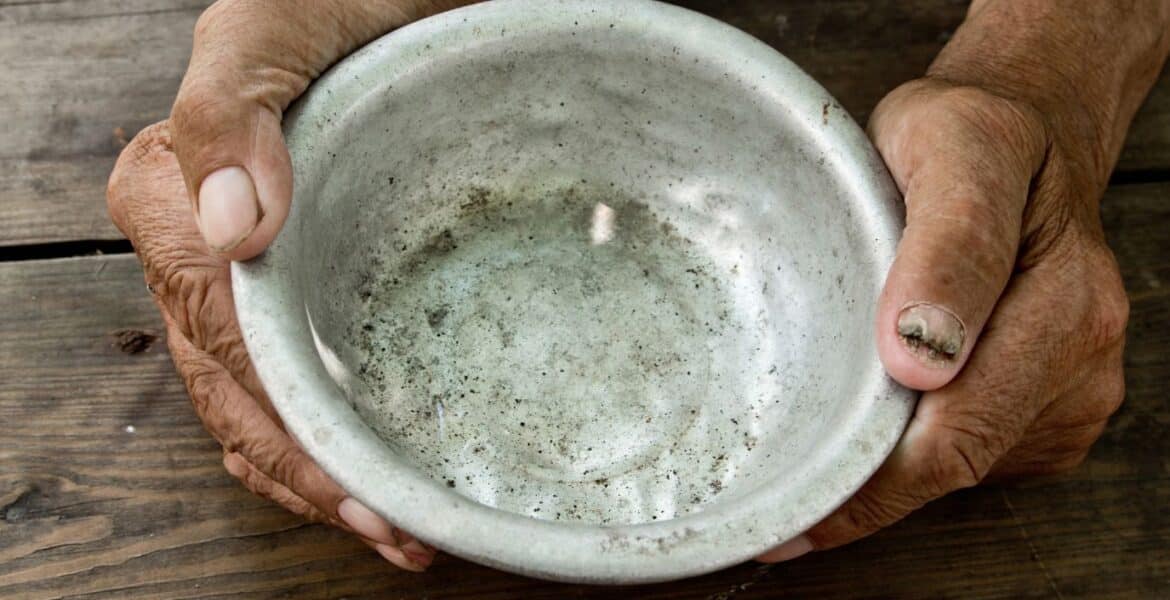
If one truly wants to help eliminate poverty, perhaps it’s time to rethink the process. To begin, one should ask this question: why are some nations (and individuals) wealthy while others are so poor?
The reason the United States has led the world in wealth, standard of living, and abundance is that every resident of the United States has had the ability and the opportunity to invest in and produce their own capital and build personal wealth. Why is that possible? And why has most of the rest of the world failed, and continues to fail, in such attempts?
The answer is actually very simple. The United States created a very easy, immediate, and complete system for recording and securing ownership of all private property in the nation. In truth, this system makes the County Recorder’s office in every community in the United States the most powerful force of freedom in the world. In short, those records of ownership of all property provide proof of individual ownership. That proof of ownership is the root of building personal wealth, which leads to individual empowerment.


Peruvian economist Hernando DeSoto explains the root of American wealth in his book, The Mystery of Capital. DeSoto asks, “Why does Capitalism thrive only in the West, as if enclosed in a bell jar?”
“Capital,” he argues, “is the force that raises the productivity of labor and creates the wealth of nations. It is the lifeblood of the capitalist system, the foundation of progress, and the one thing that the poor countries of the world cannot seem to produce for themselves.”
Why not in other countries? Because the laws and practices of most countries in the world make it nearly impossible for average citizens to own and prove ownership of property. There are vast obstacles to gaining legal ownership.
For example:
- In Mexico, it takes twenty years before a piece of property can be recorded.
- In Peru, it took DeSoto’s team of experts 289 days to legally register a new business, even after paying over $1,200 in registration fees.
- In the Philippines, a prospective property owner would first have to organize an association with their neighbors to qualify for a state housing finance program. The entire process could take 168 steps, involving 53 public and private agencies, and take 13 to 25 years.
And so it goes, country after country. The impact of a $1,200 fee in a poor nation is enough to forever discourage even the attempt to register property. In many developing countries, such an amount may equal an entire year’s income.


In addition, it’s important to note the impact free markets and private property have on the income of a nation’s citizens. The per capita income for Americans is $41,400 per year. For Europeans, where more government control is exercised, the per capita income is $27,400. In the former Communist nations of Eastern Europe, now that free markets have been established, it’s $3,295; yet, just a few years ago, it was $2,047. As more freedom and greater ability to own property grow, so does per capita income.
If ownership of property cannot be properly recorded and traced directly to the owner, then it cannot create equity and cannot be used as collateral for credit. Thus, the property is of no value to the owner; it becomes nothing more than an expense. This situation has created, in DeSoto’s estimate, over $9.3 trillion in “dead capital,” i.e., property that cannot be used by anyone to create equity and, therefore, wealth. Without the ability to use it for productive purposes, it’s useless—dead.
While it’s common practice in the United States for individuals to buy property, hold it for a few years, and sell it at a substantial profit or move up to a better home, thereby creating personal wealth, such a system is basically unheard of in most nations of the world. If one doesn’t have or can’t prove title to a piece of property, then no bank will make loans on that property. In nations where property cannot be easily and legally registered, the only recourse is to go to friends and relatives, get a smaller loan (thereby reducing one’s ability to build a company), and still never have title to the property or to the business or its inventory. Though people may live on and pay for property for years, it remains hidden in an underground economy that is not beneficial to the individual or the national economy because ownership cannot be proven.
“In the West, by contrast,” DeSoto argues, “every parcel of land, every building, every piece of equipment, or store of inventory is represented in a property document that is the visible sign of a vast hidden process that connects all these assets to the rest of the economy.” Seventy percent of all small businesses in the United States are started by equity loans on personal homes. Small, independently owned businesses employ the majority of people in the U.S.

This, then, is the hidden secret of why the West became so wealthy while much of the rest of the world has been mired in poverty. Obviously, poverty can never be eradicated—and will actually increase—until governments get out of the way and everyone has equal opportunity to own and benefit from the wealth associated with private property ownership.
Today’s poor in undeveloped nations certainly want the same opportunities to advance, yet many now live in societies that are, in some ways, 3,000 years behind the modern world. Because of its system of private property ownership, the West created a world of advanced technology, health, education, and leisure, where life expectancy increased each decade. In the West, people truly pursue a life of happiness.
Eradication of poverty in the world won’t come from endless aid programs designed to provide mere subsistence. Nor will it come from simply providing jobs. The answer to poverty will come only from providing all people in the world with the tools necessary to create new, independent wealth. Only then will they be able to achieve personal empowerment and live lives of individual independence.