
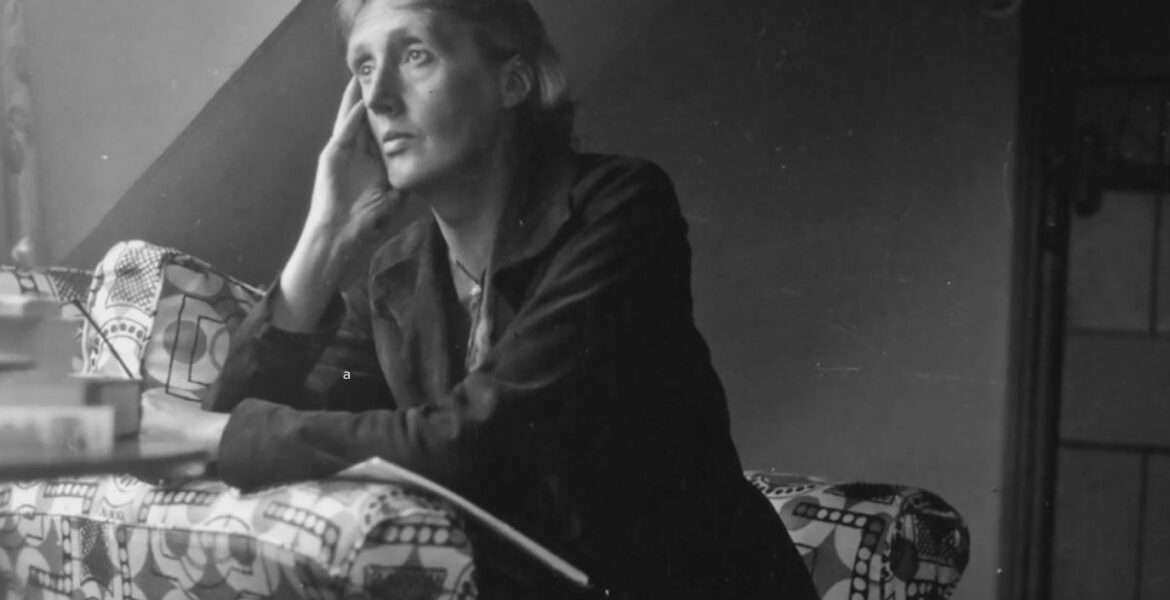
Although she was an atheist, the great writer Virginia Woolf was greatly influenced by Christianity. In explaining this, it is best to begin by noting that she wrote, “When you asked me to speak about women and fiction I sat down on the banks of a river and began to wonder what the words meant. They might mean simply a few remarks about Fanny Burney; a few more about Jane Austen; a tribute to the Brontës and a sketch of Haworth Parsonage under snow; some witticisms if possible about Miss Mitford; a respectful allusion to George Eliot; a reference to Mrs. Gaskell and one would have done.”1
One version of what Woolf suggests here is (written by me), “Much of Fanny Burney’s life was blighted by the idea that women should not write; she burned her writing at age fifteen, likely due to her stepmother holding that idea. As well, her dramatic comedy The Witlings was not published right away in part because her father and family friend Samuel Crisp had reservations about the correctness of a woman writing comedy. This and more makes her success all the more remarkable.
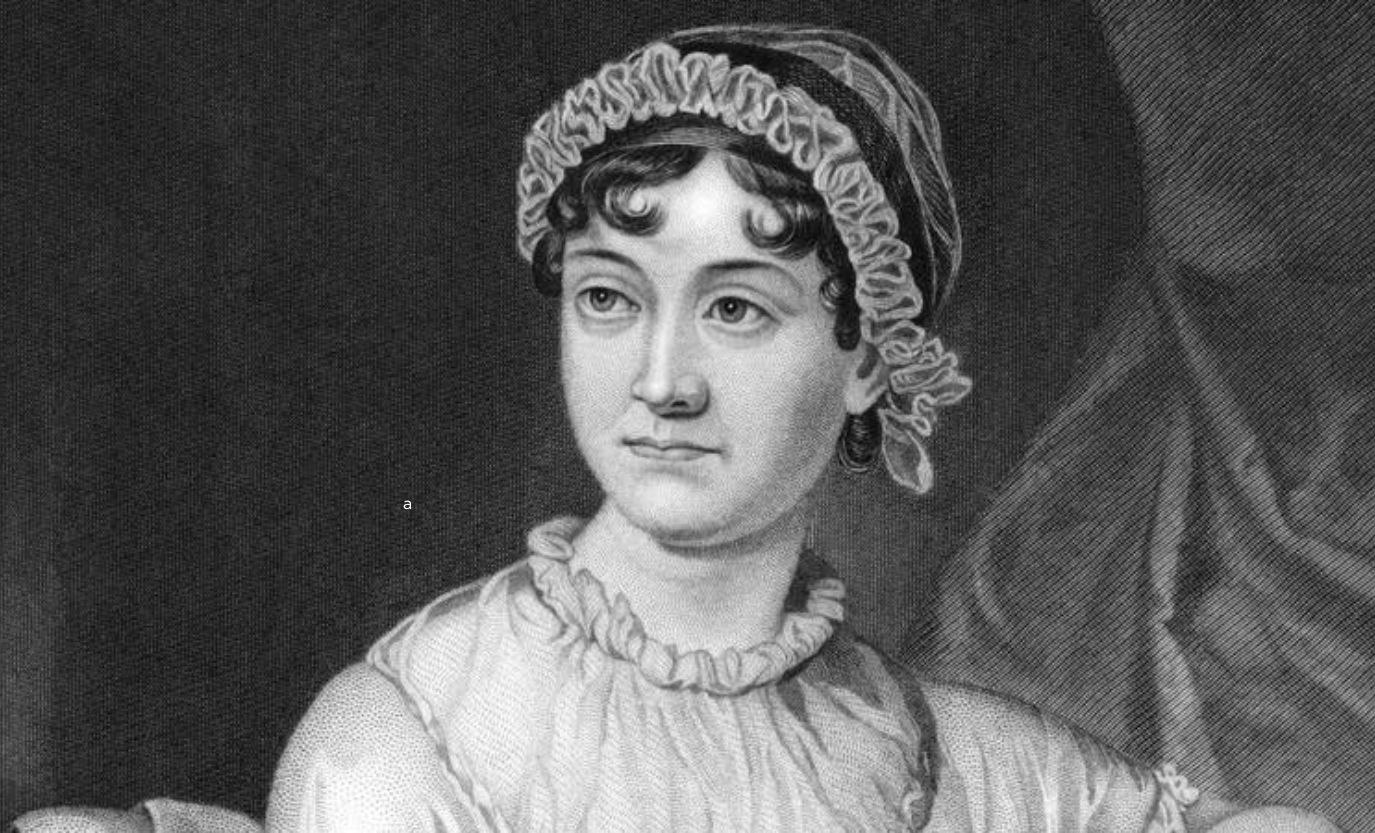
As for Jane Austen, for much of her life she depended on her brothers’ money, so she had to be careful not to upset them. This and the dull duties expected of a proper lady at the time undoubtedly negatively affected her writing. Yet she also was able to succeed remarkably.

The Brontës – Anne, Emily, and Charlotte – must also be noted and praised; they were the greatest literary geniuses of the Victorian era. They lived for many years in Haworth Parsonage, a beautiful sight to behold in the winter – a two-story building, the roof covered in snow, with snow also frosting the windows and collecting in the windowsills, and stretching out over the moorlands in the back.
Regarding Mary Russell Mitford, I say we may have her father to thank more than her for some of her writings, as he was eventually supported financially by the sales of them. Indeed, she is said to have respected her father’s memory to the last, though that is perhaps more than it deserved.
One of the greatest writers in all of English literature must not be overlooked when considering women and fiction, though she wrote under a man’s name; despite her death in 1880, her writing remains eternal.2

As does that of Elizabeth Gaskell, whose North and South reminds us of the importance of challenging unjust authority, something still often necessary for women to do in order to write fiction at all.”
In researching these female writers to write this, I discovered that every single one of them was Christian. To show how unlikely it is that Woolf would turn to Christian writers in her thoughts regarding women and fiction (the first-person narration in A Room of One’s Own echoes her own thoughts) one may note that not only Woolf herself but her contemporaries Anna Howard Shaw, Susan B. Anthony and her partner Emily Gross, M. Carey Thomas and her partner Mary Garrett, Jane Addams and her partner Mary Rozet Smith, Anne Martin and her partner Dr. Margaret Long, Sarah Orne Jewett and her partner Annie Fields, Carrie Chapman Catt, Frances Kellor, Mary Emma Wooley, Emily Blackwell, and Martha May Elliot were all lesbians; hardly a group likely to praise Christian writers. (Woolf was married to a man but had an open marriage). Yet Woolf, though an atheist herself, was too honest to deny her debt to them, and therefore by extension to Christianity in general.
Neither does Woolf’s debt to Christianity end at Christian women writers contributing much to fiction by women in general. Woolf’s famous concern for women having rooms of their own obviously owes a debt to the literary tradition of cloistered nuns and female Christian hermits. As well, Woolf writes of a fictional woman writer called Mary Carmichael (again using her nameless narrator to show Woolf’s own thoughts), “Give her another hundred years, I concluded, reading the last chapter [of a fictional book supposedly written by Carmichael]–people’s noses and bare shoulders showed naked against a starry sky, for someone had twitched the curtain in the drawing-room–give her a room of her own and five hundred a year, let her speak her mind and leave out half that she now puts in, and she will write a better book one of these days. She will be a poet, I said, putting LIFE’S ADVENTURE, by Mary Carmichael, at the end of the shelf, in another hundred years’ time.”3 This concern with money also owes a debt to nuns, who although they famously take a vow of poverty, do often have the necessities of life provided to them by their religious community, thus freeing them from the concern with earning money that Woolf rightly thought made it difficult for women to write.4
Although Woolf has been denounced as a classist for insisting that women need money to write, it is undeniable that women’s lack of access to money and property compared to men, along with women being expected to assume a greater responsibility for housework and childcare than men, has contributed and still contributes to their lack of career accomplishment and literary accomplishment compared to men; this is something Christianity has long recognized, setting women apart as nuns and hermits because of the Christian knowledge of how concern for the things of this world such as money, children, and housework can absorb a person and prevent them from concentrating on other and often more valuable things. This knowledge can particularly be seen in Woolf’s depiction of her fictional character Miss Kilman, a single Christian woman, whose nunlike singleness allows her to concentrate more on God, in Woolf’s novel Mrs. Dalloway.

Woolf’s writing against lack of education for women, the other thing (in addition to women’s lack of access to money and property compared to men, along with women being expected to assume a greater responsibility for housework and childcare than men, and prejudice and violence against women), that has contributed and still contributes to their lack of accomplishment in careers, the arts, humanities, science, and mathematics, compared to men, owes a debt to the Christian emphasis on education for women. She notes in A Room of One’s Own that women were often denied education due to being women in the past, something that still occurs to some extent today (for example, the Taliban controls Afghanistan and does not allow female education past the sixth grade).5 Christians have by contrast been in the forefront of women’s education, founding many schools and colleges for women.
So one can clearly see how Woolf, though she was not a Christian, owed a great debt to Christianity as a woman writer, as do many women writers. May this be more acknowledged in the future; my writing this is but a small start toward that recognition.
Footnotes
- Virginia Woolf, A Room of One’s Own (Boston: Mariner Books, 2005), 3.
- This is, as Woolf suggested be included, “a respectful allusion to George Eliot”.
- Woolf, A Room of One’s Own, 93.
- As of my writing this on July 8, 2024, £500 (pounds; English money) in 1929, when A Room of One’s Own was published, is worth “about £39,807.20 today, an increase of £39,307.20 over 95 years”, according to https://www.officialdata.org/uk/inflation/1929?amount=500 This current figure is (again as of my writing this on July 8, 2024) $51, 042.24 in American dollars, according to
https://www.xe.com/currencyconverter/convert/?Amount=39807.2&From=GBP&To=USD not a greedy or unnecessary amount of money to have, as Woolf suggests in the quote just before this footnote, each year.
- Virginia Woolf. A Room of One’s Own. (Canada: Broadview Press, 2001), 57.
